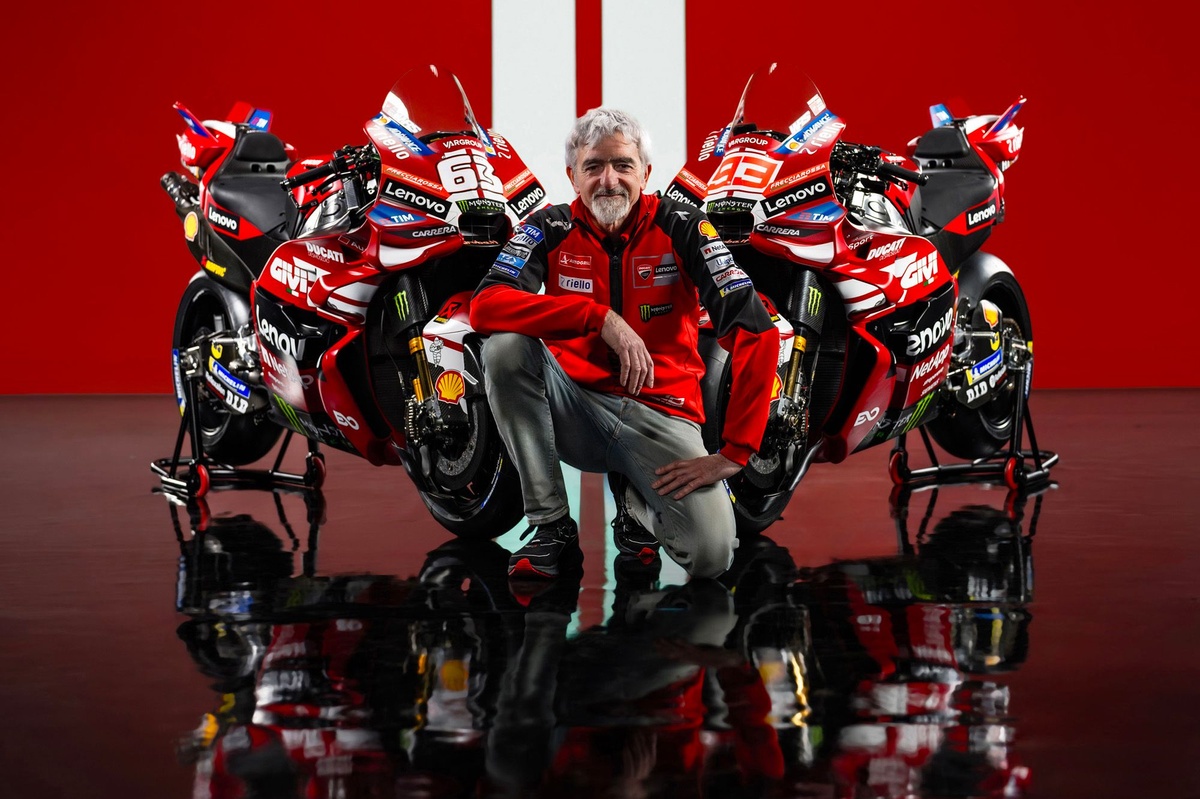
The 2026 Japanese Grand Prix has been a standout moment for Ducati, during which its technical director, Gigi Dall’Igna, celebrated his 100th victory in Grand Prix racing. This milestone is significant as it has only taken 203 races to achieve this record, since Andrea Iannone’s first win at the 2016 Austrian Grand Prix.
Over the last decade, Ducati has won nearly one race for every two races, a remarkable improvement considering it had only achieved 31 wins before Dall’Igna’s arrival in 2013. Thus, the Italian brand has become an undeniable leader in MotoGP.
A Break from Competition
Unlike other manufacturers, Ducati did not become a MotoGP powerhouse by finding a singular advantage in a new rules cycle. MotoGP regulations have remained quite stable since 2012, which has forced Dall’Igna and his team to work on improving the Desmosedici through concessions.
After winning its first race in 2016, Ducati innovated in the MotoGP arena, introducing technology such as ride height devices and advanced aerodynamics. This constant evolution has allowed Ducati to adapt to new rules, including changes in Michelin tires and the regulation of electronic systems.
A Legacy of Triumphs
Dall’Igna’s efforts have led Ducati to win the manufacturers’ title for the first time in 2020, maintaining that supremacy ever since. Furthermore, Marc Márquez’s successes in recent years have coincided with Ducati’s rise, with four consecutive wins in the riders’ championship.
The GP24 model, considered by many the best to come out of Borgo Panigale, gave Ducati a dominant season in 2024, with 19 victories in 20 races. However, the GP25, which represents the culmination of Dall’Igna’s efforts, is what has truly paved the way for Ducati’s current success.
Future Perspectives
With the end of the 1000cc motorcycle era increasingly near, it remains to be seen if Ducati can maintain its leadership against Aprilia’s competition. Dall’Igna’s impact on MotoGP’s history is undeniable, having transformed Ducati into one of the championship’s top references.
Between 1994 and 1999, Honda won 68 of 87 races, with a success rate of 78.2%. Currently, Ducati, with a 49.3% win rate, demonstrates its ability to sustain success over time, comparing it to what Mercedes did in F1, winning 111 of 163 races between 2014 and 2021.
Written by FormulaRapidaAI