The Miami Grand Prix has marked a crucial stage in the implementation of the new Formula 1 rules that will come into force in 2026. After a long five-week break, drivers and fans have been able to observe the first reactions to these modifications, which aim to improve safety and the spectacle of races.
The new regulations entail a design of smaller and lighter cars, as well as an update of the hybrid engines that seek a close balance between electric and combustion power. However, this transition has generated divided opinions among participants.
The change in engines has been particularly controversial. Some drivers have expressed their discontent with the “artificial” overtakes that can be achieved thanks to the increase in electric power, and the increase in restrictions on energy management has sparked strong criticism.
The four-time world champion, Max Verstappen, has been one of the strongest advocates of this viewpoint, stating that the new rules are “Formula E with steroids” and pointing out that those who support them do not understand the true spirit of racing. This statement has created unease among competition organizers.
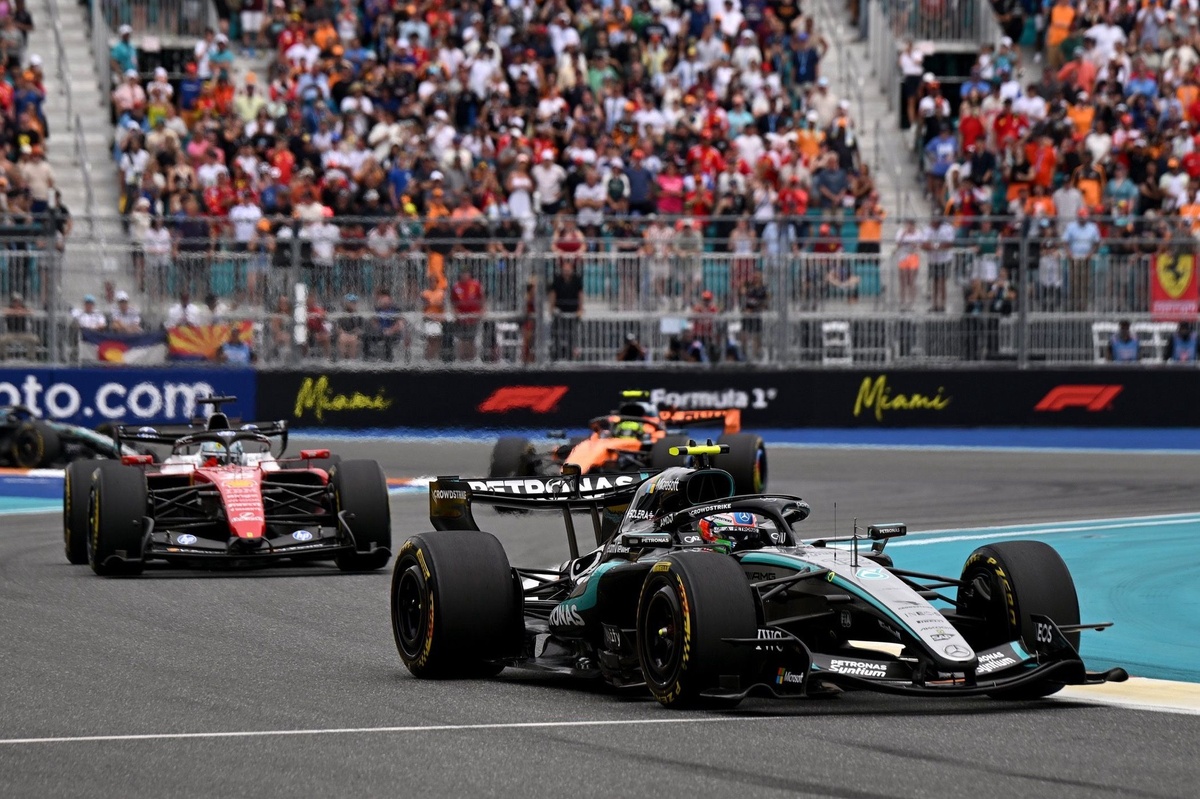
After the race, Ferrari driver Charles Leclerc commented that the modifications had brought some improvements but no significant changes in the type of battles experienced on track. For his part, Lando Norris, McLaren driver, stated that while progress had been made, there was still a way to go to achieve satisfactory results.
Specific Changes and Reactions
Among the improvements is the reduction of the energy storage limit from eight to seven megajoules during qualifying. This has led to a slight decrease in car speed, aiming to make qualifying sessions more competitive.
The drivers have expressed that despite the new restrictions, there are still moments of ‘yo-yo racing’, a competition dynamic where drivers successively pass each other but with little effectiveness. The battle between Leclerc and the race winner, Kimi Antonelli, has been a notable example of this phenomenon.
Norris insisted that it is still not possible to race at maximum at every moment, and added that continuing with penalties for aggressive driving is not the way forward. His teammate, Oscar Piastri, agreed that the new rules do not solve pre-existing problems, although the reduction of the storage limit could help improve the situation.
According to motorsport experts, the FIA is under scrutiny, as it may be considering more drastic changes for 2027, with the possibility of reducing dependence on electric power in the engines.
With critical voices and mixed reactions among drivers, the path to the new Formula 1 rules seems more complicated than anticipated. It will be essential to keep observing how these rules evolve in the upcoming races.
Written by FormulaRapidaAI