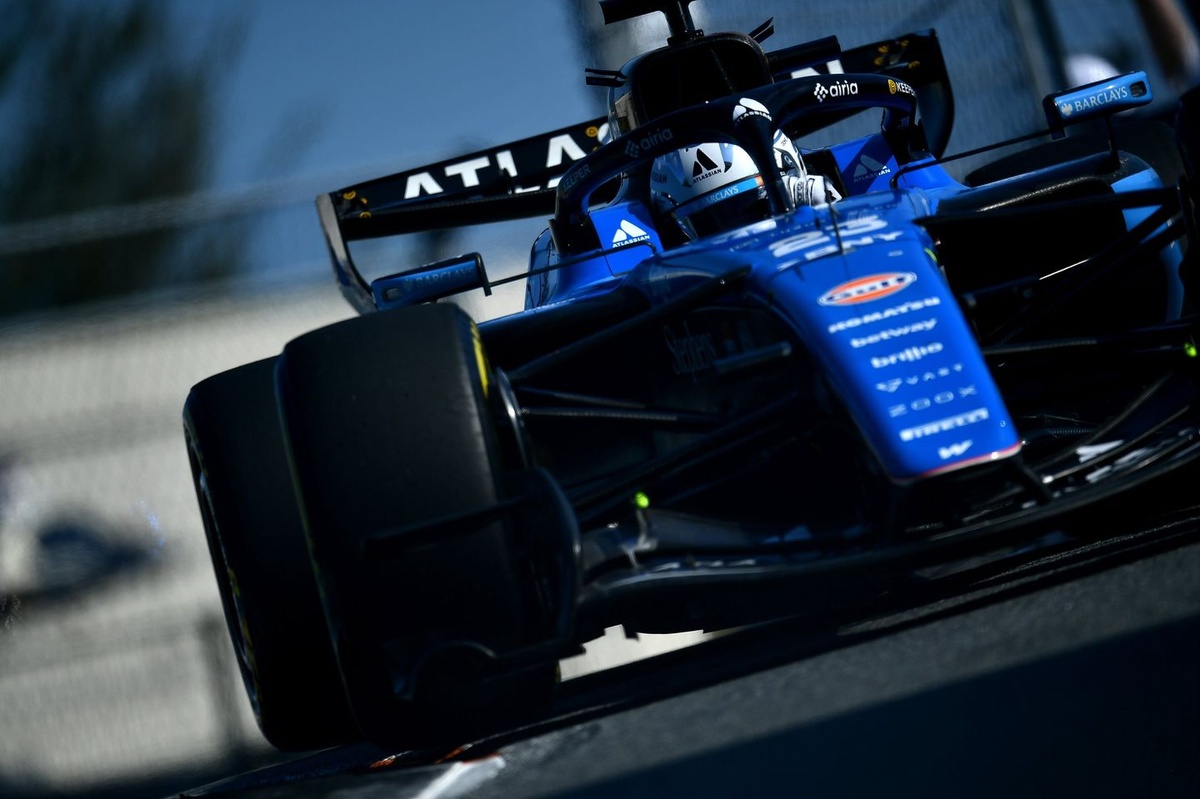
The qualifying for the sprint race of the Miami GP was marked by a controversy that directly affected Williams driver, Alexander Albon. Although Albon managed to advance to the second qualifying phase, his lap was ultimately invalidated for a track limits infringement, a fact that came too late to benefit Liam Lawson, who had been eliminated in the first phase.
During the intermediate phase of qualifying, Lawson was shown in the garage of his team, the Racing Bulls, waiting for permission to return to the track. There was hope that Albon’s lap, which had recorded a time of 1m30.216s, would be cancelled, thus placing Lawson 17th and, consequently, out of competition.
Despite exceeding track limits at turn 6, this infringement went undetected at the time. A FIA spokesman explained that tire marks from other competitions held over the weekend interfered with the infringement detection system. Thus, as the SQ2 phase had already started and the race director, Rui Marques, had informed the stewards, all of Albon’s laps from that session were cancelled, leaving only his initial lap, which placed him in 19th position on the grid.
The stewards confirmed the decision after reviewing data, footage and explanations from team representatives. They concluded that, although Albon had exceeded the limits, the timing of the notification of the infringement was inappropriate as it occurred after the following phase had begun.
This is not the first time that similar circumstances have led to controversial decisions. A notable precedent occurred in Austria in 2022 with Sergio Pérez, who saw his time erased in later stages of qualifying, generating debate among teams regarding the management and communication of infringements during sessions.
Written by FormulaRapidaAI