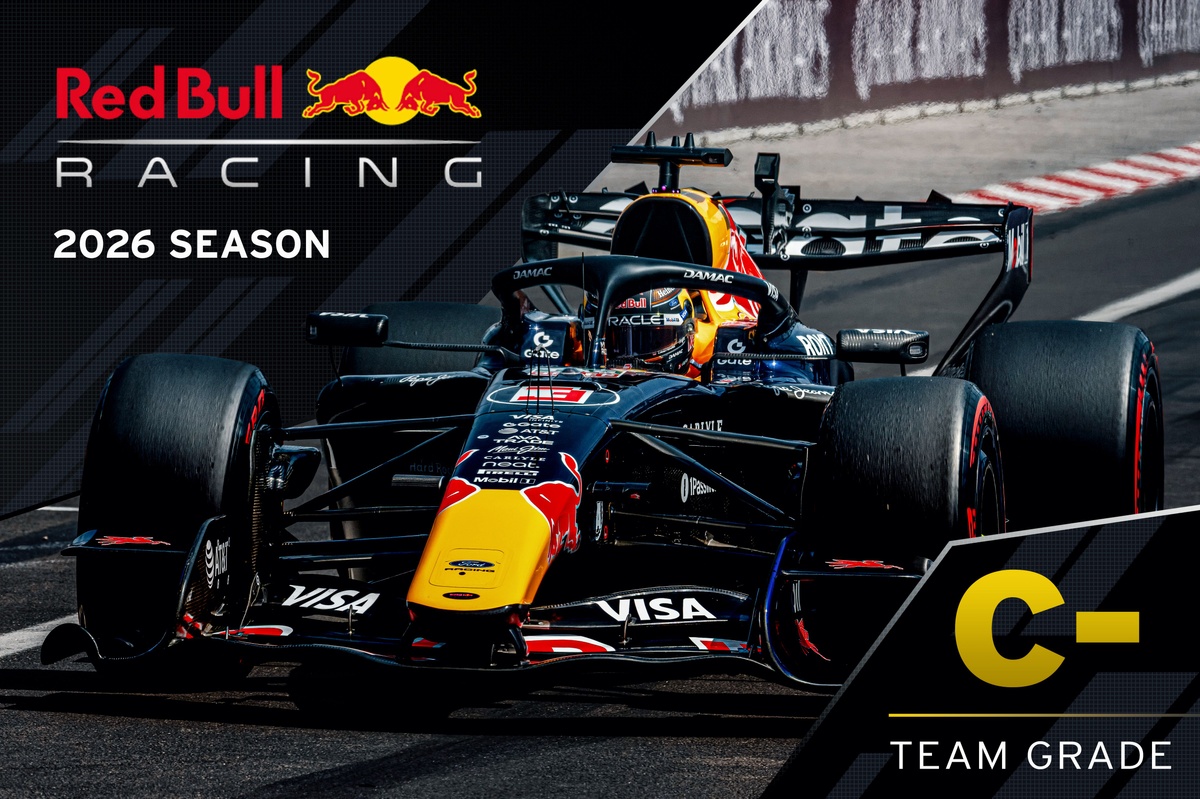
The 2026 Formula 1 season has reached its midpoint, and teams have been evaluated based on their performance so far. Among these, Red Bull Racing has experienced a start full of complications, although in recent weeks it has begun to show some significant improvements.
Red Bull began the year as the fourth fastest team on the grid at the Australian Grand Prix. Complaints about the initial performance were mainly attributed to the difficulty in deploying engine power and a lack of maneuverability. Additionally, the car’s starts have proven to be another obvious weak point.
The team has faced a recurring challenge: a car that is difficult to set up properly, which has affected both drivers, Max Verstappen and Isack Hadjar, who have struggled with unpredictable behavior in their vehicle during several races. This situation has reactivated rumors about Verstappen’s future with the team, a concern that has become common in the summer.
Despite these setbacks, Red Bull has made notable progress. Since Australia, where the gap to rivals was over a second, the team has introduced numerous aerodynamic improvements to its model, the RB22. These have allowed Verstappen to achieve four podiums, including three of the last four events. However, uncertainty about the ability to maintain this development pace persists.
Another positive factor is the team’s performance with the second car. Hadjar has proven to be a capable driver in his first season with Red Bull, keeping pace with Verstappen during qualifying and often finishing in the top six.
In the words of Laurent Mekies, one of the team’s senior officials: ‘We are not satisfied with our results, and we will not be happy until we have a competitive car capable of winning races on its own merits. It is necessary to assess how to balance this year’s development with next season’s, and we hope to make that decision before the previous one.’
Red Bull has received a grade of C- for its performance in this first half of the season, a rating that reflects both the initial difficulties and the latest advancements.
Written by FormulaRapidaAI