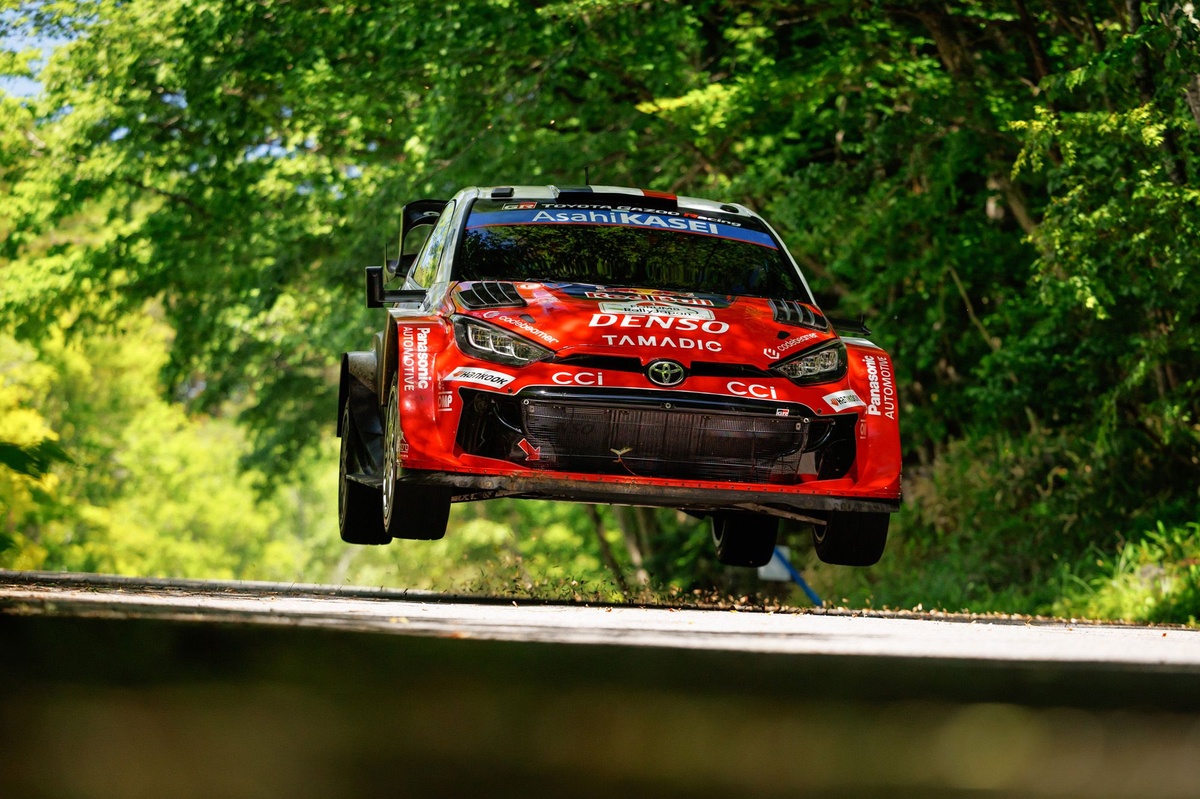
At the recent Rally Japan, Sebastien Ogier identified two key factors that obstructed his opportunity to compete against Elfyn Evans, the eventual winner of the event.
The new world rally champion had arrived in the country with the goal of victory but finished in second place, 12.8 seconds behind Evans, who has extended his lead in the championship.
Ogier faced a considerable disadvantage starting in sixth position in stages that became increasingly rough with each passing event. On the first pass through Isegami’s Tunnel, the Frenchman lost 16.7 seconds to Evans, a fact he attributed to his position on the road.
Additionally, Ogier struggled with the hard Hankook tires, which did not allow him to achieve the necessary agility. The high temperatures and technical layouts of the rally posed an additional challenge for tire management, despite Ogier being recognized as a master in this aspect.
According to the driver, the high temperatures amplified the tire issues. “It was very difficult to find the speed I needed to compete,” he commented. “Although it is true that I didn’t manage this circumstance as I would have liked, my performance wasn’t entirely bad, and the race was mainly decided by the starting position.”
Ogier was aware of his limitations in tire management, acknowledging that they do not adapt to his usual driving dynamics. “We tried various vehicle configurations, but I couldn’t find an effective solution. In the extreme heat, the situation became much more complicated,” he added.
Despite his second place, Ogier acknowledged Evans’ strength during the competition, stating that the Welsh driver deserved the victory. “We can’t blame ourselves too much for this weekend; we were acceptable, although not as competitive as expected on asphalt,” he concluded.
Written by FormulaRapidaAI