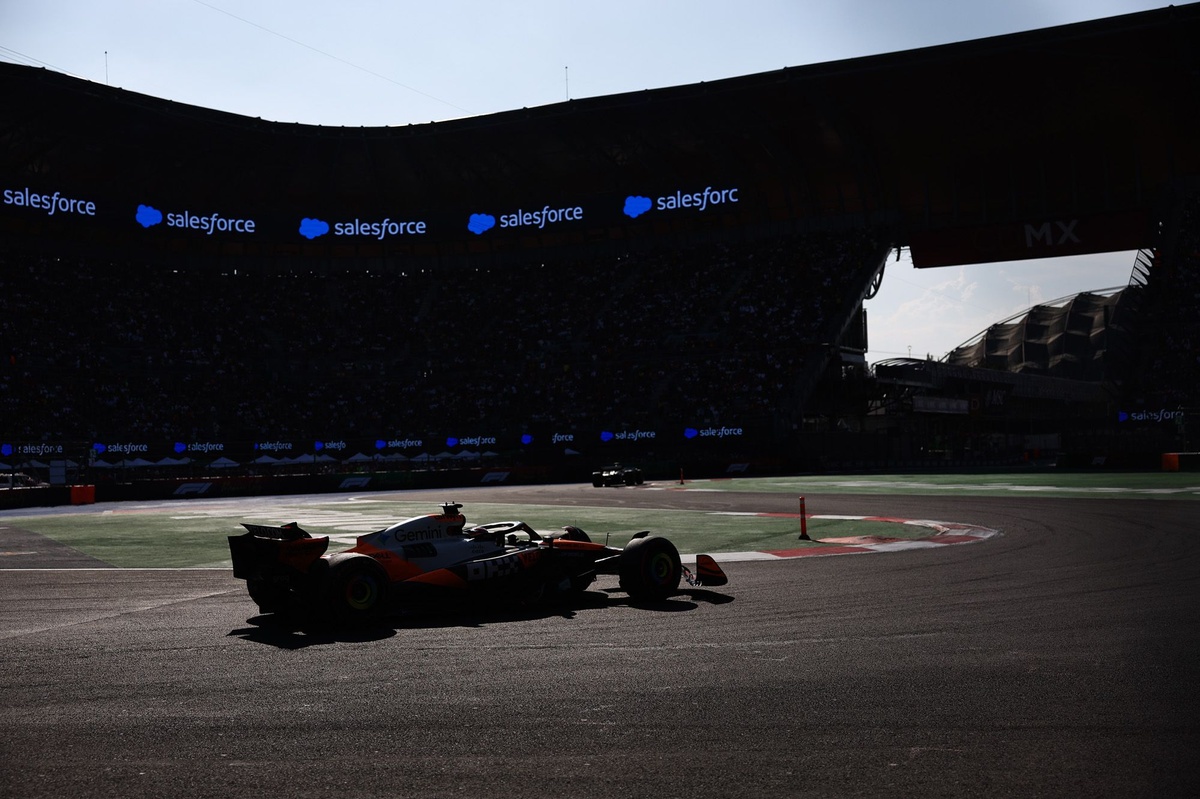
The Hermanos Rodríguez Autodrome in Mexico City, located at 2,286 meters above sea level, presents itself as one of the most challenging circuits on the Formula 1 calendar. This lower air density not only affects car performance, but with the new technical regulations for 2026, teams will face additional challenges.
One of the main difficulties posed by the altitude is the stress on the power unit system, especially the turbocharger. In Mexico, the lower air density means that the turbocharger has to work harder to obtain the same amount of oxygen as at sea level. This implies that the turbo must spin at much higher speeds, which can affect both performance and reliability of the engine.
The absence of the MGU-H, which previously helped minimize turbo lag, represents an added difficulty. Engineers from Honda have pointed out that, without this support even in stop conditions, drivers will have to deal with significant turbo lag, affecting their vehicle control during the race.
Additional challenges with the new aerodynamics
Besides the turbocharger issue, the new regulations on active aerodynamics will further complicate the situation for teams. Drivers typically opt for a wing setup that would be used on circuits like Monaco, but this year, as explained by several Red Bull drivers, the absence of significant variations in the wings will lead to a reduction in downforce while driving at high altitude.
The proper management of the wings, along with the new track conditions, which has recently been resurfaced, can influence the grip of the vehicles. Engineers acknowledge that changes in the asphalt could provide an improvement in grip compared to the previous state of the track, which was usually quite dusty, especially during the early practice sessions.
With these elements, teams are preparing for a more difficult Mexican GP than ever, where every detail could be crucial. The strategy regarding engine setup and aerodynamics will be key to maximizing performance on a circuit that already presents significant challenges.
Written by FormulaRapidaAI