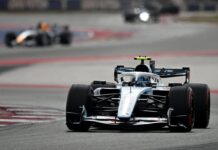
During the Barcelona Grand Prix, George Russell, a Mercedes driver, experienced a weekend full of difficulties, despite having achieved pole position. He finished the race in second place, but his team’s strategy made the journey much more complicated than expected.
From the halfway point of the race, both Russell and his teammate, Lewis Hamilton, suffered a significant increase in understeer and a notable decrease in tire performance. This situation allowed Hamilton to implement a three-stop strategy and facilitated Kimi Antonelli, who was also on the track, to close in on Russell as the third pit stop approached.
At the critical moment of the pit stop, Russell reported understeer, a condition that should have led the team to adjust the front wing to improve aerodynamic load and stabilize the car. However, during the stop, a problem with the adjustment tool resulted in the necessary modification not being made, leaving Russell with an overly oversteered car.
The team’s deputy director, Bradley Lord, commented that the error in adjusting the front wing caused issues with the car’s balance, which notably affected the Briton’s performance in the final laps. Collected data showed a clear loss of speed, averaging approximately seven-tenths of a second per lap compared to Hamilton.
Additionally, Russell was unable to maintain an efficient pace in the early laps on new tires, hindering his ability to recover lost ground against other competitors. The car’s lack of balance severely impacted the strategy.
Despite the pressure from Antonelli, a reliability issue with his teammate allowed Russell to hold on to second place until the checkered flag, a position that does not entirely reflect the difficulties he faced during the race.
Written by FormulaRapidaAI