The second half of the World Endurance Championship (WEC) in 2026 is expected to be full of intensity, with four races scheduled in just over two months. This reconfiguration of the calendar has been necessary due to the consequences of the war in Iran and has resulted in numerous alterations.
The void left by the cancellation of the Qatar round will be filled by a historic visit of the WEC to Barcelona, while Monza will take on the role of season finale in place of Bahrain.
Changes in the scoring system
These adjustments not only affect the calendar but also the competition itself. The six-hour races in Barcelona and Monza will award a maximum of 25 points to the winners, as is customary in WEC rounds. In contrast, the Qatar races of 1812 km and the Bahrain 8-hour race were events with extra points, offering up to 38 points.
This change in the scoring system is significant, as there are now 26 fewer points available, which is equivalent to eliminating a six-hour race from the championship. Furthermore, approximately 55% of the points available so far have already been distributed, especially after the celebration of the 24 Hours of Le Mans, which awards double points.
The importance of Le Mans
The cancellation of the Bahrain race makes the result of Le Mans even more decisive. Previously, a mediocre performance at La Sarthe could be compensated with a good result in the final Bahrain race. Now, that possibility is much more complicated, increasing the pressure on drivers and teams in the final rounds.
With four races ahead, the chances of victory remain wide open, as a total of 104 points can be gained, including an additional point for pole position in each round. So far, no team has surpassed 75 points, thus keeping both standings fully competitive.
New circuits, new challenges
This year, Barcelona and Monza present a very different challenge compared to Qatar and Bahrain. Barcelona has only hosted the WEC once in the 2019-20 prologue, while the competition has evolved significantly since then, with the introduction of the Hypercar category and the disappearance of the LMP2.
The Monza circuit, which has been part of the calendar between 2021 and 2023, offers more familiarity, as teams have recent data that may be key throughout its 5.7 km track. Ferrari, among other manufacturers, has utilized this track for comparisons between different models.
The championship contenders
Still midway through the season, two teams are tied at the top of the Hypercar standings: Robin Frijns and Rene Rast, with 75 points, along with the Le Mans winners, Kamui Kobayashi, Nyck de Vries, and Mike Conway. Sheldon van der Linde, with 65 points, occupies third place but cannot contend for the title due to his absence in the Imola race.
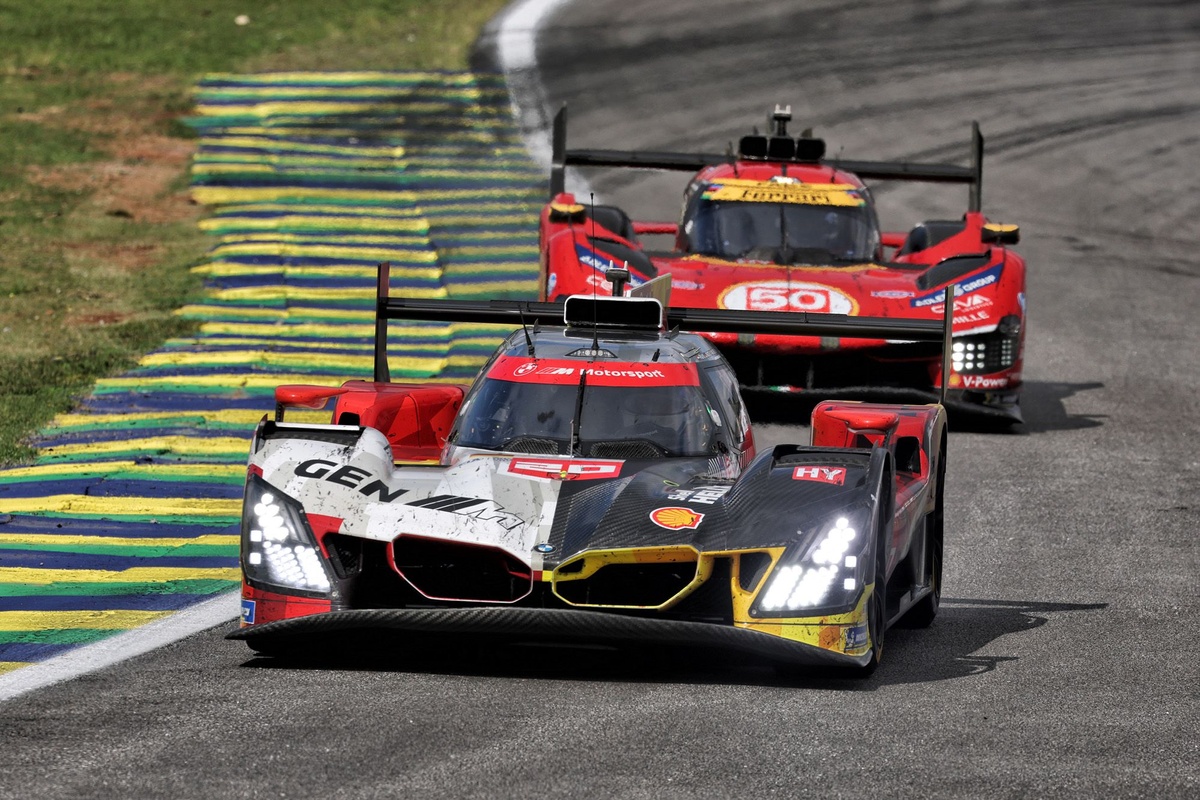
James Calado, Antonio Giovinazzi, and Alessandro Pier Guidi, also with 57 points, are close to the third position, closely followed by Brendon Hartley, Sebastien Buemi, and Ryo Hirakawa, who have accumulated 56 points. Therefore, both BMW and Toyota are the main title candidates, while Ferrari remains in the fight despite not having achieved any victories so far.
In the manufacturers’ championship, Toyota leads by five points over BMW, with Ferrari positioned 39 points behind the first place. Meanwhile, the #33 of TF Sport has dominated in the LMGT3 category thanks to its victory at Le Mans, thus leading the overall classification of the class.
Written by FormulaRapidaAI