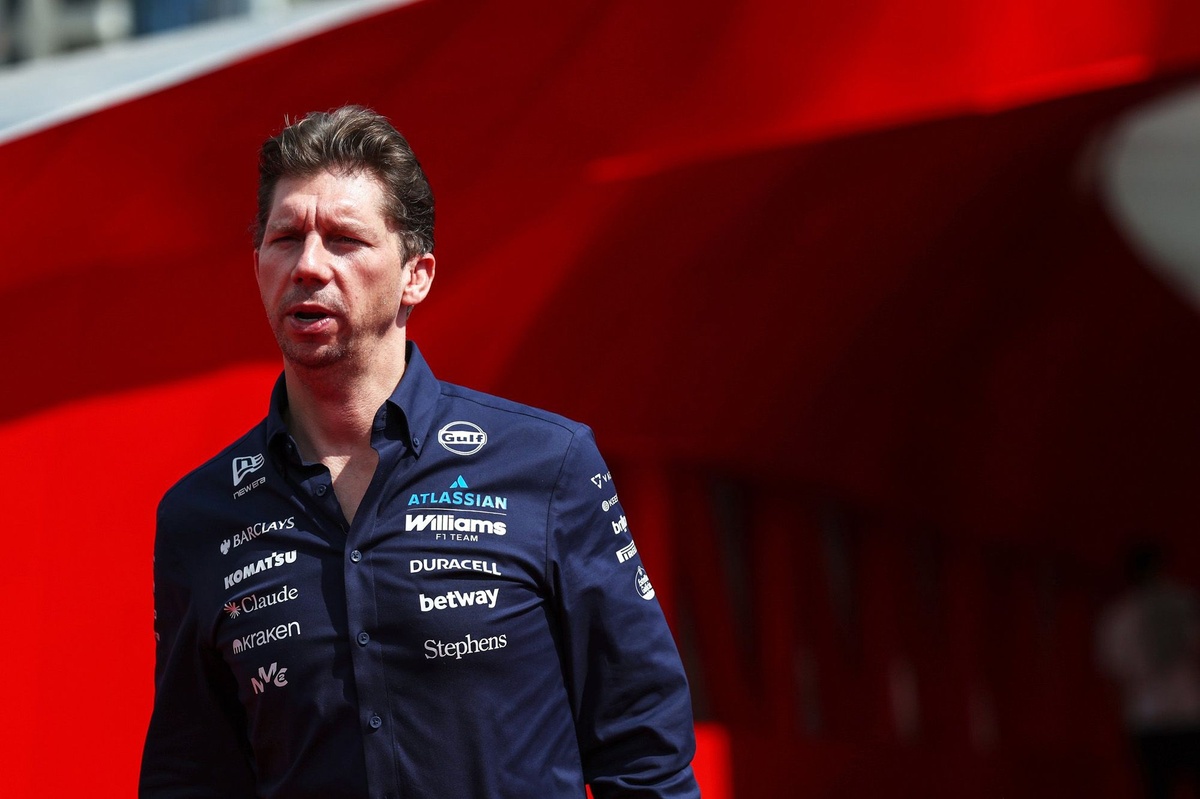
James Vowles, team principal of Williams, has recently explained his position on the need to review the cost cap in Formula 1. According to him, the current rules around capital expenditure continue to maintain a competitive advantage for the larger teams.
Since joining Williams in early 2023, Vowles has been one of the advocates for the proposal to extend capital expenditure exemptions for lower-ranked teams. Initially, a cap of $36 million over five years was proposed, but it was later modified to a variable scale format based on the teams’ championship positions. This allowed Williams, along with AlphaTauri, Alfa Romeo, and Haas, to obtain an additional $20 million for expenditures.
Currently, capital expenditure limits are integrated within an expanded overall cap of $215 million per season. This theoretically allows for greater annual capital spending, but it is subject to an amortization system that forces expenditures to be spread over a fixed period.
Vowles has indicated that he would need around $200 million to catch up with the leading teams, which would mean a reduction of $20 million in their annual cap over ten years. This restricts their spending capability both on car development and personnel.
Additionally, he has highlighted that teams that invested massively before the cost cap came into effect have an inherent advantage that cannot be overcome by the current rules. According to Vowles, the current competitive landscape is not considered fair, as the results of investments made seven years ago dictate the current performance of the teams.
Vowles has claimed that support for this proposal is broad, as the general consensus is that the category would be better if it were truly merit-based. However, he acknowledges that teams with these assets will hardly accept losing their privileged position.
Although the cost cap has contributed to financial stability, Vowles believes it has failed in its aim of reducing the number of competitive teams. He has observed that the effectiveness of prior investments continues to make a difference and that sporting equity has not been achieved.
Finally, he emphasized that the expenses associated with outdated facilities make Williams pay 30% more than the ‘Big Four’ teams for each part, which directly affects their competitiveness.
Written by FormulaRapidaAI