The debate over shared ownership in Formula 1 has come to life following Mercedes’ interest in acquiring a stake in Alpine. This situation has led Zak Brown, CEO of McLaren, to express his concerns to the FIA about the potential implications of such ownership structures.
Brown noted that the current scenario allows for uncompetitive collaborations between teams, including possible staff transfers and direct on-track assistance. One cited example was Daniel Ricciardo’s quick time at the 2024 Singapore Grand Prix, when he diffusely made a pit stop before the end of the race, thus stealing a point from Lando Norris, who was battling for the title with Max Verstappen.
The topic has resurfaced in conversations with Laurent Mekies, team principal of Red Bull Racing, who defended the independence of teams in racing. Mekies emphasized the rigor of the regulations regarding staff transfers and the rest periods imposed to avoid any kind of suspicion.
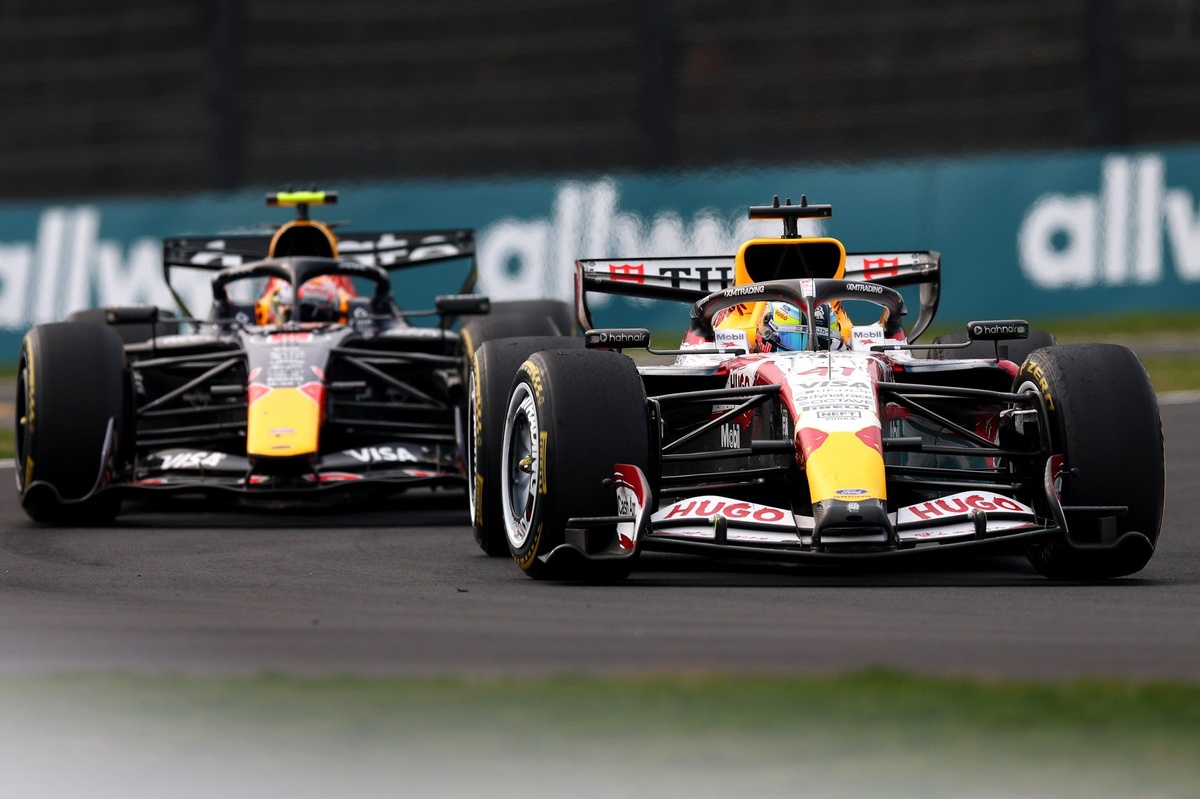
According to Mekies, competition between Red Bull and Racing Bulls has been evident in the races this season, and he urged the media to closely observe the on-track battles to see the lack of mutual assistance.
Australia: Intense start
Arvid Lindblad’s debut in Formula 1 was promising, standing out in an opening lap that moved him up to third position. Despite his ninth place on the grid, he showcased his defensive skills against Isack Hadjar, although ultimately both units were surpassed by Lewis Hamilton.
As the race progressed, Lindblad had to defend himself from Verstappen, who was recovering ground after a difficult start. The engineer’s instructions fundamentally asked Lindblad not to wear out tires too much, but no sign of cooperation was noted from the Racing Bulls driver.
China: Lawson’s Defense
During the Chinese Grand Prix, Liam Lawson demonstrated his competitiveness by overtaking Hadjar, who had his car slightly damaged. Lawson finished the race in seventh place, while Hadjar could not keep pace.
In the main race, Lindblad became Verstappen’s obstacle, who had to strive to control the situation. This rivalry between brand teammates highlighted the lack of mutual support, with Lindblad firmly defending himself on each lap.
Japan: A notable incident
The Japanese Grand Prix was even more illustrative, with Lindblad and Hadjar battling closely for several laps. Hadjar’s attempts to overtake were constant, but Lindblad did not make it easy even a millimeter. The tension became evident with complaints over the radio, indicating the internal rivalry.
Miami: A controversial moment
Another episode that sparked discussions was when Lawson let Verstappen pass during the Miami race. After a touch that compromised his advance, Lawson yielded his place to Verstappen, a decision that was later questioned by the team and the driver himself.
With the constant improvements in Red Bull’s car performance, competitive situations between Racing Bulls and Red Bull have become harder to find in recent races. However, Mekies maintains that the current season has not presented enough evidence to support suspicions of manipulation between the teams.
The true test will come as the end of the season approaches and championships are at stake. Until then, the battles on track demonstrate that Racing Bulls drivers do not seem willing to give way.
Written by FormulaRapidaAI