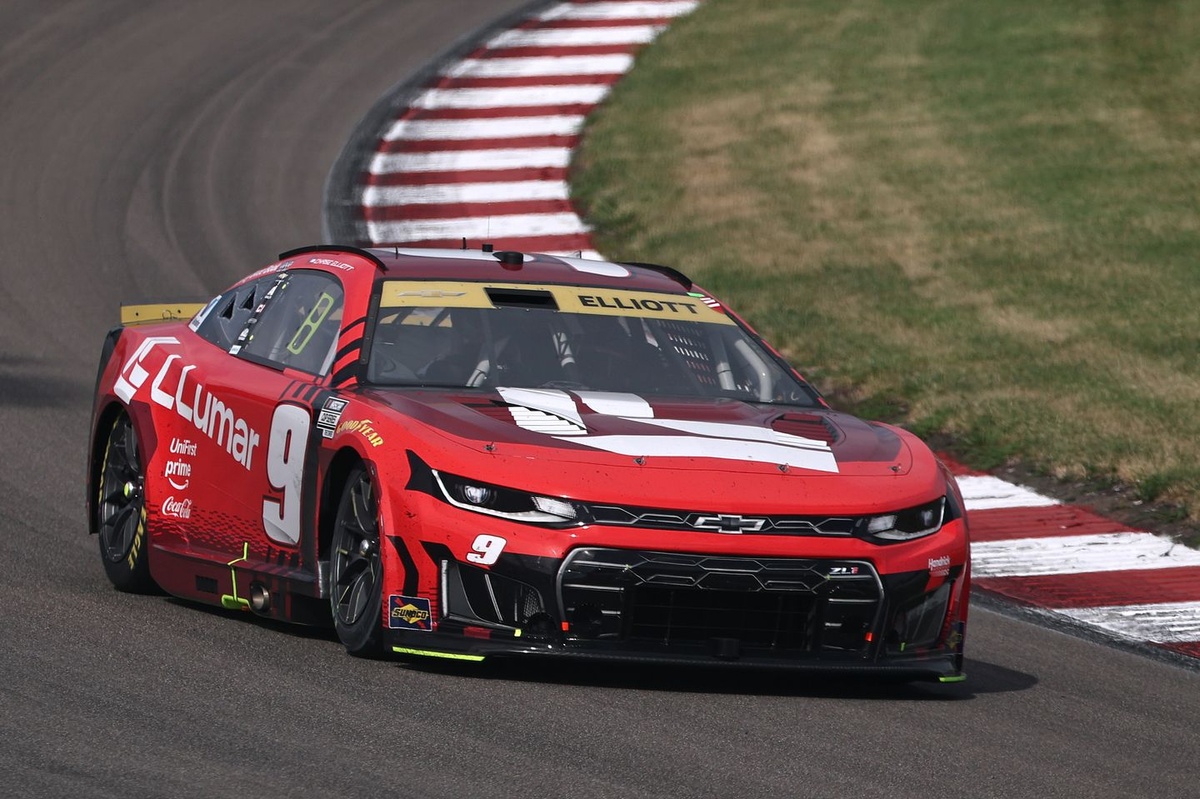
The Enjoy Illinois 300 race at the World Wide Technology Raceway was marked by a series of incidents related to brakes, a recurring theme on circuits with long straights and high-braking corners. This problem, which has been observed at other tracks like Loudon, Nashville, and Phoenix, intensified with the debut of the new short track rule package that elevates vehicle power and reduces aerodynamic downforce.
On this occasion, brake failures had a notable impact on several teams involved in the title fight. Zane Smith crashed heavily at the end of Stage Two due to a rotor failure. Ryan Blaney also suffered an accident on lap 155, while Chase Elliott failed his brakes, causing a collision with Chase Briscoe on lap 214. All three drivers were championship contenders.
Chris Buescher, another driver competing for the title, experienced a similar situation, and his crash caused the final yellow flag with just three laps to go. Several drivers complained during the race about having a long brake pedal and loss of brake pressure.
The crew chief for Blaney, Jonathan Hassler, explained that they underestimated the need for brake cooling, even though they had tried to take precautions in their approach. Denny Hamlin, the points leader, admitted he was also on the verge of a failure at the end of the race, indicating that brake safety was a constant concern.
On the other hand, Bubba Wallace did not experience any problems with his brakes during the race and managed to position himself in the top five. His team has worked on brake components over the past few years, allowing them to maintain a race day without incidents.
William Byron, who finished fourth, needed help from his crew chief Rudy Fugle to manage the state of his brakes, acknowledging that tracks with long straights are problematic. NASCAR rules allow teams to choose what types of brakes they will use, but safety in this area becomes a recurring point of debate.
Kyle Larson’s crew chief, Cliff Daniels, highlighted that the increase in laps during practice translates to higher brake wear. This, combined with variable temperature conditions, can significantly affect brake performance in the race.
According to Daniels, it should be considered to allow teams to make changes to brakes before the race to avoid incidents during competition. Finally, Jeff Gordon, the team supervisor, emphasized that restrictions in the rules complicated teams’ ability to adapt to the demands of the circuit.
Written by FormulaRapidaAI