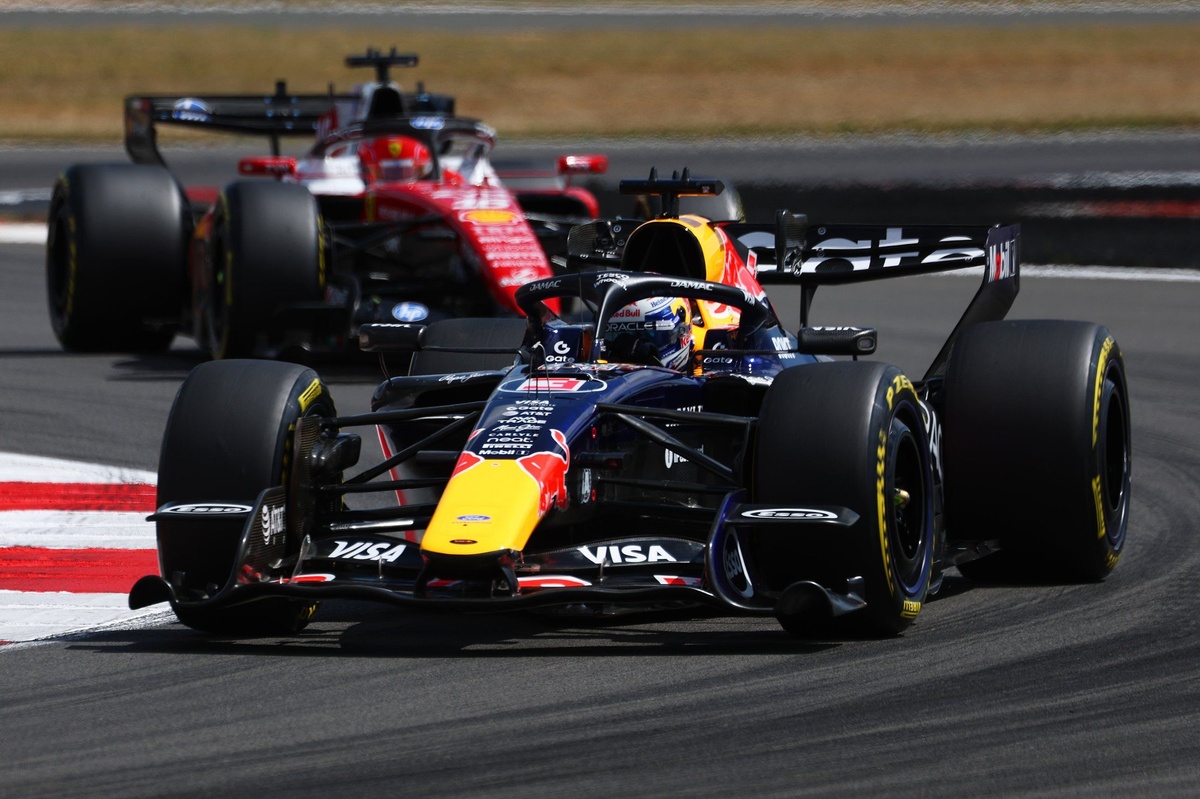
The FIA has initiated a review of the movable wings of Red Bull and Ferrari following recent incidents involving Dutch driver Max Verstappen during the races at Silverstone and Spielberg. The aim is to ensure that both teams comply with the established safety requirements.
Currently, the FIA’s request is focusing on these two teams as they have been the only ones to use movable wings, known as the “Macarena wings,” since their introduction at the Miami Grand Prix. Red Bull’s team principal, Laurent Mekies, explained that they will thoroughly investigate the causes of Verstappen’s accidents, making it clear that they will leave no stone unturned.
Ferrari presented its movable wing during preseason testing in Bahrain, aiming to reduce drag. Although they initially planned to debut it in China, it was ultimately launched in Miami. On the other hand, Red Bull unveiled its version, featuring a design that rotates in the opposite direction to Ferrari’s, along with greater aggressiveness in the aerodynamic opening it generates.
Although Ferrari has not recorded technical problems so far, the incident with Verstappen has prompted the FIA to request more information on the compliance with safety regulations by both teams. It is required that the wing transition does not exceed 400 milliseconds, and the FIA wants to verify that this is the case.
Following the failures, Verstappen described the situation as “super dangerous,” fueling safety concerns. The FIA plans to review current requirements and consider whether it is necessary to implement additional measures or new regulations, such as a possible ban on these designs in competition, although this is not the immediate intention.
Pressure on Red Bull is mounting, as the team must decide whether to continue racing with the movable wing in the upcoming Spa-Francorchamps Grand Prix. With other teams like McLaren also working on this type of wing, oversight of the safety of its implementation becomes even more essential in the current F1 landscape.
Written by FormulaRapidaAI