Formula 1 drivers face a new energy challenge at the upcoming Belgian Grand Prix, to be held at the Spa-Francorchamps circuit. Following the demanding layout of Silverstone, with long straights and few braking zones, the drivers are prepared for another tough weekend regarding battery management.
Fernando Alonso has warned that drivers may struggle with a lack of energy for much of the lap. According to him, it is likely that the cars will not have access to the necessary hybrid power, which will force them to compete with a power level lower than that of an F2 vehicle.
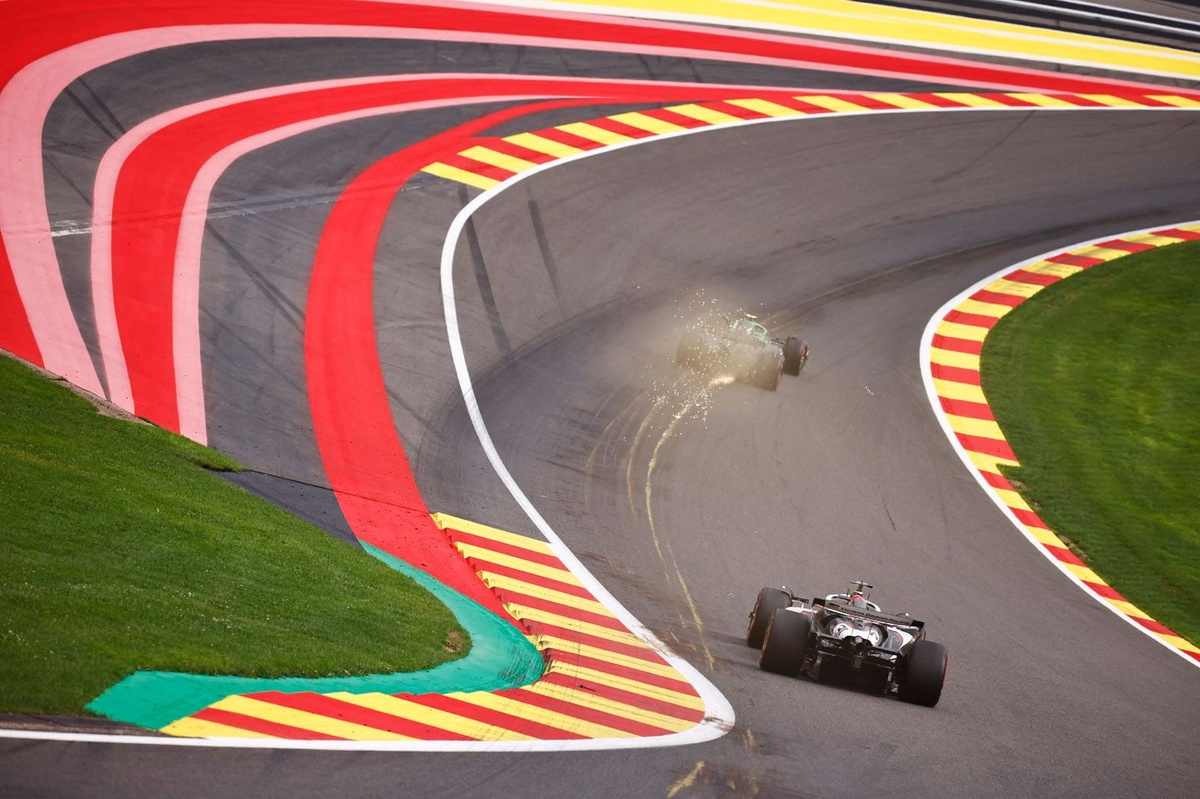
The Spa circuit is known for its demanding climbs and long straights, specifically the first sector that includes La Source, Eau Rouge, and Raidillon. Unlike Silverstone, where there were few opportunities to recharge energy, drivers at Spa will face the same challenge. The limited braking zones available will hinder energy recovery during the race.
Alonso has explained that drivers will need to maximize their battery in the first sector, which can be recharged at the Bus Stop chicane and La Source. However, the scarcity of braking zones in the high-speed sector will leave them with little energy for the rest of the lap.
Without the assistance of hybrid elements, F1 engines can only produce around 540 hp, compared to 610 hp for F2 cars. Some statistics indicate that F1 cars can reach up to 1000 hp when the hybrid system is used properly.
Despite this, Formula 1 cars will still be faster than F2 cars. Kimi Antonelli’s pole time at Silverstone was 1:28.111, while Rafael Camera’s in F2 was 1:39.690.
This concern regarding energy management has been expressed by several drivers, with Spa considered one of the most challenging circuits in terms of power needs. This poses a challenge for both Alonso and the rest of the grid, aiming to find a balance between their energy availability and the speed required on track.
So far, Formula 1 is working on solutions for energy management, with a change in the energy proportions between the internal combustion engine and the electric motor planned for 2027 and 2028 that aims to reduce dependency on hybrid components.
Written by FormulaRapidaAI