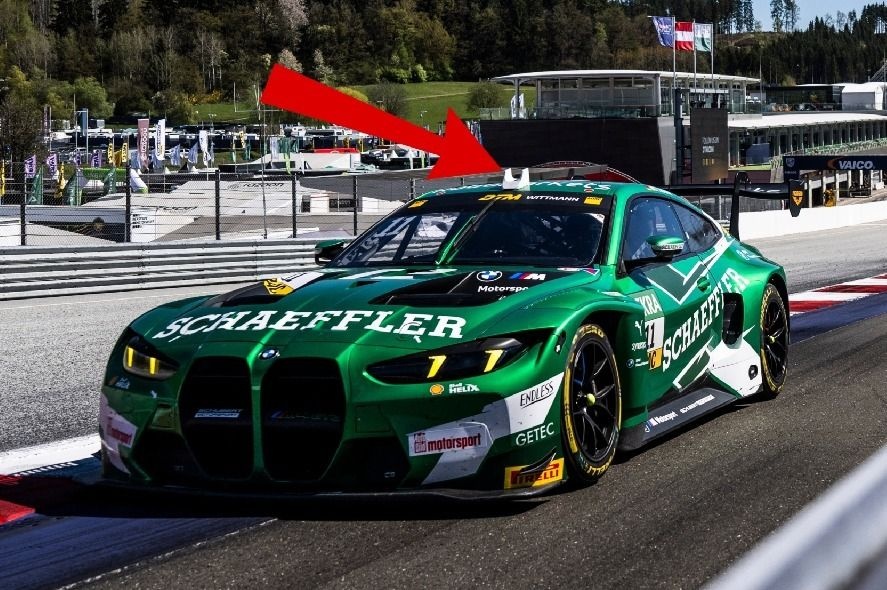
This season of the DTM has introduced a surprising novelty: a U-shaped antenna located on the roof of most vehicles, which caught attention during the official preseason tests in Spielberg in mid-April.
From the first race of the season at the Red Bull Ring, all cars have been equipped with this device, which transmits data at 5G speed. This new communication model allows for the transmission of large amounts of data in real-time and with almost no delay, marking a significant step forward in motorsport transmission technology.
The location of the antenna has been strategically designed to avoid interference with other signals. Furthermore, it includes an integrated router that connects to access points around the circuit, facilitating the transmission of images from the cameras inside the car through a dedicated wireless network.
Manufactured by Riedel, this technology is not applied only to the DTM, but will also be deployed in competitions such as the ADAC GT Masters and the GT4 Germany. Currently, not all vehicles are equipped with onboard cameras for television coverage, so some cars will use simulated units to balance weight.
The cooling system for the antenna is vital, as it is sought that, in the long term, each vehicle presents cameras for live television coverage, not just a third of the grid.
So far, video transmission has been carried out using conventional technologies and fiber optic networks. However, the use of 5G technology opens up new possibilities such as the integration of a single camera system for real-time data transmission, thus simplifying the process of material collection.
An interesting element is that, after the first test, many teams modified the position of these antennas to make them less visible. For example, in the Mercedes-AMG GT3, the antenna was moved to the rear of the roof.
Innovations of this kind could facilitate the future of the DTM and other competitions, with the aim of providing an enhanced audiovisual experience for fans.
Written by FormulaRapidaAI