The 24 Hours of Spa have established themselves as the most emblematic event in the GT3 racing calendar. However, their transformation into a GT fixture is a relatively recent phenomenon, gaining relevance from the year 2001. Since its revival in 1964, the competition has spent nearly fifty years as a benchmark in the world of touring cars.
During this long trajectory, the lines separating touring cars from GTs blurred on several occasions. For example, the Porsche 911 achieved three victories in the 1960s, and there are debates over whether the 1981 winning Mazda RX-7 was a touring car or a GT. Moreover, the triumph of the Nissan Skyline GT-R R32, known as Godzilla, in 1991 was an iconic moment in this era.
Nevertheless, the event was recognized as the touring car race of the year, standing out as the main event of the European Touring Car Championship (ETCC) from 1966 to 1988. Even with the disappearance of the championship, the race remained popular among manufacturers during the golden age of Group A, with a strong presence of BMW and its iconic M3 E30.
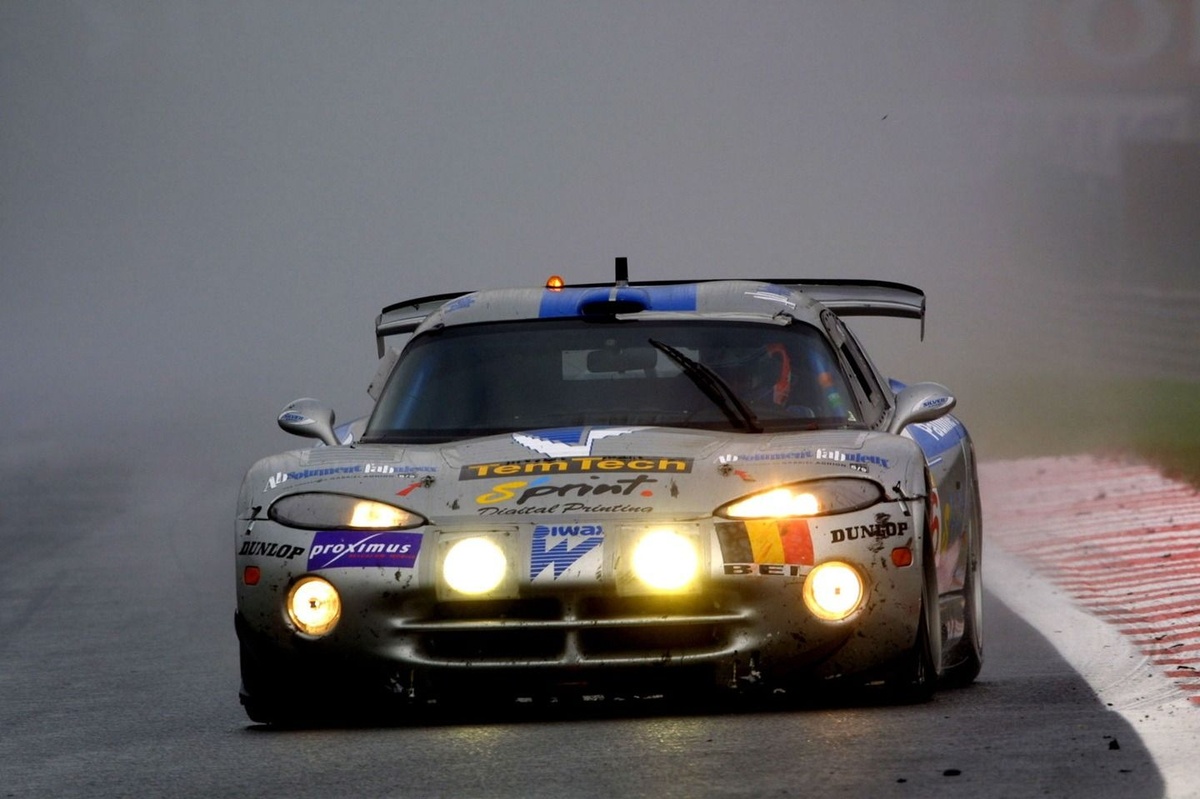
However, during the 1990s, the race saw its prestige diminish. Following the end of Group A regulations, there was an initial attempt in 1993 to position the recently renewed GT scene as the main attraction. At that time, GT racing was far from professional, with the Porsche 911 RSR as the only truly established platform, while most other cars were private entries spending more time in the pits than on track.
1990: A Necessary Turn
Faced with low participation, the Royal Automobile Club of Belgium (RACB) decided to return to touring cars in 1994, excluding sports cars from the entry list. Thus, the Super Touring category was born, which although representing a technical step back, initially worked. BMW made a great effort to return, dominating the Super Touring seasons.
However, the charm of the Group A era could not be replicated. Super Touring evolved into increasingly sophisticated cars, prepared for shorter races, which excessively raised costs. In this context, the RACB had to adopt new rules based on Group N to ensure participation from more vehicles between 1998 and 2000.
The Transformation Towards GT
After Peugeot’s consecutive victories in 1999 and 2000, the RACB decided to make a radical change. The organizers contacted the SRO Motorsports Group, ushering in a new era. At that moment, the conception of touring car racing was about to end, paving the way for a golden era of GT racing.
With the incorporation of GT races into the 24 Hours of Spa, starting in 2001, the event quickly gained significant importance. SRO spectacularly professionalized the GT world, and races with high-powered vehicles captivated public attention.
Logistical Challenges and Future Success
Convincing teams to participate in a 24-hour race was not easy, but SRO advanced. From 2001, the race became part of the FIA GT Championship, offering an attractive double points structure to attract participants. This change generated fierce competition, culminating in memorable moments such as the victory of the Freisinger Porsche 996 GT3 RS in 2003, which surprised everyone with an unexpected triumph.
Over the years, the popularity of the 24 Hours of Spa has grown exponentially. Currently, the event hosts more than 70 vehicles in a single category, bringing an unprecedented level of competition. The transition to a fully GT3 format has redefined the competition, generating tight races and diverse victories among brands.
Ultimately, the 24 Hours of Spa have achieved a level of professionalism that eclipses any previous stage. The strategic decision made in 2000 has borne fruit for the entire motorsport community and continues to attract fans from around the world, eager to experience the spectacle of GT racing.
Written by FormulaRapidaAI