The recent NASCAR race weekend in San Diego has stood out for its logistical uniqueness, with a key element: the need for an autonomous energy supply for all competition operations.
The circuit, located at Naval Base North Island, a major military installation, required organizers to ensure that their presence did not interfere with the Air Force’s preparations. The design of the circuit was strategically crafted to avoid massive civilian traffic through the facility, with fans positioned at the southern perimeter of the base.
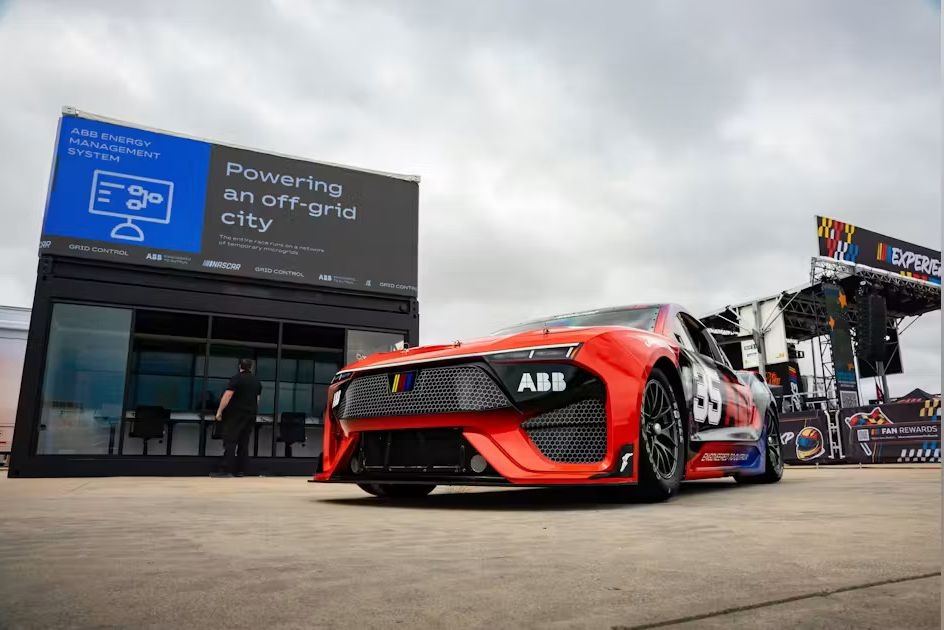
Given this situation, NASCAR had to collaborate with ABB to develop a viable and sustainable energy solution. Thus, a microgrid network was implemented, as explained by ABB’s vice president, Chris Shigas. ‘A microgrid is an autonomous energy system that manages the generation, transmission, and distribution of energy,’ Shigas remarked.
The microgrid infrastructure consisted of 30 energy storage battery systems operating in conjunction with diesel generators. The generators were activated only for two hours a day, while the batteries supplied energy during the remaining 22 hours.
The advantages of this technology were experienced throughout the weekend, which stemmed from developments made during urban circuit racing events in Chicago between 2023 and 2025. CJ Tobin, NASCAR’s vehicle systems manager, compared this situation to the movement of a ‘mobile city’ wherever more power is required.
The microgrid system ensured that all team competition activities, pit road, and fan experience had a reliable electricity supply, without depending on the base’s power grid. Tobin assured that this model can be implemented anywhere in the world for future races.
Additionally, this project was an example of NASCAR’s efforts towards becoming more sustainable. Through their NASCAR Impact department, the organization aims to achieve net-zero emissions by 2035, using renewable energy and sustainable fuels.
Eric Nyqusit, NASCAR’s impact officer, stressed that the goal is to find ways to optimize operations without compromising fan experience: ‘With a focus on energy efficiency, we seek to reduce dependence on fossil fuels while maintaining the quality of the competitive product,’ he added.
Energy performance data was provided in real-time to fans through an ABB exhibition, which included screens with live videos, advanced analytics, and various race perspectives.
Tobias mentioned that this experience was the first of its kind, with a commitment to increase transparency in future opportunities. ‘They want fans to have access to the information that underpins our decisions and system management,’ he concluded.
Written by FormulaRapidaAI