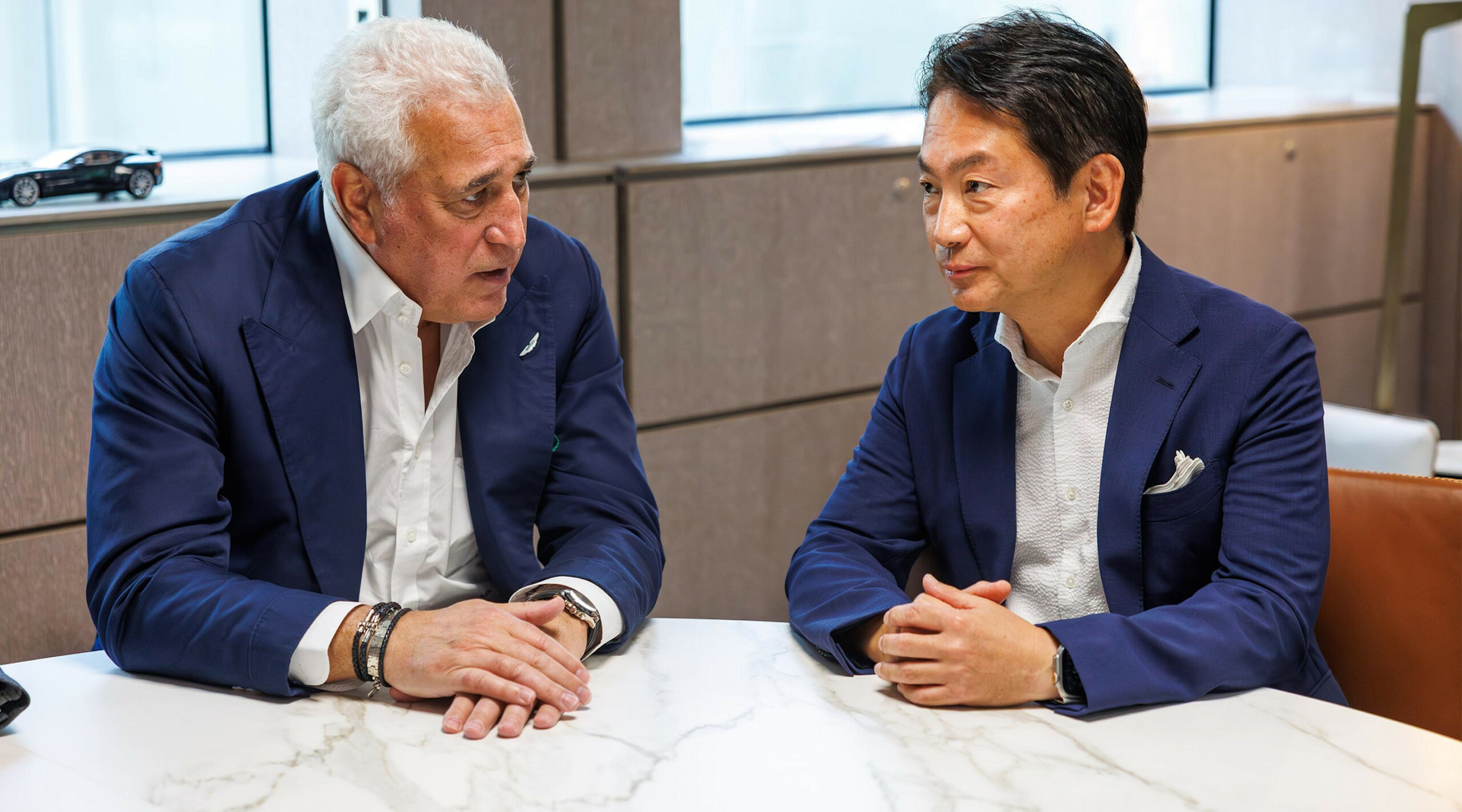
Koji Watanabe has opened up on Honda starting a new journey in F1 with Aston Martin and working with Andy Cowell plus Adrian Newey and more.
After eight years with the Red Bull family, Honda will move to Aston Martin under the new regulations from F1 2026 onward. Initially, the Japanese manufacturer had pulled out of the sport, forcing Red Bull to go their own Powertrains route in partnership with Ford.
In the meantime, Honda committed to the Aston Martin project under Lawrence Stroll. The British outfit moves away from Mercedes and becomes a works team under the guidance of the Canadian owner. The integration work has been ongoing for several seasons, but stepped up at the start of 2025.
It has been quiet so far about the project, with the first interview only published now after the 2025 F1 season under their ‘UNDERCUT’ series. But work at Sakura has been intense with Aston Martin engineers already immersed. Likewise, the Honda engineers are at home at AMR Technology Campus.
This is the big task for both Aston Martin and Honda, that is to create a ‘one’ environment where they can work together for one goal of the F1 world championship. Watanabe stressed on that aspect, wherein Cowell is also playing a key role under his new Chief Strategy Officer role.
The Brit volunteered to be the bridge between Aston Martin, Honda and Aramco/Valvoline ahead of the start of 2026 season. His power unit experience from Mercedes is key in this role. While there is no admission, but Cowell’s move and Watanabe’s answers kind of highlighted the gap.
And Cowell has stepped up to fill the gap for a smoother transition and work among all the parties involved. Watanabe talked about his re-union with Newey, with whom he worked at large in recent era to create a title-winning combination at Red Bull, which they hope to repeat at Aston Martin.
Watanabe also shared about the changes to the power unit and how it helps with Honda’s ethos to continue in the sport. He added on why they opted with Aston Martin, as he highlighted what a successful season will look like to him.
Here’s what Watanabe said –
Return to F1 for 2026, why Aston Martin –
Watanabe: “I think Honda probably can’t live without F1. Looking specifically at the technology, however, the power unit regulation changes for 2026 were an important factor in Honda’s decision to return to the sport. These regulations encourage a 50:50 output split between the internal combustion engine and the electric motor, with the latter nearly tripling in output from 120kW to 350kW. Add to that the requirement to use advanced sustainable fuels, and this becomes very much in line with Honda’s philosophy on future propulsion systems. It also fits with our business orientation. The pinnacle of motorsport is the place to refine our technology, improve our technical capabilities and stand on a world stage that will allow us to showcase all of this.
“This is very important for the future of Honda. We’ve always been careful in the partners we select. In this instance, I was very impressed with the team’s leadership and with the passion and vision of Executive Chairman Lawrence Stroll. He’s very competitive – always with a view to winning. It’s very impressive. You can see the desire to succeed expressed in the new facilities at the AMR Technology Campus, but also in the way the organisation has been strengthened over the past few years with experienced personnel. The commitment and focus of the team are very strong, and this was very attractive to us. Exciting too.”
Working with Andy Cowell –
Watanabe: “We have a very good relationship – Andy is someone I can call anytime and talk through whatever we’re doing in Silverstone or Sakura. Developing and supplying the power unit is entirely the responsibility of HRC, but of course, it is very useful that Andy is well aware of the challenges presented by developing power units and how sensitive and delicate these modern systems are. My respect for him and his achievements in the sport is very high. We have a lot of discussions, and whenever we’re setting goals for the power unit, naturally, he sets us some very ambitious targets, but it’s very helpful to have a senior member of Aston Martin Aramco’s leadership who is also an expert in power unit development. There has to be harmony between the chassis and power unit sides of the project, and Andy’s role enables that.”
Re-uniting with Adrian Newey, talks –
Watanabe: “We laughed a lot in the first meeting after he joined Aston Martin Aramco – it was very much a case of, ‘Well, here we are again!’ It’s very exciting that he’s here and, of course, there is huge respect for him and his capabilities. In terms of power unit development, we have our processes and timetable for making a power unit that is capable and competitive, and Adrian has been working from day one on doing the same for the chassis – so we’re working very closely and communicating a great deal at the point where those two things meet.
“Adrian is one of the people I communicate with frequently, and it’s often a quite intense exchange of opinions, suggestions, and feedback – but always with the focus on winning. Whenever we’re having a technical discussion about components or development, it’s always with the long-term focus on how we get the win. And that can be about anything: it might be a very detailed design issue, but equally it might be about competitor analysis, or how to manage people to get the best out of them, or even finance and using the limitations of the cost cap most effectively.”
Winning all that matters, getting everything together for Aston Martin –
Watanabe: “The focus is always on winning, but there is one thing I would add. Reading one of the previous UNDERCUT interviews, something that sticks with me is Adrian explaining his philosophy that this is all about people. F1 is a people sport. I agree with him on that completely. We talk a great deal about technology and development, but this all stems from human ideas and the passion and effort of people. This holds absolutely true for Honda. It comes back to the idea of being one team. It’s vital to trust and respect your partners and continue to improve together.
“Honda has supplied engines and power units to various teams over the decades. There have been days and years with very good results, but also days and years with poor results. Whatever happens on track, it’s important that we remain one entity. F1 can be… cruel. It’s a cruel business and sometimes, if results are not what you hope for, it’s difficult to improve – but it is absolutely vital to maintain the relationship of trust and respect with your partners.”
All-new power unit –
Watanabe: “The new engines don’t have the MGU-H – the element of the power unit that converts heat energy from exhaust gases into electrical energy. This means there will be some turbo-lag to handle. The other challenge is tripling the output of the electrical motor, while leaving the capacity of the energy store almost unchanged. The key factor here will be making energy management more efficient. It’s the most difficult technical challenge in the new regulations. Efficiency is going to be the decisive factor in F1’s new era, and at Honda, we take pride in having the world’s most advanced battery technology. It’s going to be important to leverage this strength while also enhancing our energy management performance. There is also the power unit cost cap to consider, which will be $130 million USD per year from 2026 and covers all costs related to the design, production and supply of the power unit. It’s a very serious subject and a significant change in how a power unit supplier will operate, and comes at a time of these major technical changes.
“I’m confident we’re going to deal well with these challenges. Honda has been accumulating experience in F1 since 1964, and we’re confident that, working together with Aston Martin Aramco as one team, we can be very competitive in F1’s new era. Moving to a PU with a 50:50 split means we have to improve the efficiency of how we generate and store more electrical energy – but we also have to determine where and how much of it is used. This isn’t new: the current power units require careful management of where energy is recovered and where it is deployed around the circuit – but it becomes more critical in 2026. The patterns of energy use differ from corner to corner, and a single circuit might have thousands of energy use patterns. We have developed software in-house at HRC to manage more than 20,000 parameters of data stream coming from the power unit to define the best energy-use patterns. This is not the sort of work that gathers a lot of attention publicly. But, in modern F1, where track testing opportunities are limited, the digital technologies and simulations we are developing are critically important – particularly so for 2026, where the increase in electrical energy makes the management of energy recovery and energy deployment more complex. It’s a significant technical challenge; at the moment, it’s perhaps the most significant of the project.”
Supplying one team, in future –
Watanabe: “For the moment, we’re not considering supplying any other teams. We want to concentrate on winning with Aston Martin Aramco. In the future, if there are benefits to supplying multiple teams, in terms of the feedback that provides, then yes, of course it is something we would consider.”
Sustainable fuel –
Watanabe: “Going to a 100 per cent advanced sustainable fuel is important for the sport and has wider implications for achieving a sustainable world. As a global manufacturer of passenger cars, achieving carbon neutrality is a very important issue for Honda. Alongside our technical cooperation agreement with Aston Martin Aramco, we have another with Aramco and Valvoline, and are working very closely together to develop both cutting-edge sustainable fuels, but also cutting-edge lubricants – this is also where Andy comes in in his new role as Chief Strategy Officer. Honda is sharing its accumulated knowledge of racing fuels and lubricants, and we’re developing some very advanced technology together.”
Successful campaign will be what –
Watanabe: “Definition of success… for me, 2026 is a year to ensure the partnership we have created between Aston Martin Aramco and Honda is functioning as planned, as one integrated team. We need to ensure we have the values we have aimed for and that we achieve our performance goals. The thing we can’t predict, and is beyond our control, is the status of our competitors. Before we know that, we can’t talk about anything beyond meeting our own internal goals for the season. Of course, in the longer term, the ultimate goal of this partnership, and our definition of success, is winning the World Championship.
“It’s very important to take a long-term view of this. Our relationship with Aston Martin Aramco is going beyond a technical collaboration – we are sharing a common vision. There is a lot of passion in the team at the AMR Technology Campus, but also a great deal of quality. Pair that with Honda’s development skills and ability to provide winning power units, and we have the potential to be successful in F1, not just in 2026, but also ’27, ’28 and beyond. We are on the eve of something very special.”
Here’s Honda releasing sound of 2026 power unit: https://x.com/HondaRacingF1/status/1999426305750638690?s=20