


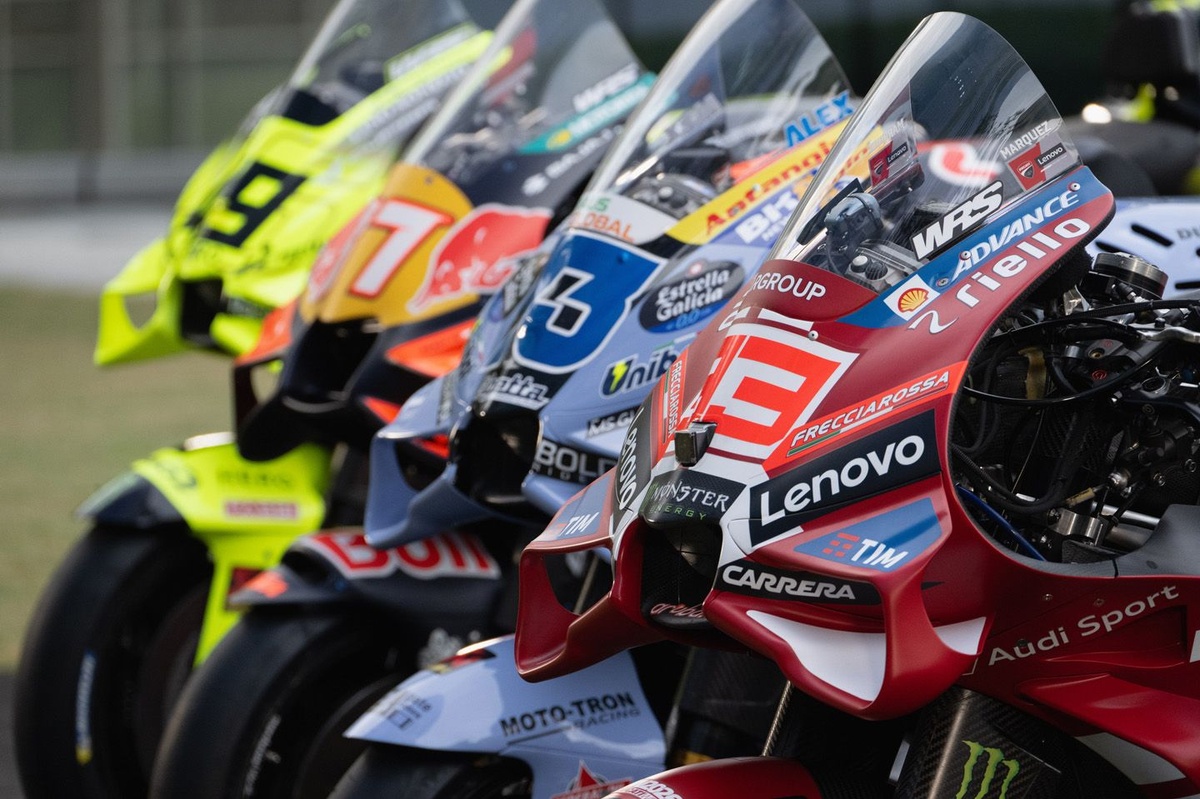
With an important regulatory change set for 2027, MotoGP approaches a new chapter marked by a significant review of technical specifications. While Formula 1 competitions grapple with the adoption of new hybrid regulations, the motorcycle category is also preparing to face its own challenges regarding its evolution.
MotoGP bikes have maintained a certain stability in recent years, with 1000cc engines introduced in 2012 and Michelin as the official tire supplier since 2016. However, the 2027 regulations will bring radical changes in these aspects. The current engines will be replaced by 850cc units, while Pirelli will be incorporated as the new tire supplier.
Furthermore, the designs of the bikes will experience significant changes with aerodynamic restrictions and the elimination of height adjustment devices. This restructuring represents one of the most radical technical changes in modern MotoGP history and has motivated the five manufacturers to increase their investment to develop their new bikes while also maintaining the current ones.
After the start of the 2026 season, several brands have already begun working on their models for 2027. KTM, for example, was the first to test its engine of this new generation at the Jerez circuit. Honda and Yamaha have also started tests of their engines, while Aprilia and Ducati are expected to train with their prototypes during April.
Sebastian Risse, the technical director of KTM, commented that the new regulations present both a challenge and an opportunity. The key to success will be ensuring that the engines, chassis, and tires work in perfect harmony, especially with the reduction of both power and aerodynamic force.
One of the major questions is how Pirelli tires will behave. Although tests have been conducted with current bikes, both the final specification of the tires and their interaction with the new bikes remain uncertain. Risse indicated that the effectiveness of the new designs will be crucial to avoid performance disadvantages.
As aerodynamic specifications are reduced, engineers will attempt to maximize the efficiency of their designs to ensure an attractive competition. However, Risse emphasized that aerodynamic force is not the only priority, as tire performance also significantly influences how each bike holds up on the track.
In 2027, riders may face bikes that are slower on certain circuits, although Risse believes that on many tracks the new models will not necessarily be slower than the current ones. The first official tests for the 2027 season will take place in Brno next June, where riders are expected to try their new machines with Pirelli tires, followed by other private tests to accelerate development.
Awaiting the final definition of tire specifications, the MotoGP industry is on high alert to adapt to the new changes and ensure a competition that maintains its essence of excitement and spectacle.
Written by FormulaRapidaAI
SourceID: SRC_5c8289da05dbb4c22c1c7613a1bf8261c128a19d