


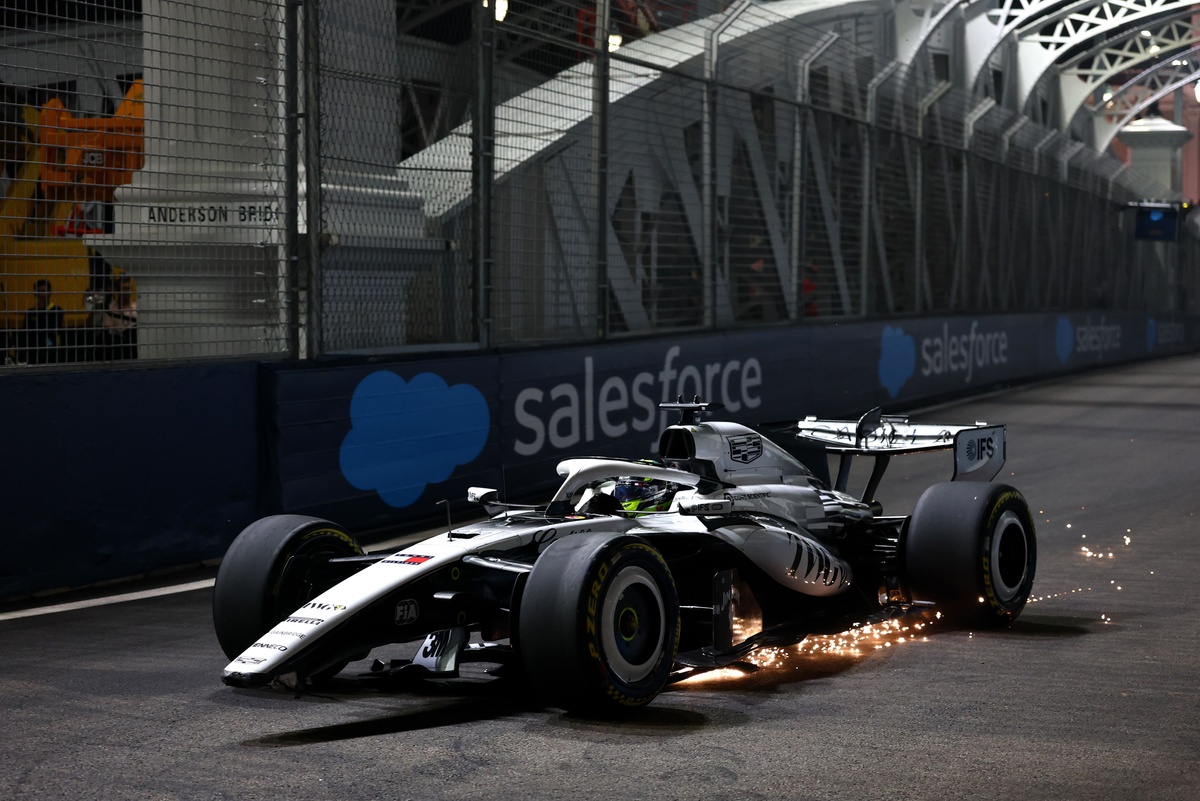
The sprint qualifying of the Singapore Grand Prix has been marked by a significant control error that has frustrated several Formula 1 teams. Aston Martin is evaluating its options to act in response to the situation.
During the first segment of qualifying, a red flag had to be raised to clear debris from Sergio Pérez’s front wing. When the session was restarted, a human error in the race direction caused the push-to-pass mode, which normally activates a power boost during qualifying, not to be reactivated. This led to several drivers noticing they had less power than usual.
A race official attempted to correct the error and reactivated the mode for 27 seconds before deactivating it again. As a consequence, the results of the first round of the sprint qualifying were seriously affected; some cars set their best times during the first part, while others could not improve their records without that power boost.
Among the most affected drivers are Arvid Lindblad, Lance Stroll, and both Williams cars, all eliminated in the first round. Sources from Motorsport.com indicate that Williams made a request to race control to allow all 22 cars to participate in the next round, but it was denied as the stewards were unsure of having the regulatory capacity to do so.
Additionally, another request to repeat the first round could not be addressed due to a lack of available tire sets.
The FIA single-seater director, Nikolas Tombazis, met with the affected teams and drivers, and both Williams and Racing Bulls expressed their frustration, although neither team intends to protest the results. Aston Martin, on the other hand, wants to keep its options open depending on whether the FIA takes any corrective measures.
The situation marks the second significant error in two consecutive weeks, after the Bahrain race in Malaysia was delayed due to a software issue with the power control systems.
The FIA error is not related to a separate timing issue controlled by F1 management, which did not log several lap times during the first round. The lack of reliable lap times created additional confusion among drivers about whether they had done enough to advance to the next round.
The FIA issued an apology after the error, acknowledging that the human mistake affected the performance of certain cars based on the timing of their lap and their position on the track. The subsequent segments of qualifying were not affected.
Written by FormulaRapidaAI
SourceID: SRC_88d541addf79e3646b0d44d6aa6a0dc3a2787ade