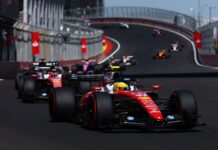
One year after the dismissal of Christian Horner, Red Bull Racing has experienced significant changes, but without revolutions. In the Milton Keynes team, many aspects have varied, but the pressure on the whole remains intact.
On July 9, 2025, Horner’s surprising dismissal shocked everyone in the Formula 1 world. After two decades of success, the team found itself embroiled in a complex internal political struggle. Amidst this scenario, Laurent Mekies took the reins of the team, intending to create a more balanced structure and avoid power concentration.
Once in management, Mekies prioritized understanding the team’s internal workings, avoiding immediate drastic changes. Although many of the professionals who brought success to Red Bull remain in their positions, Mekies recognized that the focus on subtle improvement would be key to maximizing the team’s potential. “I like working with the best people in the world at what they do,” he declared in his first public appearance.
Among the implemented changes, Mekies adopted a more technical approach and fostered a more intense dialogue among engineers. This allowed the team to find solutions to some handling issues with the 2025 car, helping Max Verstappen to compete until the end against McLaren.
Future Challenges
However, Red Bull faces significant challenges with the imminent review of regulations in 2026 and the creation of its own engines. The Red Bull Ford Powertrains, under the direction of Ben Hodgkinson, has exceeded expectations with a powerful V6 engine, although much work remains on the electrical side and on the procedures for launching the new RB22 model.
Nevertheless, its privileged position as a manufacturer might result in limitations for engine improvements, as it has been determined to be the most powerful on the grid. Red Bull has contested this decision, but the latest examination reports have confirmed the initial findings of the FIA.
A New Driver on the Horizon
Moreover, the addition of a new driver has brought a new dynamic to the team. Isack Hadjar, a former junior driver for the team, has proven to be a safe bet, achieving promising results during his first season at Red Bull Racing. With a third-place finish in the Melbourne grid and a remarkable performance in Monaco, Hadjar has broken the mantra of the ‘second driver syndrome’.
However, both Hadjar and Verstappen have experienced difficulties with the car’s performance, fueling speculation about the future of the Dutch driver, who remains a highly sought-after asset on the circuit.
A Path Toward the Future
With the departure of key personnel after Horner’s dismissal, Mekies faces the task of maintaining team cohesion while working to build the fastest car. If he manages to convince Verstappen of the team’s long-term commitment and that he can fight for the title again, everything could fall into place.
Competition in the world of Formula 1 constantly demands adaptation and innovation, and Red Bull Racing must demonstrate its ability to face future challenges and stay on the podium.
Written by FormulaRapidaAI