


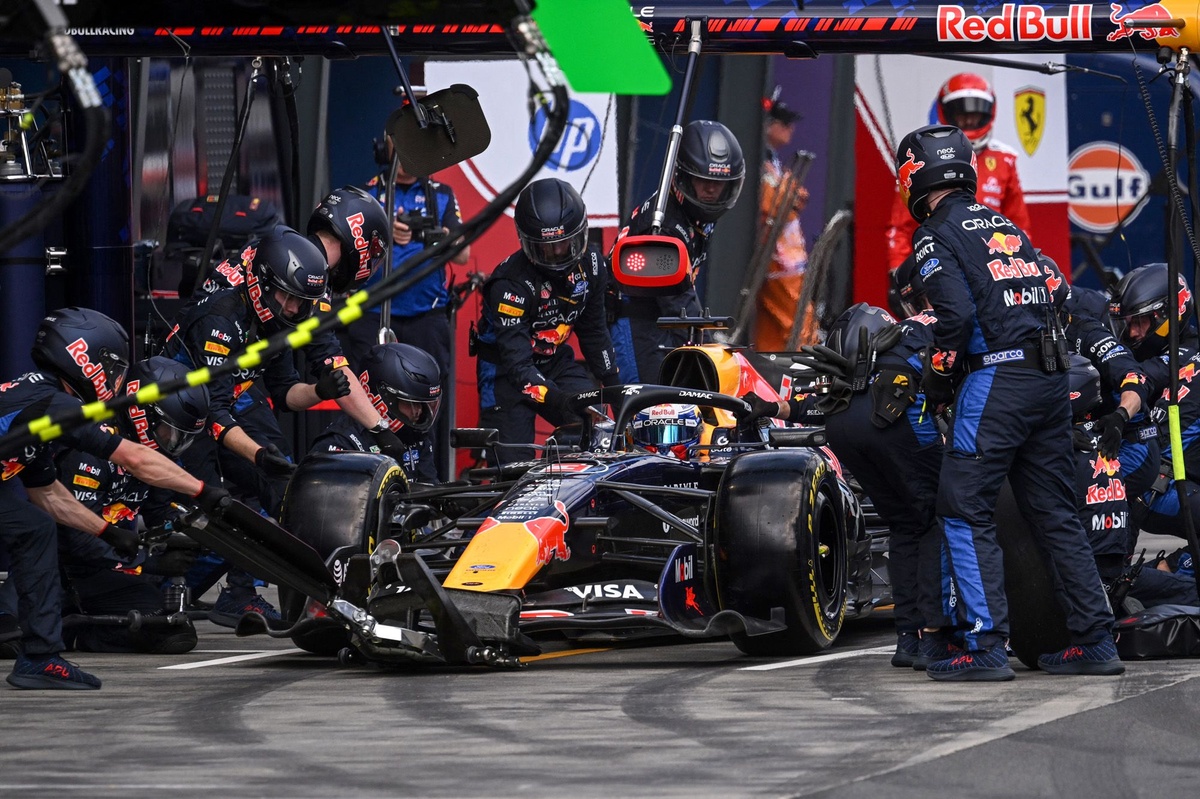
The 2026 Formula 1 season comes with the alarm that races could be limited to a single stop. This situation became evident in the first two races, held in Australia and China, where the Mercedes team dominated with a one-stop strategy.
The debate about stop strategies —one versus two— has been a recurring theme over the years. A good example goes back to the 2019 Hungarian race, where Max Verstappen couldn’t secure victory with a single stop while Lewis Hamilton, with two stops, triumphed. Today, with the new regulations and the decrease in tire wear, the trend towards one-stop races is concerning.
One of the reasons for this change can be attributed to Pirelli’s work, which has opted for more durable tires, eliminating the softer compound (C6) and limiting itself to a range from C1 to C5. Additionally, the new regulations have made the cars lighter, with a minimum weight reduced by 32 kg, resulting in lower loads on the tires.
Mario Isola, head of motorsport at Pirelli, has indicated that they are willing to adjust the tire selection to create more strategic possibilities. He commented that the goal is to maintain competition similar to the previous year, with options for either one or two stops, depending on tire durability.
Isola stated that the performance of the new cars may vary throughout the season, which could influence stop strategies. If teams can develop faster cars, this would imply more stress on the tires and could make the current selection optimal.
With the new regulations introduced, 2027 may promise to be a key year, not only for Pirelli but also for the teams, who will need to constantly adapt to changing circumstances at each stage of the season.
Written by FormulaRapidaAI