
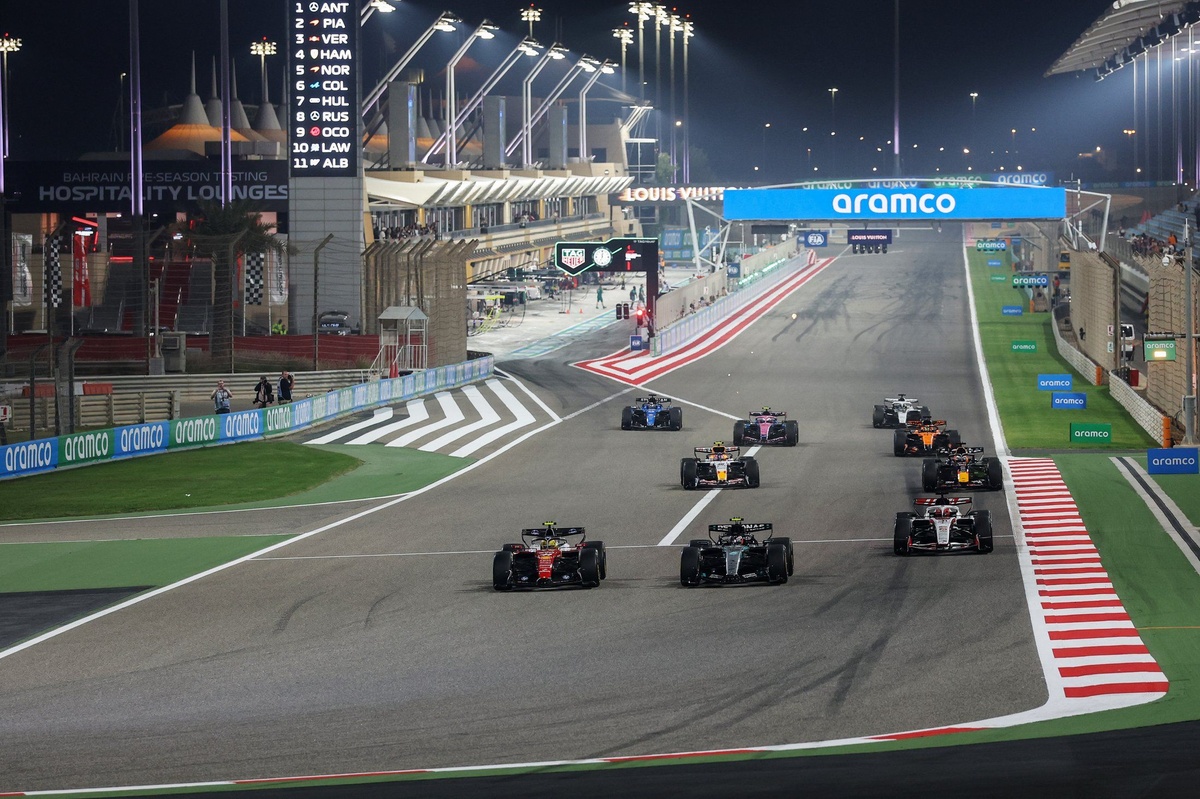
Formula 1 ventures into a new era with the most extensive regulation in its history, which includes significant changes to the chassis and power units starting from the 2026 season.
The chassis of the vehicles are now approximately 32 kg lighter and feature less aerodynamic load, while the engines rely more on electric energy, with an almost equal division between the internal combustion engine and electricity.
Aerodynamic innovations
One of the main innovations is the emergence of active aerodynamics. The new configuration includes a ‘straight mode’ system, which allows the front and rear wings to open to reduce air resistance on straights. This new feature can be used throughout the race, differing from the previous DRS system, which had time restrictions.
Modifications to vehicle operation
There is also a return to ‘flat floors’ instead of solid effect surfaces, which previously generated more aerodynamic load. Additionally, the ‘overtake mode’ replaces DRS and is activated when a driver is less than a second away from the car in front, allowing for a controlled power boost.
Energy management
The term ‘recharge’ becomes fundamental, as drivers will need to learn to recharge the batteries during the race, a practice that involves reducing speed in certain parts of the circuit. This will result in significant changes in how lap times are optimized, and tracks will be categorized as ‘rich’ or ‘poor’ in energy.
Technical and competitive aspects
Superclipping allows cars to collect energy with the Peugeot MGU-K at full throttle, although this implies a momentary reduction in speed. The change in the ‘compression ratio’, reduced from 18:1 to 16:1, has sparked controversy due to its potential manipulation, while the issue of ‘turbo lag’ is reconfigured for the new regulation without the MGU-H, complicating race starts.
Team strategies
Finally, ‘sandbagging’, a technique where a team under-delivers during testing to hide its true potential, will continue to be a topic of debate in the early races of the season. Teams will need to find the right balance between hiding and revealing their strategies to maintain competitive advantages.