


In the universe of MotoGP, it is common for fans to attribute the successes or frustrations of a manufacturer to the quality of its riders. Some are considered exceptionally good in development, while others are accused of diverting engineers from their tasks. But what influence do riders really have on the technical evolution of the bikes?
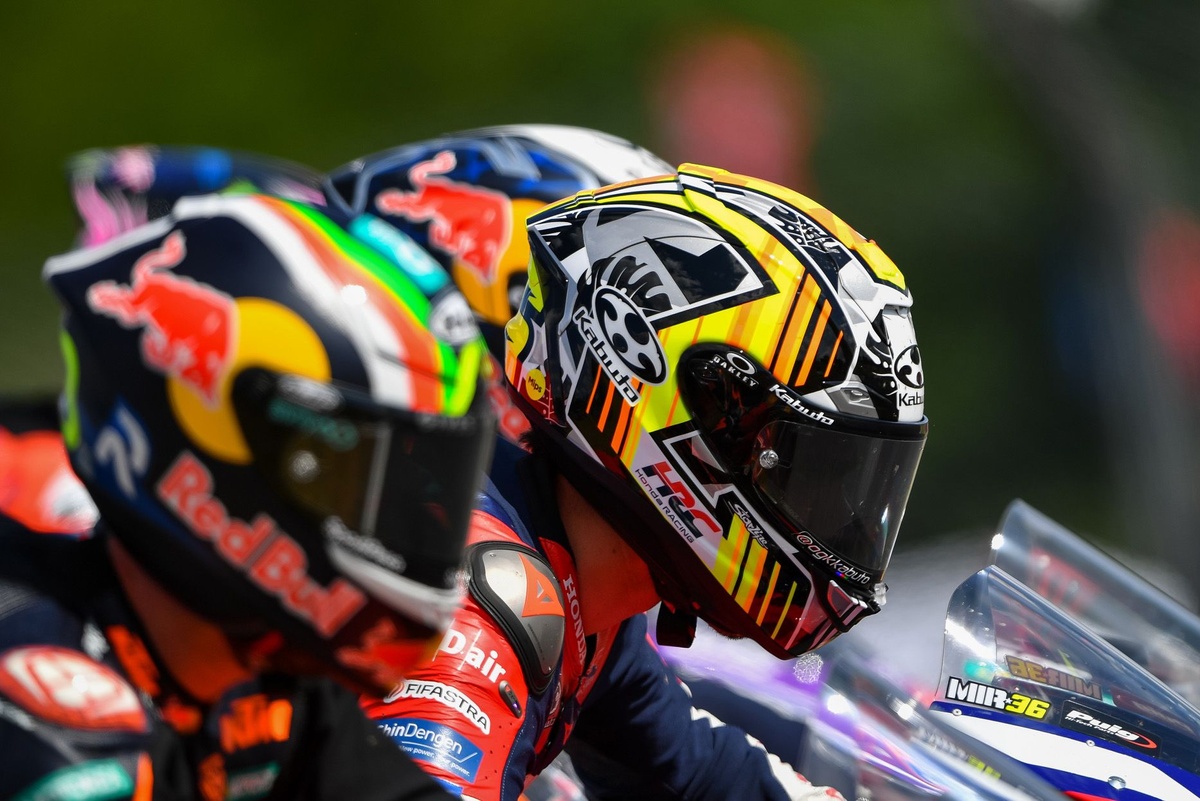
Joan Mir, world champion in 2020 with Suzuki, and currently a Honda rider, has accumulated a wealth of experience in developing innovations over the years. In his opinion, the main function of a rider is to provide accurate feedback, leaving engineering solutions in the hands of the bike designers.
“Normally, all riders want to go faster,” Mir commented in a recent interview. “We can describe what we feel about the bike, but we are not engineers. Maybe some riders think they are, but we are not!”
Technical development in the hands of engineers
Nicolas Goyon, current manager of the Tech3 team, has held various roles throughout his career, including data analysis and the role of chief mechanic. He agrees with Mir that, although the work of riders is crucial, innovative ideas primarily come from engineers.
“Engineers are responsible for creating the updates and developing the bike,” Goyon assured. “The role of the rider is fundamental, as they decide which parts to use and which competitive package to choose. However, the creativity of the engineers determines whether a bike is competitive or not.”
Despite this, riders do have a significant impact. When they return to the garage, they explain how the bike behaves and what features they would like to improve. “We can say, ‘I want the bike to rotate more at the back’, ‘I want a better feel at the front’, but we cannot say ‘I want a shorter swingarm'”, Mir added.
Example of Valentino Rossi
To illustrate this point, Goyon highlighted the famous transfer of Valentino Rossi from Honda to Yamaha. When Rossi arrived at Yamaha in 2004, he immediately won the world championship, thanks to his speed and setup knowledge, but Goyon believes the bike already had good potential that simply had not been utilized.
“You can’t go from a terrible bike to a winning one just because of a rider,” Goyon stated. “Valentino brought his speed and riding style, but he was not the one who developed the M1 to make it a winning bike.”
The importance of rider feedback
The development process is more relevant than ever with the new technical regulations set to be introduced in 2027. Manufacturers are designing completely new bikes with 850cc engines, lower aerodynamics, and new Pirelli tires.
Marco De Luca, head of vehicle dynamics at Aprilia, asserts that rider feedback is essential, especially with the updates on the tires. “We need clear communication about what they feel, what they want, and what they like,” he commented.
The synergy between riders and engineers
If simulations and data were sufficient, every manufacturer would build the perfect bike. However, it is the riders who determine whether a theoretically faster part is actually usable. Goyon emphasized that the rider’s feel is crucial, especially in the world of motorcycling, where even small differences can have a big impact on performance.
Additionally, Goyon believes that the best development riders are not always the fastest. During Marc Márquez’s dominant years at Honda, it was considered that Dani Pedrosa had significantly contributed to the bike’s development due to his exceptional technical sensitivity.
Finally, Goyon concluded that while riders influence the direction of development, it is the engineers who generate the ideas. “The rider is a key part of development, but it is not they who develop the bike.”
Written by FormulaRapidaAI
SourceID: SRC_177268f3cceb5089539942476b97c67f52a51641