


After the checkered flag fell at the Monaco Grand Prix on June 7, 2026, the final results of the race were immediately surrounded by controversy. The Alpine team requested a Right of Review, and five days later, the final classification was modified. Despite this, this change reopened the door to new appeals, with McLaren and Red Bull filing protests, while Mercedes also requested an additional review. A new hearing is scheduled for Saturday.
The driver Kimi Antonelli took victory, followed by Lewis Hamilton in second place. However, the fate of the third place on the podium remains uncertain. Pierre Gasly crossed the line in third position but was dropped to seventh, leaving Isack Hadjar from Red Bull to celebrate on the podium, although he was also bumped down to fourth place a few days later, with possible more changes on the horizon.
What really happened?
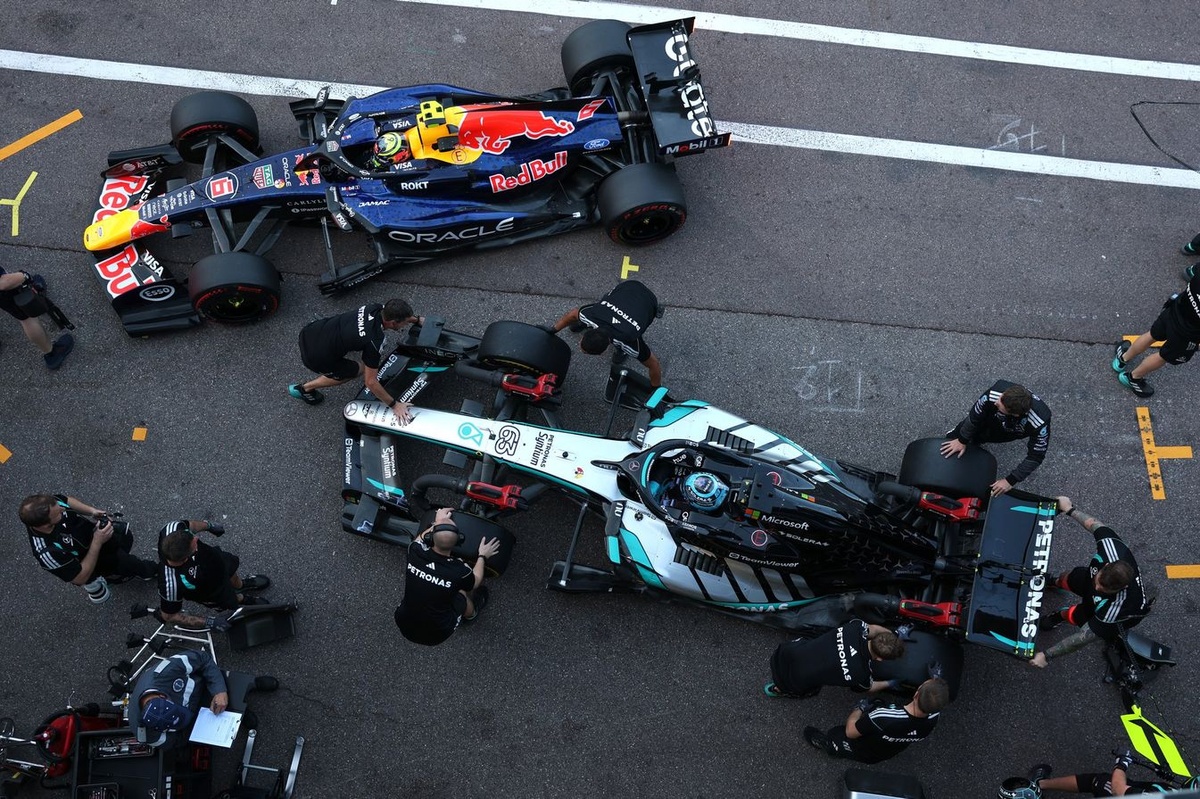
During the race, an unusual number of penalties were imposed for speeding in the pitlane. Five drivers, including Gasly on two occasions, received five-second penalties for exceeding the speed limit by less than 0.4 km/h. Five of the six infractions recorded only 0.1 km/h over the established limit.
It wasn’t until a few days later that it was discovered that many of the penalties may have been issued incorrectly, as Formula 1 Management admitted to an incorrect configuration of the pitlane timing system.
The problem is that, although the penalties were minimal, they had a significant impact on both the race result and the championship battle. Among the penalized drivers was also George Russell.
Who is responsible?
The responsibility here lies with the FIA, which manages the sporting aspect of Formula 1. However, in this case, it is practically a client of the official timing provider. The error occurred before the event, when the pitlane configuration was slightly modified compared to previous years.
The system measures the average speed between timing loops, thereby preventing teams from attempting to manipulate the system. However, in Monaco, one of the timing sectors appears to have been configured with an incorrect distance, causing drivers to commit infractions despite adhering to the actual limit of 60 km/h.
Why was only Gasly’s result reviewed?
There are two reasons for this. First, the FIA commissioners did not have a formal mechanism to automatically review each penalty. Only Alpine requested a Right of Review, so they could only reconsider Gasly’s case.
The main reason why Gasly’s penalties were annulled was the evidence presented by Alpine, including a statement from the FOM confirming the pitlane timing system failure. This evidence was not available until the Wednesday following the race, which prevented other teams from contesting the results immediately.
Why are teams protesting now?
The teams’ protests can be attributed to the FOM’s admission of the incorrect system configuration and the decision to cancel only Gasly’s penalties. The commissioners annulled the penalties of one driver without affecting those of others.
From their perspective, Alpine has gained an advantage from a system failure, while the other drivers continue to bear the consequences of the error. In Russell’s case, the incorrectly issued penalty could have cost him a spot on the podium and significant points in the championship.
What will happen to the other penalties?
It is impossible to give a clear answer. The commissioners have set an important precedent with the annulment of Gasly’s penalties, complicating the situation further. The fundamental problem is that there may not be a solution that satisfies all parties involved.
Alpine is satisfied with the current result, while Red Bull wants to restore Hadjar’s podium position. McLaren argues that Alpine’s decision “may create sporting inequity.” For its part, Mercedes continues to seek justice for Russell.
Is it easier to cancel the entire race?
No, not really. The regulations do not provide any mechanism to annul the result of an entire grand prix. Moreover, doing so would unfairly harm those teams that were not affected by this timing system failure, especially Antonelli, who won on total merit.
Of the total 22 drivers who started the race, only five were penalized for the pitlane, indicating that avoiding penalties was still possible. Teams could have adjusted their limiters to avoid the controversy.
When will all this end?
Maybe in Austria. Saturday’s hearing may not produce an immediate result, and any final decision is likely to leave some of those involved dissatisfied. With the classification of the Monaco Grand Prix still unresolved nearly two weeks after the race, it is already becoming one of the longest sports conflicts in recent Formula 1 history.
As a sector expert commented, the saga could drag on for months, and the only ones who could win are the lawyers.
Written by FormulaRapidaAI
SourceID: SRC_83dfd4ef2cb7e5e2e93e1b05b08d53b1c35cb859