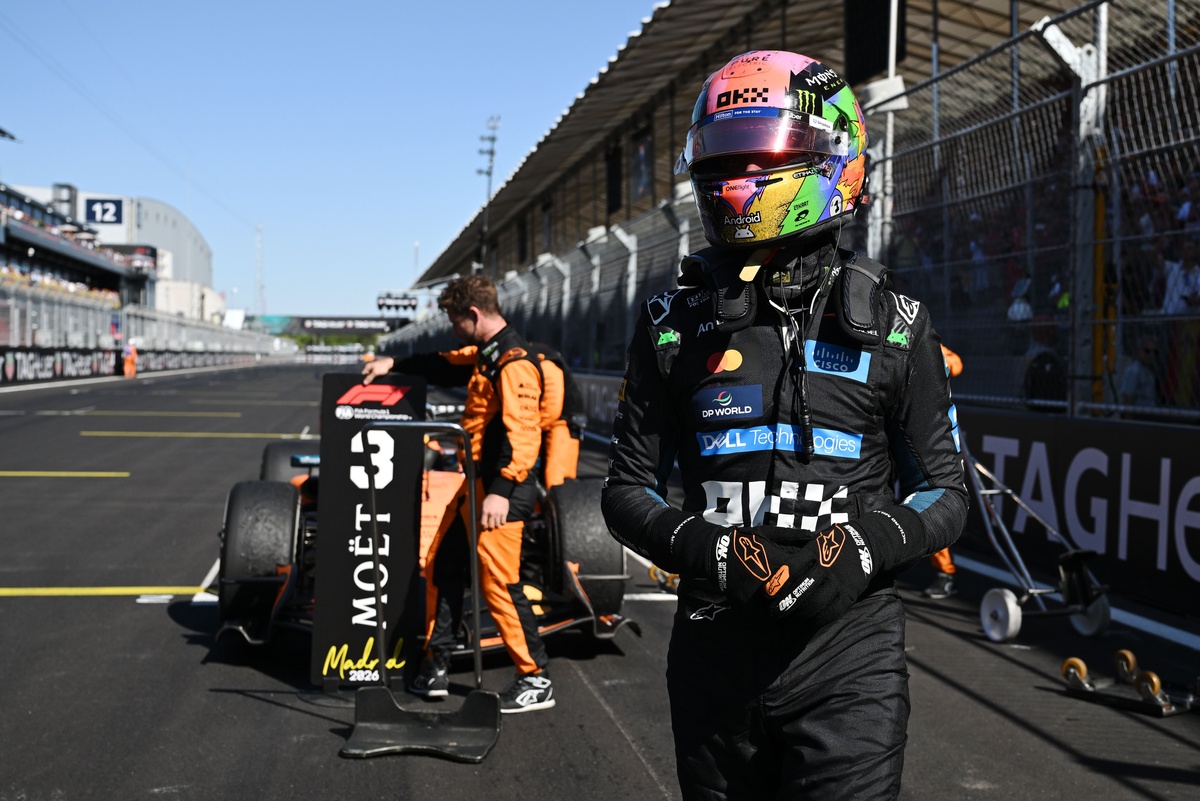
The recent Spanish Grand Prix highlighted the complications that can arise on track, with Lando Norris from McLaren as the protagonist of an unfortunate situation. The British driver lost a race he seemed to have won, without it being his fault or his team’s, all due to an ill-timed virtual safety car activated during the race as Norris was preparing to enter the pit.
The key moment was lap 14, when the retirement of Lance Stroll triggered this action, just before Norris entered the pitlane. This allowed his competitors, who could not match his racing pace, to stop advantageously while Norris was forced to settle for a third position.
This incident has reopened the debate on possible changes to the rules of Formula 1. Norris, during the post-race press conference, expressed his frustration: “There was nothing I could do to improve my situation. I started 1st, I led the race, and losing it so unfairly, I don’t think that’s the right way to win a Grand Prix.”
Currently, various options are being discussed to prevent situations like this from happening again. Norris suggested that measures could be put in place to ensure that all drivers have the opportunity to make their pit stop during a virtual safety car. “With what happened in Madrid, there are things we could do to make it fairer for everyone, but it’s a broader debate,” he stated.
Limitations of the Proposed Changes
Among the proposals presented, there is the idea of closing the pitlane during a virtual safety car. While this solution may seem effective in theory, in practice it would be problematic. Closing the pitlane entrances during an incident could compromise safety if there are damaged vehicles circulating on track.
Another proposal would allow only damaged cars to enter the pits. However, this raises difficulties in defining what constitutes an acceptable damage for a pit stop. Drivers could seek ways to force damage in order to be able to stop.
The Implications of a Regulatory Change
Another debatable point is that a virtual safety car needs to last at least a lap in order to ensure that all drivers can make their stop. Although it could make the situation fairer, it wouldn’t necessarily solve the underlying problem. The complex strategies of Formula 1 will mean that there will always be drivers who benefit while others will be disadvantaged.
Ultimately, the debate over whether the rules of Formula 1 need to be modified to address situations like Norris’s will remain open. As he reiterated on several occasions: “What we are looking for is justice for everyone,” but at the same time, he acknowledges that the world of racing is not always fair. Accepting this could be one of the simplest solutions, even though the controversy remains alive and necessary for the improvement of the championship.
Written by FormulaRapidaAI