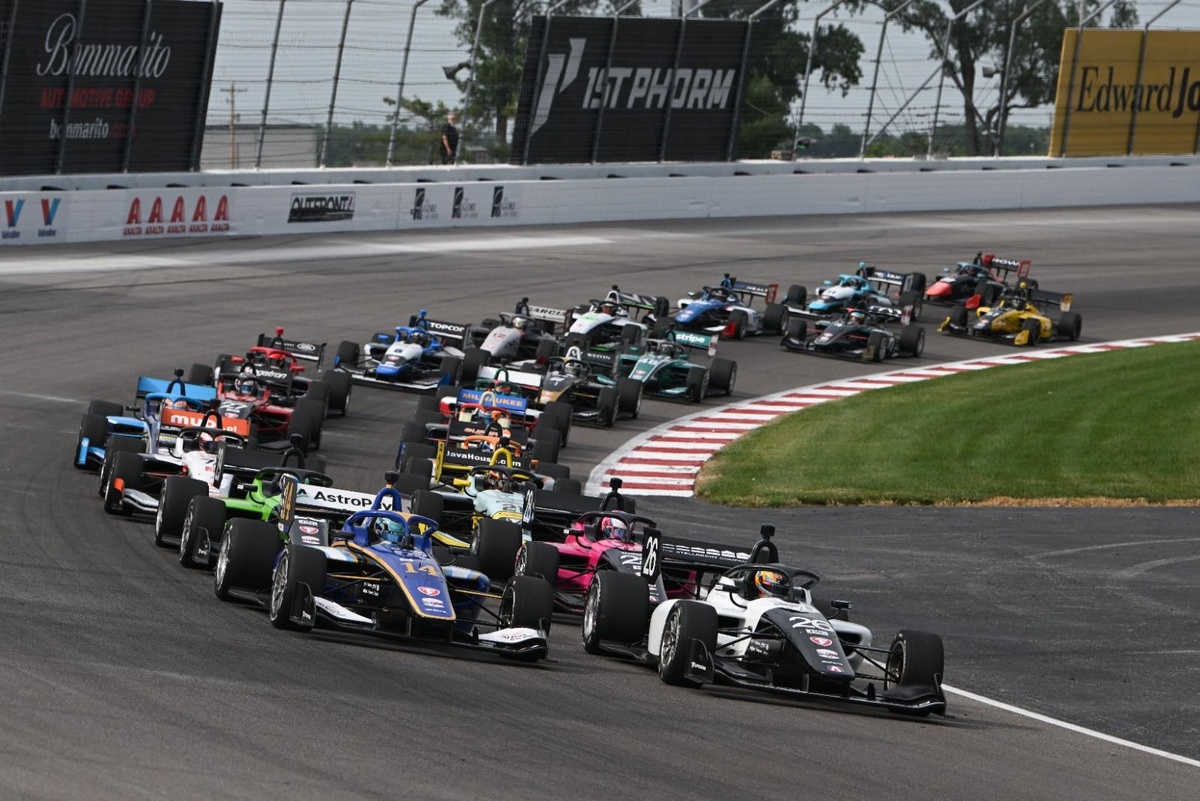
IndyCar has recently presented an update to the requirements for granting licenses to drivers, aimed at improving the integrity of the championship. Starting in 2027, the new regulations impose stricter requirements for drivers coming from feeder series, as well as closer scrutiny of those commonly referred to as ‘pay drivers’.
These changes, announced last month, seemingly established clear criteria requiring a minimum of 12 races in Indy NXT, finishing in the top three of the championship, or achieving multiple victories within a two-year period to obtain ‘Competitively Qualified’ status. This initiative appeared to be a positive step towards establishing more rigorous standards.
However, the implementation of these rules has generated doubts. In practice, the new system functions more like a revolving door than a secure wall. The lack of a clear and stringent standard allows drivers who do not meet the requirements to be placed in a ‘Resume Review Required’ category, where case-by-case decisions are made on who may be accepted, opening the door to subjective influences by series officials.
This situation has been particularly evident in the case of Josh Pierson, who has been identified as one of the drivers benefiting from these flexible criteria. Despite a history in Indy NXT that does not achieve the necessary results for automatic approval, his financial backing, with a sponsor of around 25 million dollars over two years, has facilitated his acceptance after a test at IMS.
The decision to qualify Pierson, with a history that includes only a couple of notable results in two seasons, stands in contrast to the rise of drivers like Kyffin Simpson, who has shown real merit in his career, with multiple victories and podiums. His records have been sufficient for a more formal evaluation against the entry criteria for the championship.
Additionally, within the current evaluation structure, there is a crucial aspect that needs addressing: the assessment on oval circuits. The ability to drive properly on road courses does not guarantee the skill to handle high speeds on an oval, a distinction that is currently not reflected in the licensing process. The current regulations require drivers to complete a rookie orientation program only when they arrive at the Indianapolis 500, which may come too late in the selection process.
If IndyCar wants to gain credibility and avoid criticism over its licensing policy, it needs to establish clear and objective criteria that eliminate any margin for discretion. Only then can it ensure that the elite of American motorsport maintains the high quality that its followers deserve.
Written by FormulaRapidaAI