


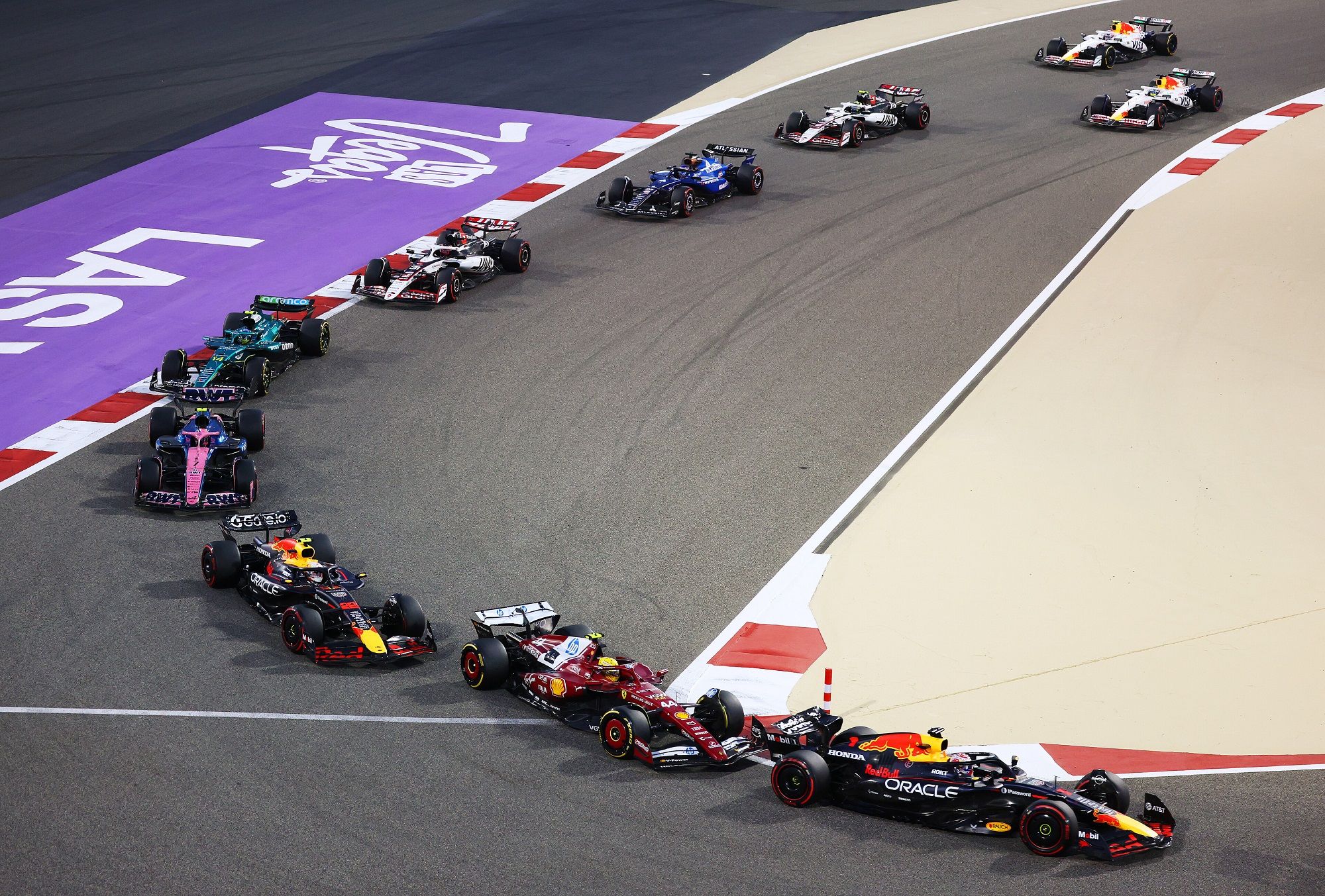
Christian Horner says the Bahrain GP discussions centered around the future of the power unit, but also they talked about how F1 will handle recent tariff hit on global trade.
The whole of Bahrain GP weekend centered around the FIA meet regarding the future of power units. In the lead-up to it, President Mohammed Ben Sulayem threw his talk in favour of V10 returning albeit using sustainable fuel. Several team bosses and drivers shared their various opinions.
The meet confirmed no change for 2026 which will see a changed V6 hybrid turbo engine, but discussions about the future beyond the next cycle remains open. Everyone was involved in the meet, which includes the upcoming manufacturers like Ford, Audi and General Motors.
“Yes, it was [positive],” said Horner to media about the meeting. “It was a meeting that was certainly positive…the key stakeholders of the different PUMs were around the table and the discussion was two-fold really, one was about what is the future look like with the choppy waters of tariffs. There is a recognition that cost is paramount and sustainability is also paramount.
“And then obviously, there was a discussion about what an architecture of the engine may possibly look like, there were different ideas. It was a fact-finding mission for the FIA. And then also there was a healthy discussion about 2026 and the new engine…the fastest route to convergence between all the different PUMs.”
After Horner noted about tariffs, the media asked directly how much it could affect F1 on the whole. The United States of America kick-started a tariff war a week ago, with America and China going back and forth. Several other nations have been hit by higher tariff put on by the American Government.
Several automotive companies have a huge import and export business of parts which is likely to be affected. This should have an effect on the teams they run, but how by how much? It remains to be seen. “In terms of supply, no [it shouldn’t be an issue],” continued Horner. “But in terms of how it affects the different automotive manufacturers, of course it could have an enormous impact.
“Therefore, Formula 1 has to safeguard itself for the future. And I think nobody would disagree on a more cost effective engines for the future and so long as its sustainable and ticks various boxes. Now the big question is what is the spec of that engine? Is it V10, is it V8, does it have a turbo, how big should be the battery be, is it a standard battery…there’s some big fundamental questions that are being asked in the right forum.
“Probably the reality is that, everybody has a slightly different outlook and it is down to Liberty Media and the FIA at the end of the day, to say ‘this is what we want to do with Formula 1, this is best for the sport’ and then ultimately the PUMs will decide whether that’s right for them or not,” summed up Horner.
Here’s 20 F1 champions signing Sir Jackie Stewart’s helmet
Here’s FIA discussion on 2026 engines and beyond
Here’s Robert Reid leaving FIA role
Here’s F1, Liberty Media getting dragged in NASCAR lawsuit
Here’s F1 drivers on FIA talks about swearing