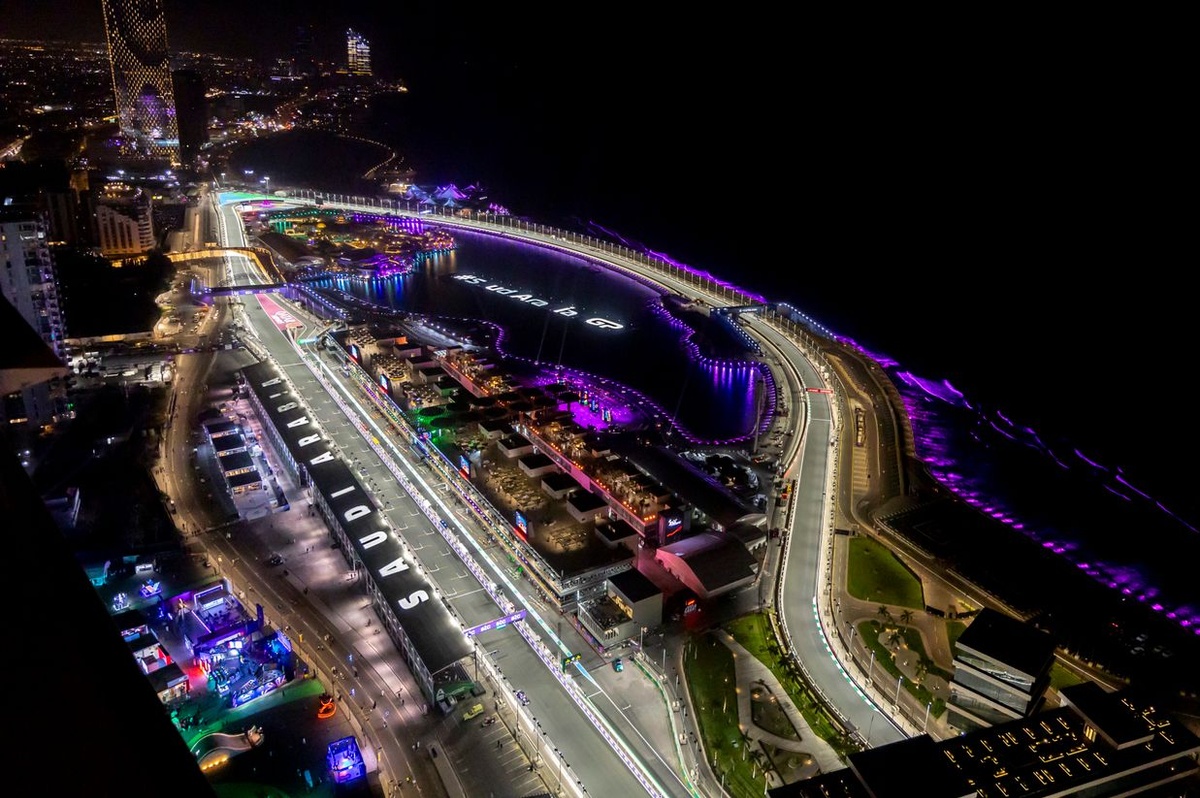
The cancellation of the Grands Prix scheduled for April in Bahrain and Saudi Arabia has left Formula 1 facing a complicated logistical puzzle in its 2026 calendar. This event has generated a month-long gap without races, as well as multiple complications to reorganize the second half of the championship.
Although officially these two races have not been canceled, the F1 management has expressed its interest in scheduling them later, depending on the evolution of the conflict in the Middle East. The race promoters are also motivated to recover the events.
The CEO of Liberty Media, Derek Chang, indicated in a recent meeting with shareholders that the management team is working to recover, at least, one of the two races. “We are continually evaluating the calendar this year and it is possible that we can reschedule a race at the end of the season,” he added.
Possible rescheduling scenarios
The best scenario would be to reintegrate one of the races between Baku and Singapore in September. This option is the most viable, as it would not require significant changes to the calendar. However, it would involve an intense sequence of triple-header in the final part of the season, which could increase the logistical and human workload for the teams.
If both races are to be recovered, the situation becomes complicated. From the end of October, Formula 1 will move to the Americas, making it difficult to include a new race in November. Additionally, if an event is sought to be added at the end of the season, it would affect the contract that stipulates that Abu Dhabi must be the final event, forcing it to be postponed by a week.
Logistical issues and costs
The situation quickly becomes complex, given that the Middle East is an essential logistical hub for all teams. Due to the conflict, most of the race materials remain trapped in Bahrain, complicating the logistics movements and messages of the teams towards other races, such as Singapore.
Moreover, the costs associated with transporting goods are included within the budget limit. Ensuring efficient transportation is essential, and expenses caused by the conflict have increased, affecting smaller teams more acutely.
Personnel issues and workload
The impact is not limited to the logistical aspect. The workload on staff is another factor to consider. The larger teams can implement rotations to manage their staff, a situation that is difficult for smaller teams with limited resources.
Adding a new race could bring the total number of events to twelve in just 16 weeks, meaning that staff members would be away from home for almost four months, a situation that can affect the performance and mental health of the staff.
Regardless, Formula 1 continues to seek solutions to recover the lost races, while maintaining close communication with teams and promoters to optimize the calendar in such a volatile context.
Written by FormulaRapidaAI