
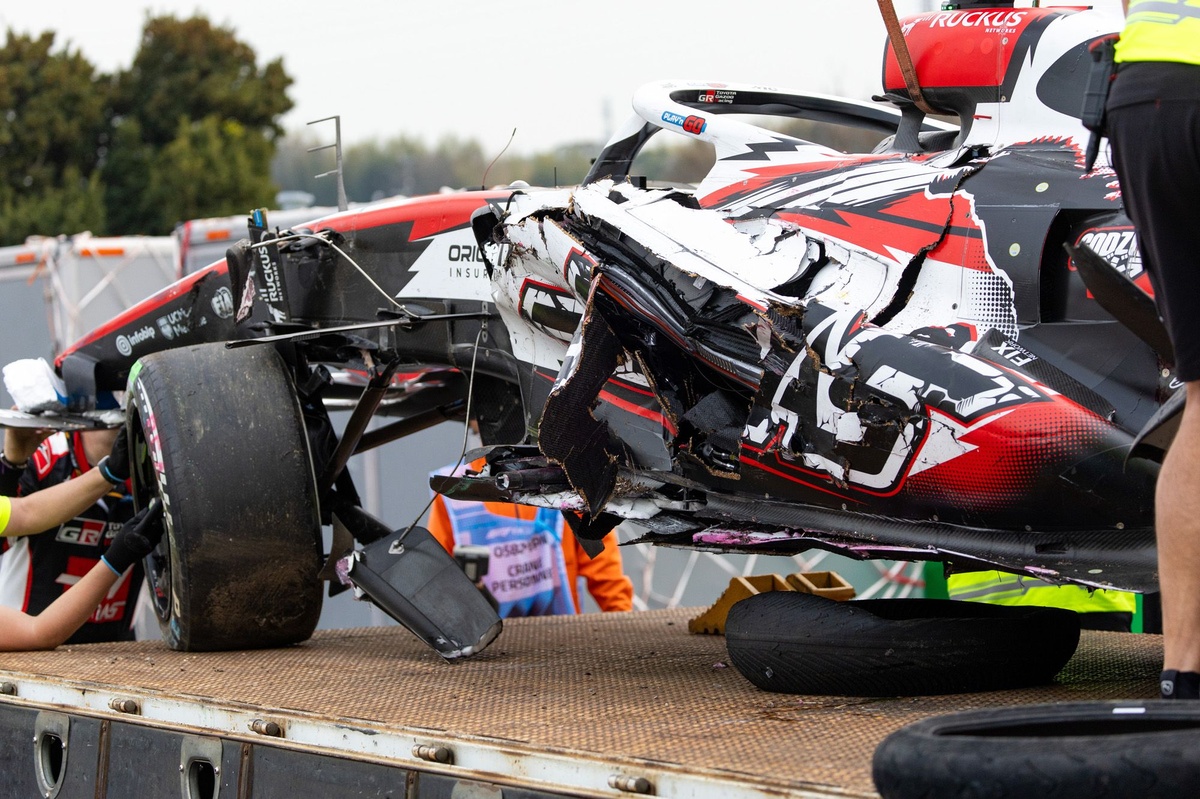
Safety in Formula 1 has once again come to the forefront following Oliver Bearman’s spectacular accident during the Japanese Grand Prix. The Haas driver suffered a monumental crash while trying to avoid Franco Colapinto in a situation of significant speed difference on lap 21, just before the Spoon curve.
It was reported that the Alpine car was not harvesting energy at the time of the incident, leading to the absence of warning lights on its rear wing. This caused Bearman to close the distance at a speed of 45 km/h. The driver had to perform an evasive maneuver at 308 km/h, losing control before crashing into the barrier with a force of 50G.
The championship has been marked by concerns over dangers associated with the new technical regulations introduced this year. Several drivers, including Carlos Sainz, have expressed their worries about excessive closing speeds, indicating that accidents of this nature were inevitable if no measures were taken.
Following the accident, the FIA issued a statement addressing concerns over energy management rules. According to the regulatory body, it is vital to conduct a structured review after the initial phase of the season to analyze the collected data. Several meetings are being scheduled for April to decide on possible adjustments to the regulations.
Additionally, the FIA has stated that its commitment to safety is paramount and that any changes require careful simulation and detailed analysis. Meanwhile, drivers continue to express concern over the insecurity posed by the current competition conditions and energy management.
Written by FormulaRapidaAI