


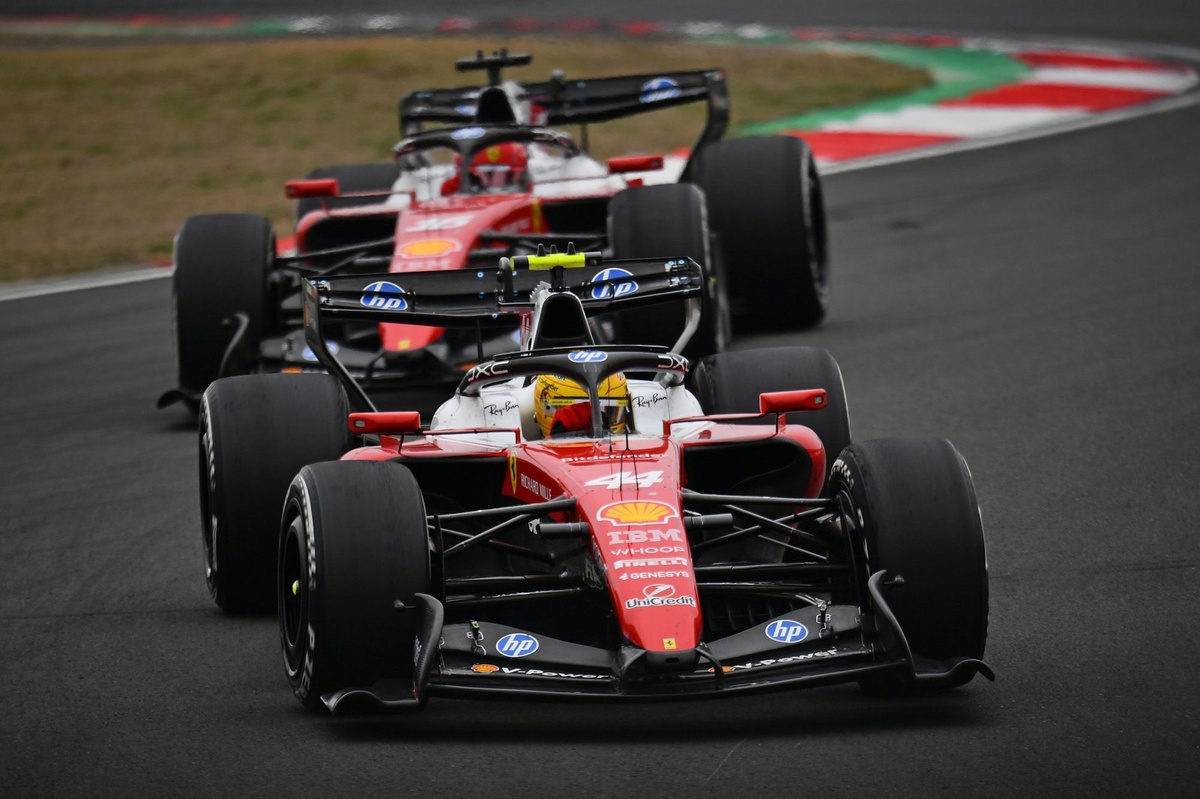
Ferrari is intensifying its efforts to improve the energy recovery of the SF-26 ahead of the Japanese Grand Prix. The Scuderia, considered the main alternative to Mercedes in the fight for victory, has been working hard at the factory, analyzing data from the first two Grand Prix of the season.
The Suzuka circuit presents a new challenge, with its demanding layout characteristics that make battery recharging difficult, although it is not as demanding as the Melbourne circuit. Furthermore, the recent resurfacing of the track and the weather conditions, which could be cold and adverse, represent uncertainties that could alter simulation data.
Technical improvements underway
The staff at Maranello has been working to maximize the potential of the SF-26. The simulations conducted so far provide hopeful results, although the team has not been able to truly compare itself with its rivals, especially Mercedes.
Historically, Ferrari has shown to be very competitive in technical and twisty sections, but it struggles on long straights where Mercedes capitalizes on its power. The Silver Arrows use fuel to recharge the battery, settling for a reduction in speed that is less severe compared to their rivals.
Energy strategies
Ferrari relies on achieving better energy distribution throughout the circuit. The goal is not primarily to compete with Mercedes, but to optimize its own concepts, maximizing the potential of its small turbo. The Scuderia aims to maximize recovery in slower sections and during transitions, possibly using lower gears in certain situations to keep engine revs high.
Although no complaints have been reported from the sports management, there is a doubt about whether Shell has managed to produce sufficiently clean fuel to compete with what the Mercedes teams use.
Aerodynamic advances
In addition to improvements in energy recovery, Ferrari is experimenting with aerodynamic aspects. The “Macarena”, a type of rotating wing, has been tested at the factory and is expected to reappear in Japan. The reasons for not utilizing a solution that promises to improve maximum speed are likely related to driver complaints about instability when braking.
The tests have focused on both the moments of opening and closing the wing and on adjustments to the front flank to achieve the necessary balance on a demanding circuit like Suzuka. The aerodynamic engineers are working to assess the aerodynamic benefits and ensure that these outweigh the drawbacks.
Although Ferrari is in full evolution in this new era of Formula 1, the Japanese Grand Prix will serve as a test to evaluate the effectiveness of its development path. A good result could provide the necessary momentum before a month of downtime due to the cancellation of races in Bahrain and Jeddah, when the team will look to close the gap with Mercedes.
Written by FormulaRapidaAI
SourceID: SRC_4624455eb9f16bf5000d8abbf4e41e2be60882e5