


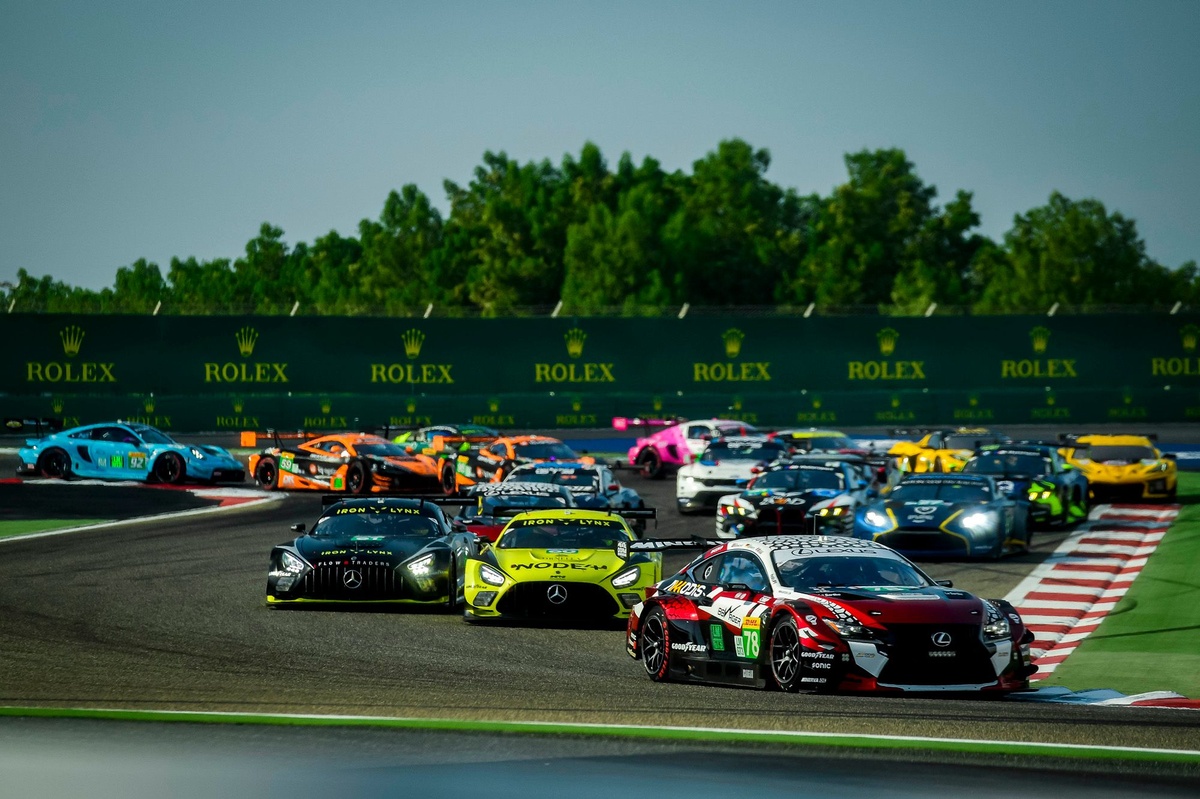
The LMGT3 category of the World Endurance Championship (WEC) has become one of the main focal points in motorsport since its introduction in 2024. With rising costs and heightened competition, the question of the level of support manufacturers should provide to teams is more relevant than ever.
In its third season in 2026, LMGT3 has exceeded expectations with a total of 18 vehicles on the grid, even surpassing cars in the Hypercar category. This category was designed as a space for private teams with minimal participation from manufacturers, in order to keep the focus on customer competition.
However, the challenge of maintaining a fully independent competition strategy is becoming more complicated. The **24 Hours of Le Mans** and the WEC provide a massive exposure platform for manufacturers like **Mercedes**, who do not compete in the Hypercar category, and see in LMGT3 an opportunity to be present at this high level of competition.
Manufacturer Involvement and Technical Support
Collaboration between manufacturers and teams is a crucial aspect for success in LMGT3. Drivers like **Arnold Robin** and **Ben Barnicoat** have highlighted that choosing the right team is essential for maximizing victory chances. Companies like **Ferrari**, **BMW**, and **Porsche** have established partnerships with experienced teams that have proven effective in motorsport.
Moreover, technical support is crucial. **Jerome Policand**, director of Akkodis ASP, has shared that his team has engineers from **Toyota** who help them optimize every detail of the car. This support not only involves track assistance but also a constant exchange of information and collaboration to improve performance.
The Debate on Costs and Sustainability
Policand has warned about the high costs associated with competing in a prestigious category like LMGT3. The budget required to compete is similar to that of Hypercars, and the logistical requirements for an international calendar of eight races across various continents will complicate the reality for many teams.
The diversity in manufacturer support can lead to unequal competition, raising doubts about the viability of balanced competition. Policand expresses that the key is to maintain a balance between manufacturer support and the independence of private teams.
Perspectives and Expectations for 2026
Amid this controversy, figures like **Stefan Wendl** from **Mercedes** believe that factory support regulations may be extended according to market needs. The interaction between teams and manufacturers, as demonstrated with **Manthey Racing** and Porsche, is an example of mutual collaboration without encroaching on the space of private teams.
A new season of the WEC begins in **Imola** at the end of this month, where the ability to balance costs with manufacturer assistance will be crucial for ensuring the long-term health of the LMGT3 category.
Written by FormulaRapidaAI
SourceID: SRC_918ffee63cbb44f890f58d9f3610f549fc4e375b