


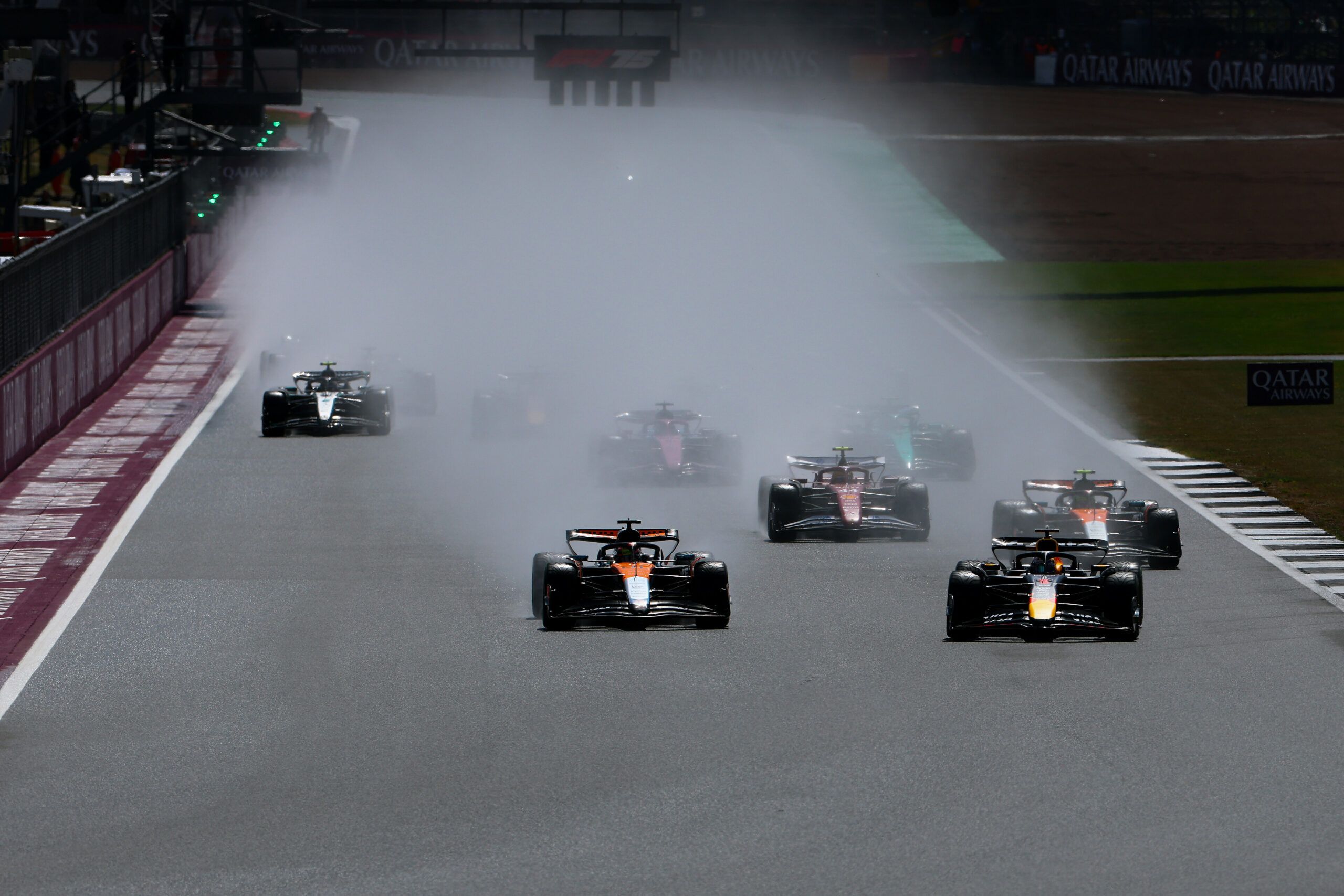
F1 has shared updated figures of where they are in their Net Zero Carbon pledge by 2030, as they reduced emissions by 26% between 2018 and 2024.
Formula 1 has today announced that it is firmly on track to achieve its target of becoming Net Zero by 2030, having delivered a 26% reduction in its carbon emissions by the end of 2024 compared to its 2018 baseline. This progress has been driven by cross-sport collaboration with Formula 1 teams, partners, promoters, and the FIA, and comes during a period of remarkable growth, with the race calendar expanding from 21 events in 2018 to 24 in each of the past two seasons.
Over the same period, race attendance has surged from 4 million to 6.5 million, and Formula 1’s global fanbase has grown to over 826 million. The data shows that if no changes had been made to operations during this time, there would have been an estimated 10% increase in the sport’s carbon footprint vs 2018. The update confirms that the sport is over halfway towards achieving its minimum 50% emissions reduction target, as set out in its Net Zero by 2030 commitment.
Any remaining unavoidable emissions will be offset using credible programmes in line with latest best practice guidance. At the end of the 2024 season, the carbon footprint for the sport stands at 168,720 tCO2e down from 228,793 tCO2e in 2018. This report incorporates a re-baselining of our 2018 carbon footprint, reflecting supplier data improvements, and in alignment with industry best practices and internationally recognised standards.
As a result, the reported 2018 footprint has been revised to 228,793 tCO₂e, down from 256,551 tCO₂e. This ensures that the reported emissions reductions reflect genuine progress compared to the baseline year, rather than improvements resulting solely from changes in accounting methods. Key initiatives underpinning this momentum include:
- Emissions from Factories and Facilities have reduced by over 34,000 tCO2e compared to 2018, representing a 59% reduction in this area. This has been achieved through the continued transition to renewable energy sources to power Formula 1 and F1 Teams sites.
- Emissions from Travel have reduced by almost 20,000 tCO2e compared to 2018, representing a 25% reduction in this area. This has been achieved through the increased rollout of remote broadcast operations, and F1 Teams making investments in Sustainable Aviation Fuel (SAF) for their race travel operations.
- Emissions from Logistics have decreased by 6,438 tCO2e compared to 2018, representing a 9% reduction in this area. To achieve this Formula 1 made a significant investment in new freight containers to allow for the use of more efficient 777 planes, invested in SAF for freight operations, and expanded the use of biofuel trucks for freight in Europe.
- Event Operations emissions have decreased by 12% on a per-race basis. This reduction has been driven by continued efforts across all Formula 1 stakeholders to transition to renewable energy sources at events, alongside key suppliers adapting their operations to lower emissions. While total event operations emissions for the 24-race calendar have increased slightly by 247 tCO₂e, this reflects the addition of three more Grands Prix compared to 2018.
Formula 1 has a clear path to achieving Net Zero in 2030 and will continue to invest in its alternative fuel strategy, including increasing use of Sustainable Aviation Fuel, enhance its future race operations, with a further move towards the use of sea-freight, and the use of regional hubs where vital equipment can stay in region to reduce the amount of travel required. Formula 1 will also continue to create cross-sport solutions to drive reductions and efficiencies across our global network. Investment in our future operations will not only help to continue our journey towards Net Zero but will create operational efficiencies that will be financially beneficial in the coming years.
Stefano Domenicali, President and CEO of Formula 1, said: “We are strongly committed to achieving Net Zero by 2030. It is a concrete goal, already visible in the significant reduction of our sport’s carbon footprint. While continuing to grow globally, we have shown that sustainable development is possible and that the strategies we have adopted are yielding tangible results. Formula 1 has always been synonymous with innovation and the desire to improve. Once again, this mentality has allowed us to make important progress, not only for those who work in this world, but also for society as a whole.
“We will continue to pursue our projects and next year we will introduce new actions, such as the use of advanced sustainable fuels in all Formula 1 cars, a step that also opens up significant opportunities for road cars and other means of transport. We are proud of what we have achieved so far and remain determined to continue on this path. Thank you to the FIA, the teams, partners and promoters for their fundamental contribution along this journey.”
Ellen Jones, Head of ESG at Formula 1, said: “Today’s results are the product of years of hard work across the sport. All areas have been tasked with operating more sustainably, and it is through this sport-wide engagement and delivery that we are able to achieve such significant emissions reductions. Looking ahead, we have a clear plan to meet our commitments and to further demonstrate how growth can be positive for both sustainability and sporting outcomes.
“Formula 1 is uniquely placed to show that performance and sustainability can support one another, and I look forward to seeing the impact of initiatives already announced – such as changes to our race calendar from 2026 – as well as those yet to come, to help us deliver on our goals and beyond.”
Delivery Since 2018
As we work to delivering for our 2030 target, the whole sport has been acting individually and as a group to drive down the carbon footprint. This includes:
- Significant investments in Sustainable Aviation Fuel (SAF) have been made as part of our ultraefficient logistics strategy. Our combined 2024 investment in SAF with Global Partners DHL and Qatar Airways reduced total related emissions by more than 8,000 tCO2e (tonnes of carbon dioxide equivalent), an approximate 19% reduction in related emissions– compared to traditional aviation fuel – for the air freight charter programme operated by Formula 1 across the flyaway events of the 2024 season. This investment will grow in the years to come.
- Investments in remote broadcast operations which means that Formula 1 deploys the world’s largest intercontinental remote production system every race weekend from our Media & Technology Centre in the UK. Formula 1 has been adding additional remote capabilities since the project was first accelerated into place in 2020 and now has approximately 140 personnel working remotely at each race weekend. In 2024, the new state of the art F1 Studio at the M&TC added new opportunities for remote broadcasting, which simultaneously reduces the need for equipment and people to travel to races, helping us reduce our carbon footprint.
- Formula 1 invested in new freight containers to allow for the use of more efficient 777 planes where available, with significant associated emission reductions. This change has led to an estimated 9,000 tCO2e reduction in carbon emissions.
- Formula 1, and many of the F1 teams and suppliers, have transitioned their factories and
facilities to make increasing use of alternative energy sources. These changes have led to a 59% reduction in associated carbon emissions for F1 factories and facilities.
- 80% of race promoters powered aspects of their events using alternative energy sources such as solar panels, green tariffs, and biofuels, with plans in place at all others to begin in the coming years.
- Working with Aggreko, the delivery of innovative low-carbon energy generation systems using renewable sources such as hydrotreated vegetable oil (HVO), biofuel, solar panels, and battery. Following a trial at one Grand Prix in 2023, the system was expanded to three races in 2024. In 2025, the programme has been rolled out to reduce more than 90% of event-energy emissions at all European Grands Prix in key areas such as the Paddock, Pit Lane, and Event Technical Centre.
- Formula 1 equipment for the European season is delivered by a fleet of biofueled trucks which reduce related carbon emissions by an average of 83%. The use of biofuel trucks in Europe is increasing across the F1 teams equipment too.
- In 2024, improvements were made to the geographical flow of races around the world. This included moving the Japanese Grand Prix from September to April to align with the Asia-Pacific segment of the calendar; adjusting the Azerbaijan Grand Prix to align with Singapore; and scheduling the Qatar Grand Prix to run back-to-back with nearby Abu Dhabi. From 2026, the Canadian Grand Prix will be held earlier in the year, before the Monaco Grand Prix. This change consolidates the European leg of the F1 season into a single period, eliminating an additional transatlantic crossing for vital freight and equipment and delivering significant associated carbon reductions.
- In 2024, F2 and F3 cars ran on 55% advanced sustainable fuel blend, developed by Formula 1 Global Partner Aramco, and the FIA medical and safety cars operated with a 40% blend. In 2025, the F2 and F3 cars moved to be fully powered by advanced sustainable fuel, in preparation for Formula 1 to be fuelled entirely by advanced sustainable fuel in 2026 alongside the new hybrid engines that will take to the circuit next year. The technology has broad off-track implications for the automotive industry and existing road cars, as the fuel developed for Formula 1 is designed to be ‘drop-in’ capable for potential usage used in road cars – serving as a fuel alternative with potential global benefits in associated carbon reductions.
- Throughout the 2024 season, all Formula 1 cars operated with FSC approved Pirelli tyres, which means the natural rubber in the type complies with the FSC’s strict standards for sustainable forestry. FSC certification joins a number of initiatives already put in place for motorsport by Pirelli in recent years, which includes all tyres brought to the track during a Grand Prix weekend being transformed into secondary raw materials after use; the electrical energy used to make the tyres coming exclusively from 100 per cent renewable certified sources; and the use of ‘virtual’ design technology for all tyres, which not only reduces development time but also cuts down on materials used due to less physical prototypes being needed.
Here’s the report: https://corp.formula1.com/wp-content/uploads/2025/07/Formula-1-Sustainability-Update-2025-1.pdf
Here’s latest from F1 Commission meet
Here’s F1 team bosses, drivers on protest
Here’s F1 with video on Brad Pitt’s run
Here’s news on Cadillac documentary
Here’s details F1 2026 pre-season
[The story is as per press release]