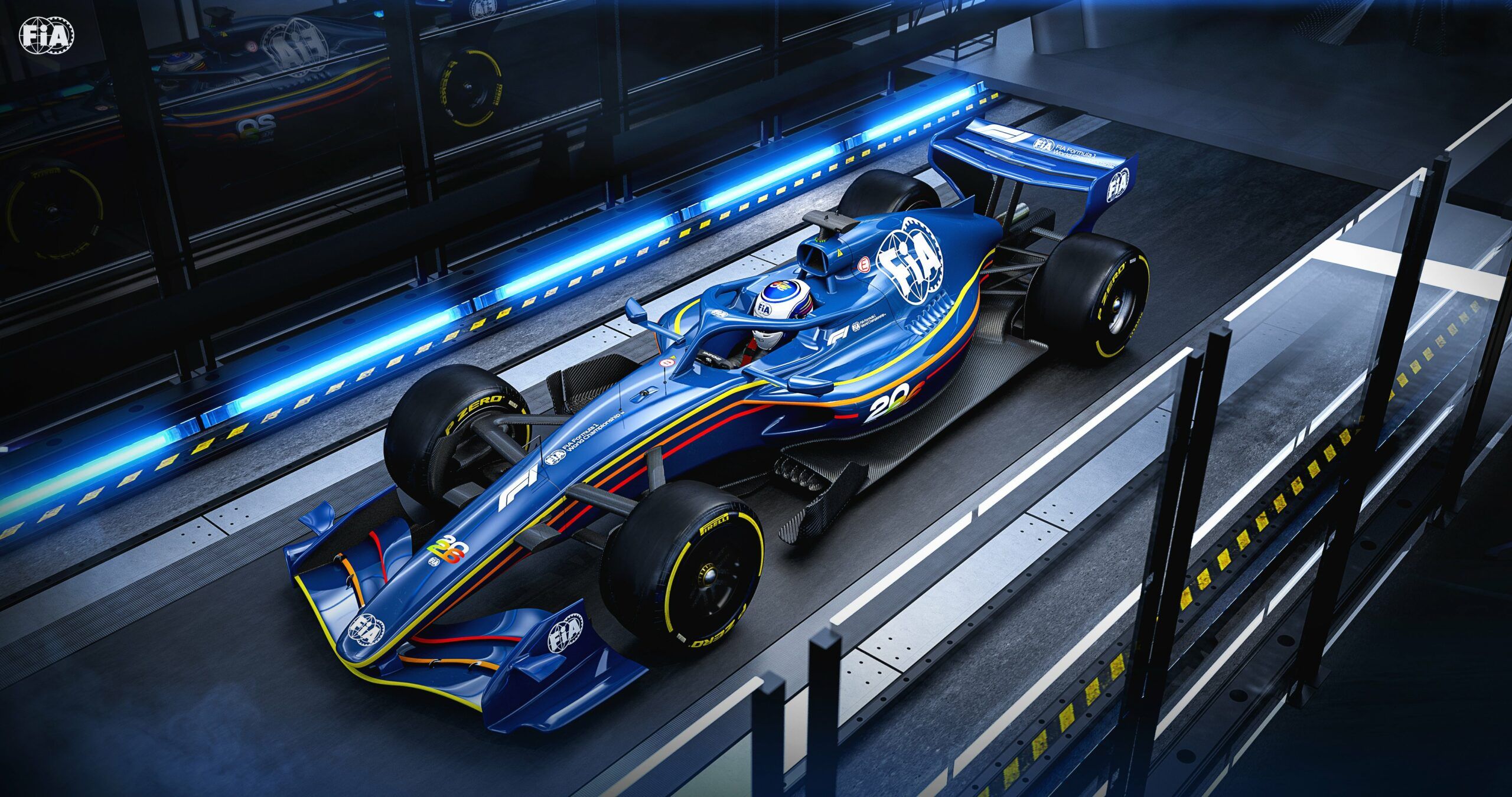
The F1 drivers spill on what they think about the upcoming 2026 cars and regulations after simulator run, as some caution about certain limitations.
Midway in the F1 2025 season, most drivers and teams have shifted focus on 2026. A lot of them have started driving the machinery on the simulator to understand the nuances of the car and the regulation. The initial feedback is largely troublesome from the drivers in terms of racing.
Everyone is up for the challenge, but they are wary of the conservation tactics that may happen in the races, more than the current season. It was pointed out by the Williams pair, where Alexander Albon equated the situation to how races happen in Formula E – albeit, it won’t be that extreme.
The power clip on long straights is another point highlighted by Carlos Sainz and Max Verstappen. Most agree that it will be about starting afresh, leaving behind a lot what they have learned over the years, when driving the new type of F1 cars. They feel they will eventually get on top of it.
But to start with the regulations, it will be strange feeling in the new type of machinery. They will get shakedowns to undertake along with a three-day ‘private’ test in Barcelona, before the double in Bahrain. Here’s what the handful of F1 drivers have said –
Lewis Hamilton: “For me, the thing I love about Formula 1 is that there are these changes that come along the way. There’s so much innovation and development. And every time they make these changes, the learning curve is so steep for everyone within the team. So it really challenges us all to dig deep, to innovate. Even from a driver’s perspective, it’s got more and more intricate as the years have gone on. Like Carlos mentioned, this next step, I would say, probably the driver has even more input into the development—particularly of the power unit and how you use the power. I don’t really want to shut it down, because maybe things will be good. Let’s see when we get into the next season. It could go either way—it could be good, it could be not so good. But only time will tell. What I love is that while we’re fighting this season in this championship, we’re also having to develop the current car—and then the next car. And that, for me, is fascinating. If we were just with the same car all the time, evolving on a very small gradient, it just would not be anywhere near as fun.”
Alexander Albon: “No, I think it will be different to anything we’ve used before. We will get used to it, that’s the job of the driver, but it is going to take some getting used to. Let’s just say our winter breaks that we spend, I don’t think it will be spent as casually as it was the previous few years. We’re training and there’s going to be so much more attention on simulator work that we’re going to be doing over the winter. Making sure that we understand how it all works and trying different driving styles and things to make it work. I know, for example, at Williams we have an active working group. We’re just working on how we can prepare the drivers as best as we can.
“Giving us as much information and as much preparation as possible for next year. I think so [there will be power conservation]. It’s really early days at the moment, but just look at Formula E as a more extreme version as to where we’re going to go to. But you can see how the drivers manipulate the race and qualifying and how they deploy and all these kind of things to gain performance. It’s not going to be that extreme, but there will be an element of, I think I said it before, but the drivers who have the brain capacity to understand and facilitate all these demands will go well. We’ve got time for one more.”
Fernando Alonso: “I only did one day of the simulator, and it was difficult to really take any conclusions of that. So I will wait a little bit longer or maybe even to test a real car because sometimes in the simulator you have a feeling and then on the real car you have a different one. So, yeah, it’s less performance than this year. Every time a racing driver tests something that is slower, we’ll never like it. But then we go in a rental car with 12 horsepower and we love it. We are all together, and you fight and you win the race and it’s like you win the championship. If next year you are fast, we will love the cars and hopefully Lance can enjoy next year. That will be good news.”
Max Verstappen: “It will [about power conservation] – some races will be more than others. That’s already happening also now. But for sure next year that will be a bit more. Time will tell if that’s a good thing or a bad thing.”
Charles Leclerc: “It is going in right direction, hopefully, because it’s very, very different to what we are used to. I think drivers, there will be a lot of things that we’ll have to forget from whatever we’ve learned in our career to start again from a blank page. That’s a little bit strange because, having done this sport since I’m four years old, to be having to erase something from my muscle memory will be, would be a little bit strange. But it’s part of the game, and in itself, it’s a challenge to try and reinvent a little bit the rules and find some performance in other things. So, yeah, I’m looking forward to the challenge, but it’s very different.”
Carlos Sainz: “Very complicated. It occupies a lot of brain space while you’re driving. But I think if you ask… I think Lewis was in the big regulation change between 2013 and 2014 – going from a normal V8 to a complex V6 with battery management and all these things. For sure, at the time, it was a shock – how much the driver had to think about things that before, on the V8, we would never think about. But then we all got used to it, we all adapted, and now it feels normal. I think with next year it’s going to be something similar. At the beginning, we’re all like: what the hell is going on here? Why do we need to do so much of this? Why is the car feeling different every lap? But then, by the time we start racing with it and the races go by, everything will feel more natural – something we’re more used to – and it will become the new normal. The big question is whether that new normal is better than the old normal.
“That’s the million-dollar question that everyone wants to have a say on or have an opinion about. But I think as drivers, we’ll just adapt to whatever they give us. We’ll just go as fast as we can. If we have to do six or seven switch changes through a lap, we’ll do them. And we’ll just become good at it like we always do. I think there are two factors. One: the great power that the car has when it has power. But how fast that power is cut in the straight. It’s a strange feeling as a driver, because you have grown all your life with a constant power that takes you until the end of the straight. In the next year’s car, the power drops to a point where your speed in the straight even stabilises and starts to go down. The second [factor] is the variability that there is from one lap to the next. Sometimes the power continues and is cut off before and others after, and it is totally dependent on the energy that you regenerate. It makes the driver feel strange because each straight is a different power and speed.”
Nico Hulkenberg: “No, I think it’s just not there yet, not ready yet [for me to test]. I think when you do it too early and it puts you off or gives the wrong, not the right reference, I think there’s no value in that also. So, just waiting for the right one.”
Here’s F1 team bosses on mandatory gardening leave rule
Here’s F1 drivers on spray issue
Here’s info on F1 Box
Here’s Q2 report from Liberty Media