
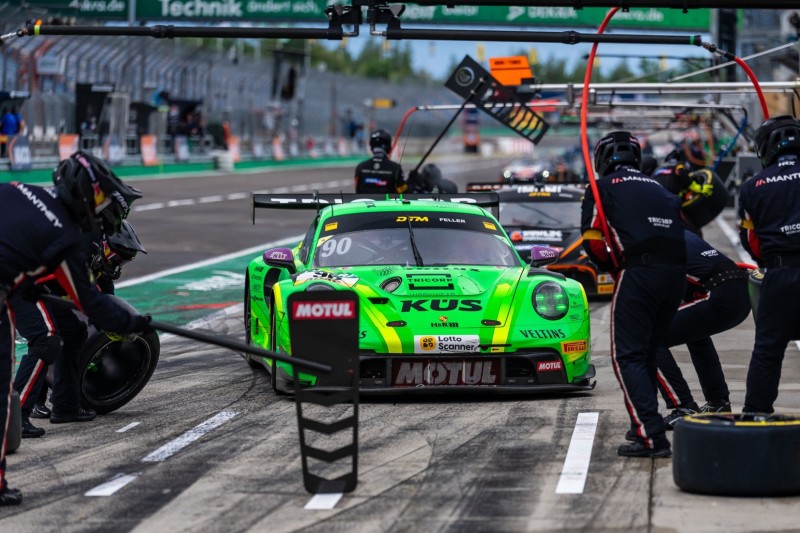
The recent DTM race at Lausitzring has generated controversy surrounding a race control decision that affected driver Nicki Thiim, depriving him of his first victory with Aston Martin. The call for a Full Course Yellow (FCY) just as three drivers were entering the pits has been the center of the debate.
This decision left Thiim resigned, who had been leading with an advantage of over five seconds before his pit stop. The situation got complicated when Marco Mapelli, Ben Dorr, and Ricardo Feller gained significant benefits due to the FCY call, leaving Thiim in a disadvantaged position, falling to fourth place after his stops.
Race director Sven Stoppe imposed a speed limit of 80 km/h across the circuit to secure Timo Glock’s damaged vehicle. This measure allowed the drivers in the pits to lose very little time, as the pit speed limit is 60 km/h. Thiim expressed perplexity at the decision, stating that he understood the need for safety, but believed that it should have waited until all vehicles were in their places.
Mapelli, for his part, argued that his team initiated their pit stop before the FCY was called, and that they crossed the safety line before it was triggered. This has sparked a debate over whether the established protocol and decisions made during delicate moments are consistent with sports fairness.
Thiim, who has identified himself as a victim of this situation, emphasized that he respects the work of the safety personnel, but called for more attention to race conditions to ensure that everyone has a fair opportunity. Other drivers, such as Maro Engel, also expressed their concerns, suggesting that discussions should take place to avoid such situations during the pit stop period.
With the winners defending the race control decision, the debate over equity and safety in motor racing remains alive, with the motorsport community awaiting clarification of the rules for the future.
Written by FormulaRapidaAI