


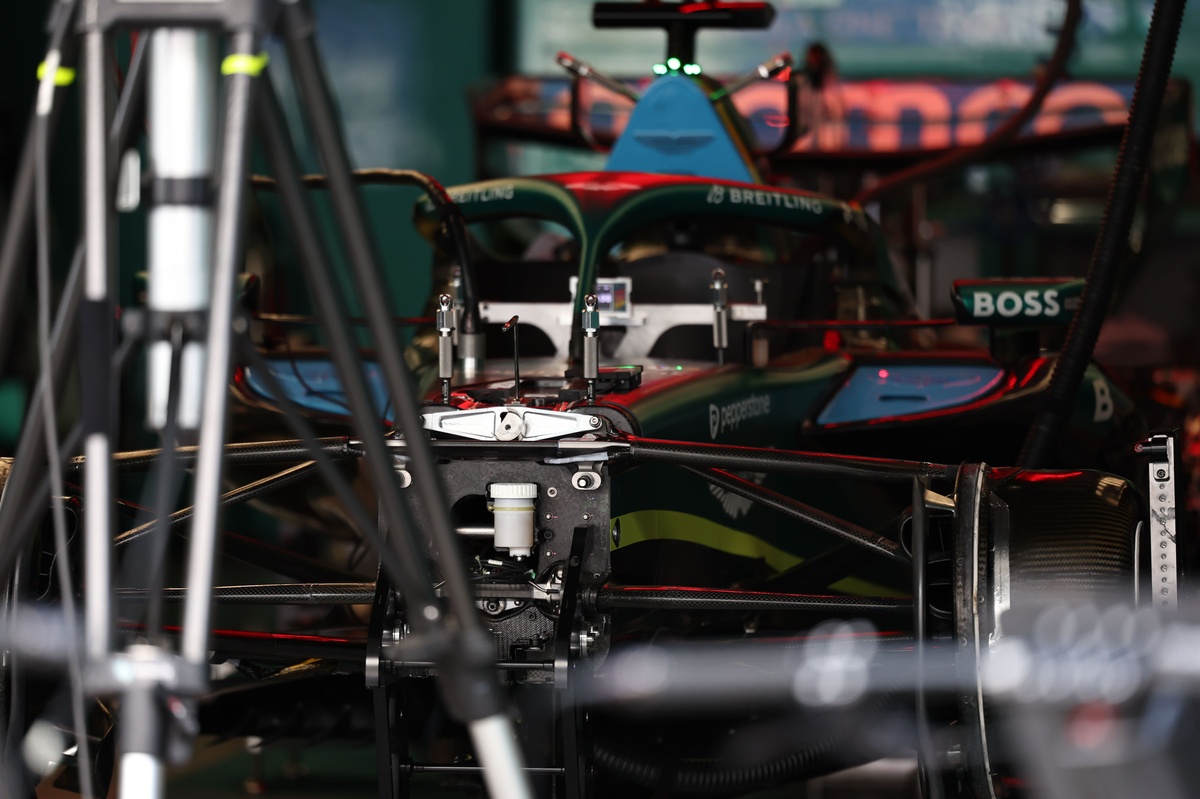
After a season start with high expectations, Aston Martin faces a challenging reality with its AMR26. The brand has decided to keep one vehicle in Japan to carry out more in-depth tests at Honda’s factory, aiming to address vibration issues that have affected the car’s performance and reliability.
Honda, the manufacturer of the power unit, is working to enhance its competitiveness, as it currently ranks among the least powerful and reliable engines on the grid. Since winter testing, vibrations have significantly limited mileage, thus hindering the car’s development.
Honda’s engineers have identified that vibrations stem not only from the engine but also from the chassis, which acts as a resonance chamber. This situation has led some drivers to experience issues such as loss of sensitivity in their extremities and, in the case of Fernando Alonso, the need to retire in some races.
Testing at the Sakura Factory
After the race in Japan, Aston Martin took advantage of the downtime to leave one of the AMR26s at the Sakura factory. This summer, Honda had already maintained a complete monocoque for dynamometer testing, but now the opportunity to work directly with a racing car allows for a more realistic analysis of vibrations, thus developing more effective corrective measures.
Shintaro Orihara, Honda’s track manager, confirmed that the goal is to improve reliability and control vibrations to provide better performance in the upcoming race in Miami. Additionally, Hiroshi Takahashi, a Honda engineer, highlighted the importance of testing to optimize the interaction between the engine and the chassis.
Towards the Miami Race
For the upcoming race in Miami, Honda expects to implement improvements, focusing on the alignment between the engine and the chassis. With the new regulations, the modifications that can be made are still limited, so each intervention will need to be carefully planned. The challenge will be to keep engine temperatures under control in the hot conditions characterizing this competition.
The race in Miami is expected to be crucial, especially as a test for the power units, which will need to adapt to the demands of a circuit with several low-speed corners, a key factor for achieving good performance on track.
Written by FormulaRapidaAI
SourceID: SRC_93e7f82ab8dfb645b5da175573f8fdfc008b08d5