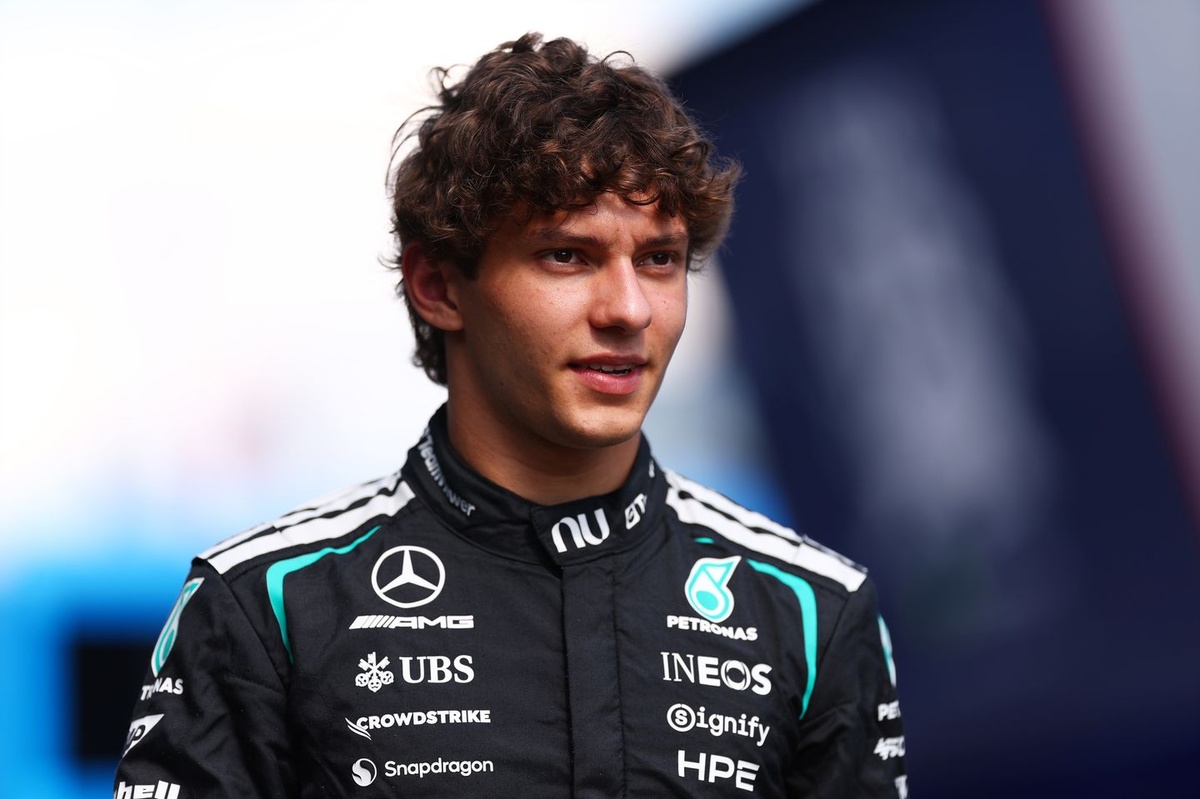
During the first practice sessions of the Austrian Grand Prix, Mercedes proved to be the rival to beat, with Andrea Kimi Antonelli leading the timesheet. The Italian set the fastest lap in both the first and second practice sessions, particularly excelling in long laps.
The second practice session focused on long laps with high fuel loads, providing valuable information on race pace and tire degradation. Antonelli finished the day with a time 0.06 seconds faster per lap than his teammate, George Russell, once the times were adjusted according to tire compounds and lap lengths.
McLaren was the second fastest team in terms of long-run pace, but lagged 0.21 seconds per lap behind Mercedes. The defending champions experienced a significant tire degradation issue, although they initially showed good pace.
Problems for Ferrari
The day was disappointing for Ferrari, which arrived in Spielberg with high expectations following its victory in Spain thanks to an improved chassis and a new engine. However, the performance fell short of expectations in both rapid laps and long runs. Lewis Hamilton was 0.597 seconds off the reference time, with a deficit of 0.51 seconds per lap during the long runs.
His teammate, Charles Leclerc, also struggled to find his rhythm, posting a time 0.841 seconds slower than Antonelli. Additionally, his degradation in long runs increased to 0.97 seconds per lap, highlighting the difficulties of his car.
McLaren and Red Bull, under scrutiny
In the case of McLaren, the team showed performance similar to that of the previous Grand Prix in Barcelona. Oscar Piastri was competitive in fast laps but fell behind in long runs due to tire degradation, with an adjusted delay of 0.50 seconds per lap compared to Mercedes.
For its part, Red Bull saw its hopes dashed with a new update, failing to achieve the expected success. Max Verstappen finished 0.550 seconds behind Antonelli in the qualifying simulation, with a deficit of 0.27 seconds per lap during the long runs.
The situation in the midfield
The midfield remains competitive, with Audi again standing out. Driver Nico Hulkenberg achieved a good performance, just 0.80 seconds per lap behind Mercedes. Alpine and Racing Bulls also showed encouraging pace.
The current warm weather may significantly influence race strategy, with an average degradation of 0.164 seconds per lap, which could turn the race into one with three pit stops, according to Pirelli’s head of motorsport.
Written by FormulaRapidaAI