


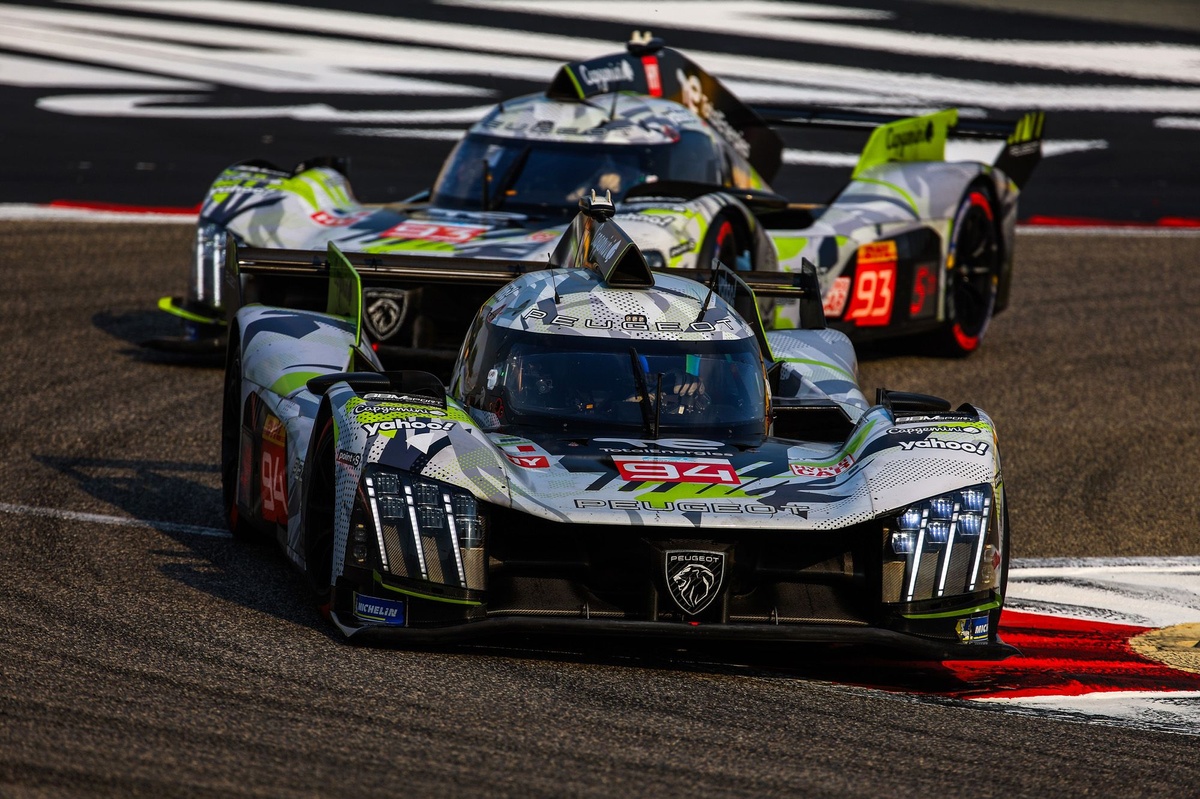
In the context of the upcoming WEC 2025 season, the analysis of the Balance of Performance (BoP) provides a key insight into the performance of the Peugeot 9X8. This season has revealed a difficult path for the French manufacturer, which continues to persevere despite the regulatory and technical obstacles posed by the LMH-LMDh convergence.
Peugeot began its project with a different vision, developing the 9X8 under regulations that changed significantly just weeks before its debut. The competition has proven strong, and this year’s BoP highlights the challenges that the team must overcome.
Competition Situation and Performance
Throughout the season, the Peugeot 9X8 has maintained a competitive weight-to-power ratio of 1.981 kg/kW on circuits with automated BoP. However, the differences with rivals such as the Toyota GR010 Hybrid have increased, marking a gap of 0.246 kg/kW in the most significant tests.
This situation has left Peugeot reliant on considerable BoP support to compete, a need that has become evident in several races, including a disappointing start in Qatar and Imola, finishing ninth.
Technical Challenges and Strategy
One of the key factors in the challenges faced by Peugeot is that the 9X8 was not designed for the current regulations. Originally conceived with a 50:50 weight distribution, the introduction of a hybrid system with minimum speeds for launches completely altered the vehicle’s initial philosophy, requiring a series of difficult modifications.
Strategic mistakes have also become apparent during races, particularly at Spa-Francorchamps and Sao Paulo, where timing history and pit stop decisions have cost the team valuable points. These errors have allowed other manufacturers to gain an advantage more easily.
BoP at Le Mans
A considerable surprise was the BoP established for Le Mans, where the Peugeot 9X8 received one of the worst classifications, raising its power-to-weight ratio to 2.049 kg/kW. This decision has raised questions about the methodology used to determine the BoP, which seems not to have taken into account the vehicle’s past performances.
Despite the obstacles, Peugeot’s #94 achieved a respectable tenth position, reflecting a consistent and determined performance, but clearly far from the initial expectations.
Future Perspectives
Looking ahead, Peugeot has begun considering the construction of a new Hypercar, likely an LMH to meet changing demands. In the framework of a meeting after Le Mans, manufacturers discussed the possibility of introducing more Evo Jokers, an option that could benefit Peugeot in the upcoming seasons.
Despite the challenges, Peugeot’s persistence in the face of regulatory changes and adversities shows an admirable determination in the motorsport world. The brand, which could have chosen to withdraw, continues its fight, hoping that upcoming improvements may return it to competition with the rest of its rivals.