


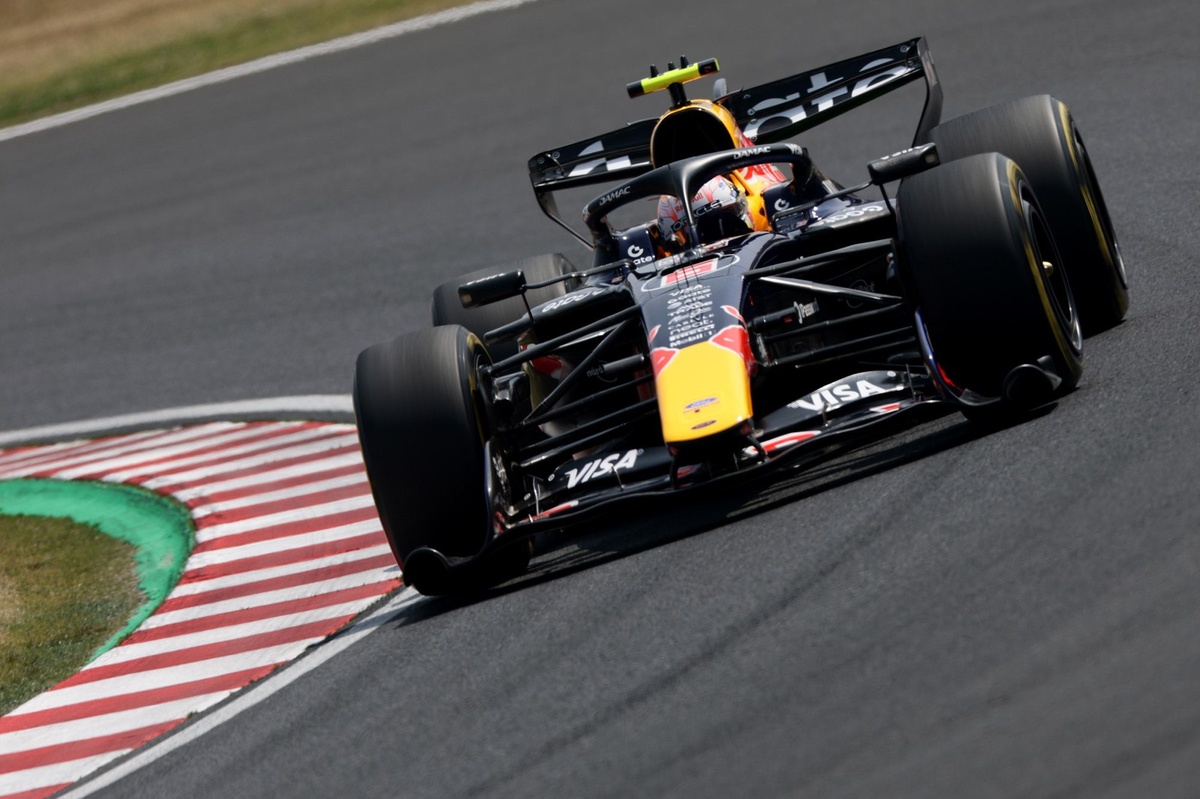
Red Bull Racing has faced a complicated start with the new Formula 1 regulations for 2026, showing a performance not seen since 2015. With only 16 points accumulated after the first three races, the team currently occupies the sixth position in the constructors’ championship, a reality that has surprised many in the motorsport world.
Currently, Red Bull is almost a second off the best qualifying time, averaging a difference of 0.97 seconds, and up to 1.26 seconds in race conditions compared to Mercedes. This situation has led them to compete directly with teams like Alpine and Haas for mid-table positions, and the difference with McLaren is only four tenths.
An Unexpected Setback
This is their slowest car in 11 years, contrary to their dominance during the ground effect era from 2022 to 2025. Since 2009, they have been among the leading teams, but this start resembles their last crisis during 2015. At that time, drivers Daniel Ricciardo and Daniil Kvyat experienced similar performance, with an average disadvantage of 1.18 seconds to the leaders.
Interestingly, in the inaugural year of the hybrid era in 2014, Red Bull was averaging a distance of 0.83 seconds from Mercedes. This makes the current situation seem even more concerning, as teams have improved in recent seasons.
A Long Road to Recovery
Looking back, Red Bull’s recovery could be a long process. After the onset of the hybrid era, they needed seven seasons to become competitive again. It wasn’t until 2019 that they managed to reduce their gap to less than half a second from Mercedes, indicating that a return to the front won’t be a quick solution.
However, it is important to note that the changes in engineering regulations from 2013 to 2014 were much more drastic than what they have experienced between 2025 and 2026. Nowadays, Red Bull has full control of its engine through Red Bull Powertrains, unlike the previous situation with Renault.
Problems to Solve
Despite competitive top speeds, especially in circuits like Australia, China, and Japan, the lost time is mainly due to time lost in corners. This has been clearly observed in critical sectors such as the second sector in China and the quick functions in Japan.
The comparison with their sister team, Racing Bulls, highlights this phenomenon, as, despite sharing an engine, the two teams show very different race times. Red Bull seems to lack the necessary aerodynamic downforce, and its current car is too focused on low friction.
In conclusion, Red Bull needs to resolve various fundamental issues before expecting positive results. The path to returning to the front is expected to be a prolonged challenge, but not as long as in their initial years of the hybrid era.
Written by FormulaRapidaAI
SourceID: SRC_298120ab2c0e0ae566eb065362ca75ee1020b789