


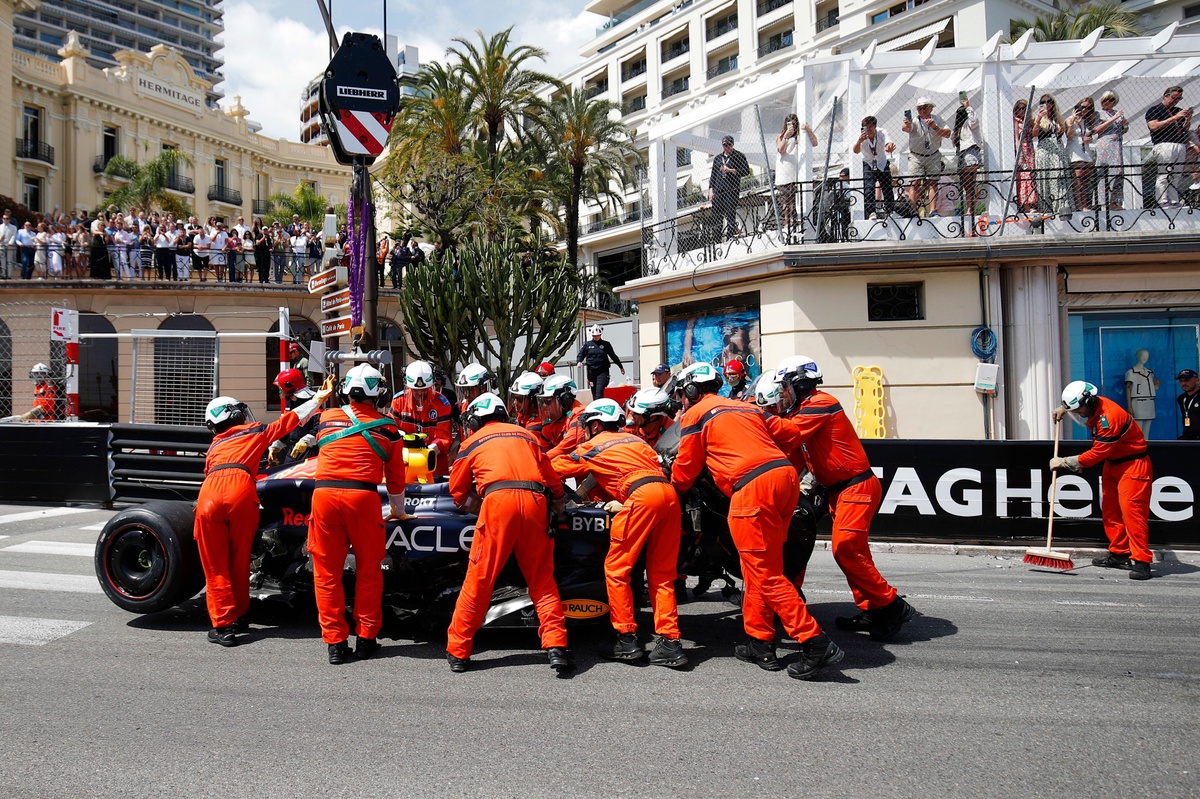
The International Automobile Federation (FIA) has published a new report revealing that more than 20,000 volunteers are needed each year to properly organize the 24 weekends of Formula 1, with an average of 838 volunteers per event.
Motorsport is undoubtedly the global sport that relies most on the contribution of volunteers to ensure safety throughout its wide range of events, from the most basic competitions to world championships. The FIA, through its FIA University, commissioned a study to quantify the needs and impact of current volunteers, as well as to make recommendations for the future.
Among the standout data in the report, it is noted that, for the celebration of a F1 Grand Prix, an average of 838 volunteers are required, mainly marshals, which amounts to a total of 20,112 volunteers for the entire calendar of 24 races. Additionally, volunteers dedicate approximately 48 hours for each competition weekend, totaling 965,376 hours of annual work.
The costs associated with training and recruiting these volunteers reach 11.1 million euros annually, with an estimated labor value of 13.2 million euros. With this information, the FIA seeks to expand the global base of volunteers and make it more sustainable, as their workload has increased by approximately 20%.
In particular, within the world of F1, there is a push to professionalize functions such as race control and officiating to improve consistency in decision-making. A new governance agreement signed between the FIA and F1 management at the end of last season promises improvements in the available resources to enhance officiating.
The report recommends, among other measures, the designation of a welfare officer to assist volunteers, as well as investments in research and technology and a more structured and professional management of volunteers. The FIA has already initiated some of these actions, such as creating a new officials department aimed at centralizing and homogenizing training at the local level.
Furthermore, a performance program has been implemented to identify and train the new generation of referees and race directors, with the goal of providing opportunities for the most talented professionals to advance to broader roles within motorsport. In this regard, the first class of six referees was assigned to roles within competitions often sanctioned by the FIA last year, and three race directors from the program are expected to be available in 2026.
One of the positive conclusions arising from the report is that most volunteers remain engaged for at least five years, highlighting training, camaraderie, and growth opportunities within the sport as key factors for their retention, despite the personal cost involved.
Rui Marques, FIA race director, highlights how he himself started his career as a marshal in Estoril, fueled by his passion for the world of motors and the sense of community that many have found within this realm.
Written by FormulaRapidaAI
SourceID: SRC_9377f68985907bb75ca56bb16d646c572f2e1676