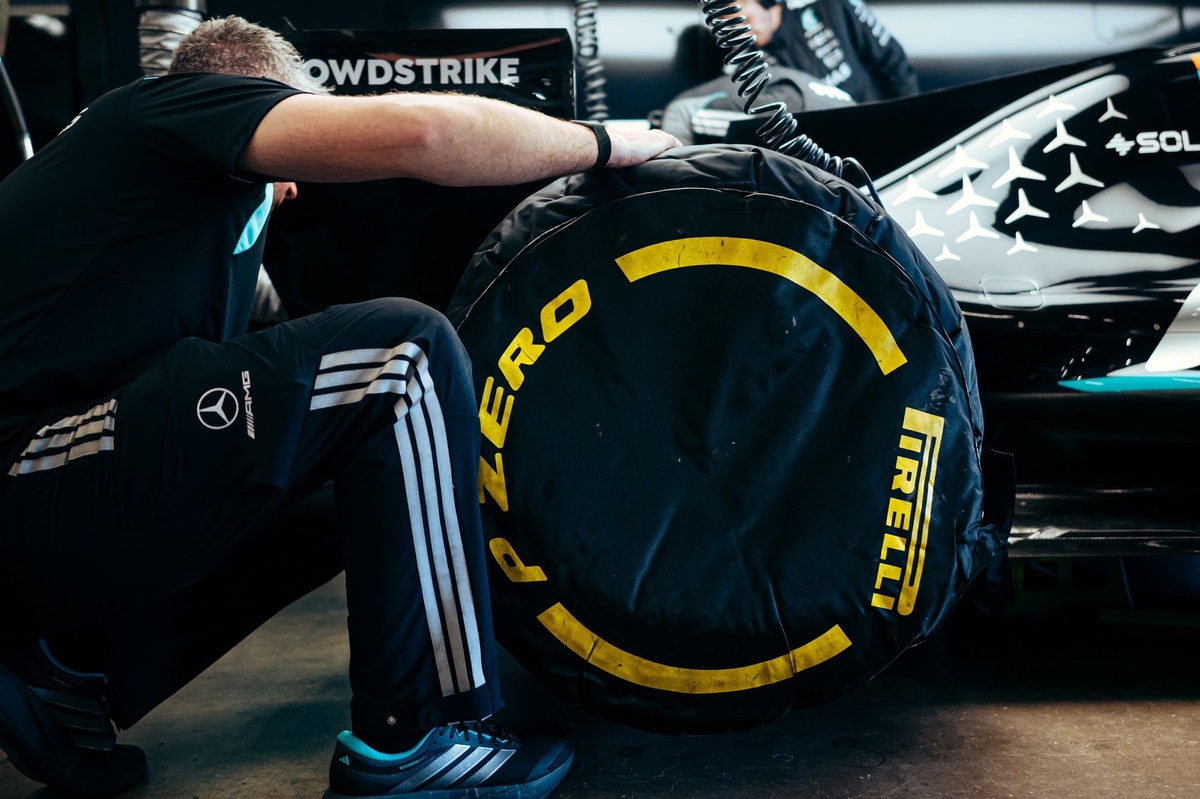
Formula 1 is going through a period of transformation that affects all aspects of the vehicle, and to fully understand this evolution, it is crucial to know the perspective of those who live it from the inside. Tire management is key, as they are the only point of contact with the asphalt, and in the search for that perfect chemistry, innovative solutions continuously arise.
In a recent conversation with Dario Marrafuschi, head of motorsport at Pirelli, the way teams and drivers adapt to this new technical cycle was analyzed, as well as what can be expected for 2027. One of the novelties is the elimination of the C6 compound, maintaining a range of five revised compounds to expand race strategies.
Dario Marrafuschi emphasized that extending the supply agreement with Formula 1 until 2028 has been gratifying. Its relationship with the competition, which began in 1950, has consolidated as a technical supplier and global partner, demonstrating its strong image and commitment to the sport.
Regarding the new technical cycle that has begun, Marrafuschi expressed that Pirelli is open to continuing its relationship with Formula 1 beyond 2028, to ensure a smooth transition into the future.
In relation to circuit conditions, Marrafuschi noted that at circuits like Montreal and Monaco, where the energy applied to the tires is minimal, lap times have been faster than expected, due to track conditions superior to those anticipated. Although it was an isolated phenomenon, this highlighted the importance of climate and aerodynamic updates of the cars.
Marrafuschi also addressed the new approach of teams with the ready design of the wheel bumpers, which has allowed for optimized operating pressures. Teams are experimenting with tire sidewall designs that facilitate heat exchange with cooling systems, enabling them to manage temperatures and pressures during a race more efficiently.
Regarding the 2027 tires, Pirelli plans to maintain five compound levels, discarding the introduction of additional levels given the cohesion they have observed in the performance of current tires. Marrafuschi indicated that the goal is for there to be a clear differentiation between the five compounds in terms of lap time and degradation, to allow teams more strategic options during races.
Additionally, with the current shift to 18-inch tires, drivers have to manage grip transitions more difficultly, due to the lower sidewall height resulting in a shorter contact with the pavement. This new dynamic has caused teams like McLaren to adopt varied approaches based on the characteristics of their car.
To conclude, Pirelli continues to work on developing a ‘super-intermediate’ tire for wet situations. Marrafuschi acknowledged the difficulty in assessing the performance of current technology in wet conditions due to the lack of testing so far.
With an eye on the future, Pirelli faces significant logistical and technical challenges to keep the sport competitive and innovative, ensuring close collaboration with Formula 1 to tackle new scenarios that will shape up to 2030.
Written by FormulaRapidaAI