
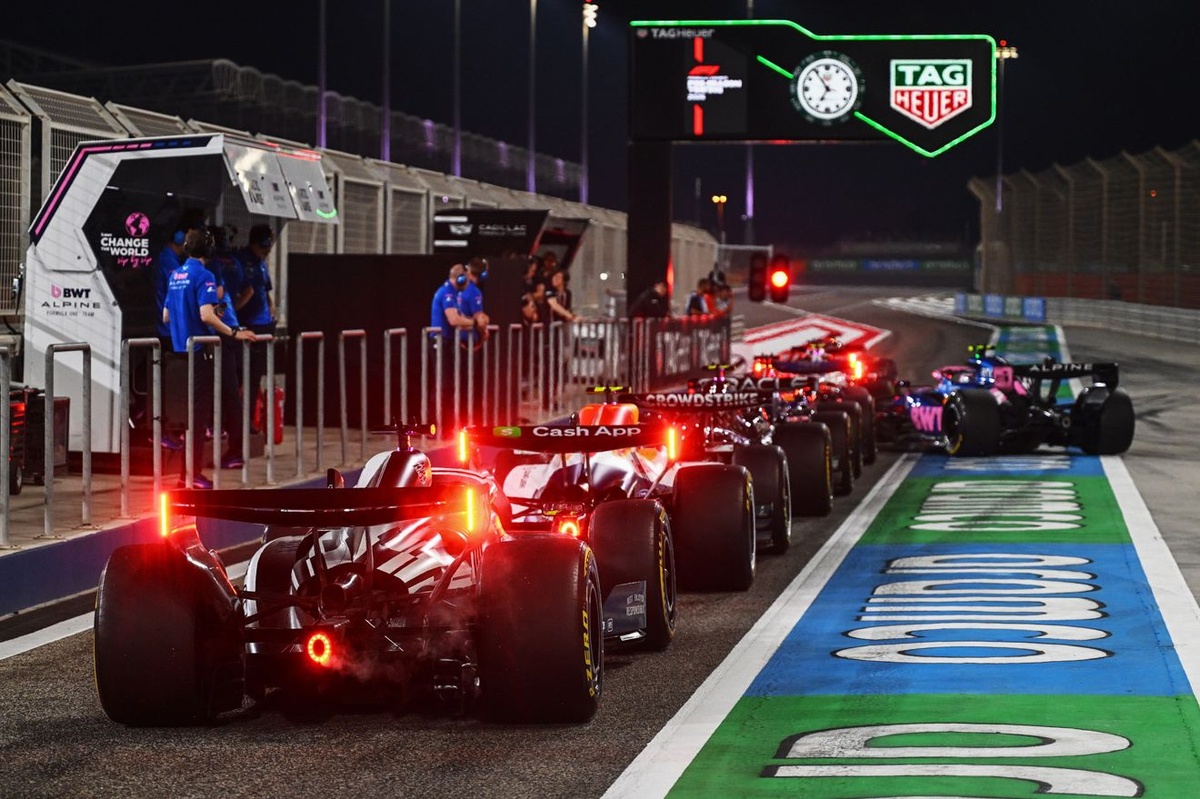
The world of Formula 1 was recently shaken by the cancellation of two races at the beginning of the season, which were supposed to take place in Bahrain and Saudi Arabia. This situation has led to an analysis of how these competitions could have developed based on the characteristics of the circuits and the competition trends observed so far.
The circuits of Bahrain and Jeddah offer a very different environment for the drivers. For example, the Sakhir circuit, where preliminary testing has taken place, is characterized by its hard braking zones, which could have facilitated a more vibrant show during the race. Drivers would have had to manage energy more efficiently to maximize the performance of the new cars.
Possible race strategy
The strategies for Bahrain would have combined possibilities of multiple stops, while in Jeddah, its nature as a narrower circuit might have fostered fewer opportunities for risky overtakes. Here, energy management would have been critical, with a combination of rigorous braking and quick accelerations.
Impact on the championship
The cancellation of these two races also has significant consequences for teams like Mercedes and McLaren. Mercedes, which has shown an early advantage in competition, could have increased its gap from rivals in these two grands prix. Meanwhile, McLaren would have sought to make significant overtakes necessary before the regulatory changes scheduled for the next phase of the competition.
Thus, the cancellation of these races not only affects the immediate outcome for the teams but may also alter the overall course of the championship as the season progresses. Now it remains to be seen under what conditions the teams arrive at the next Grand Prix in Miami, where updates will be crucial for their competitiveness.
Written by FormulaRapidaAI