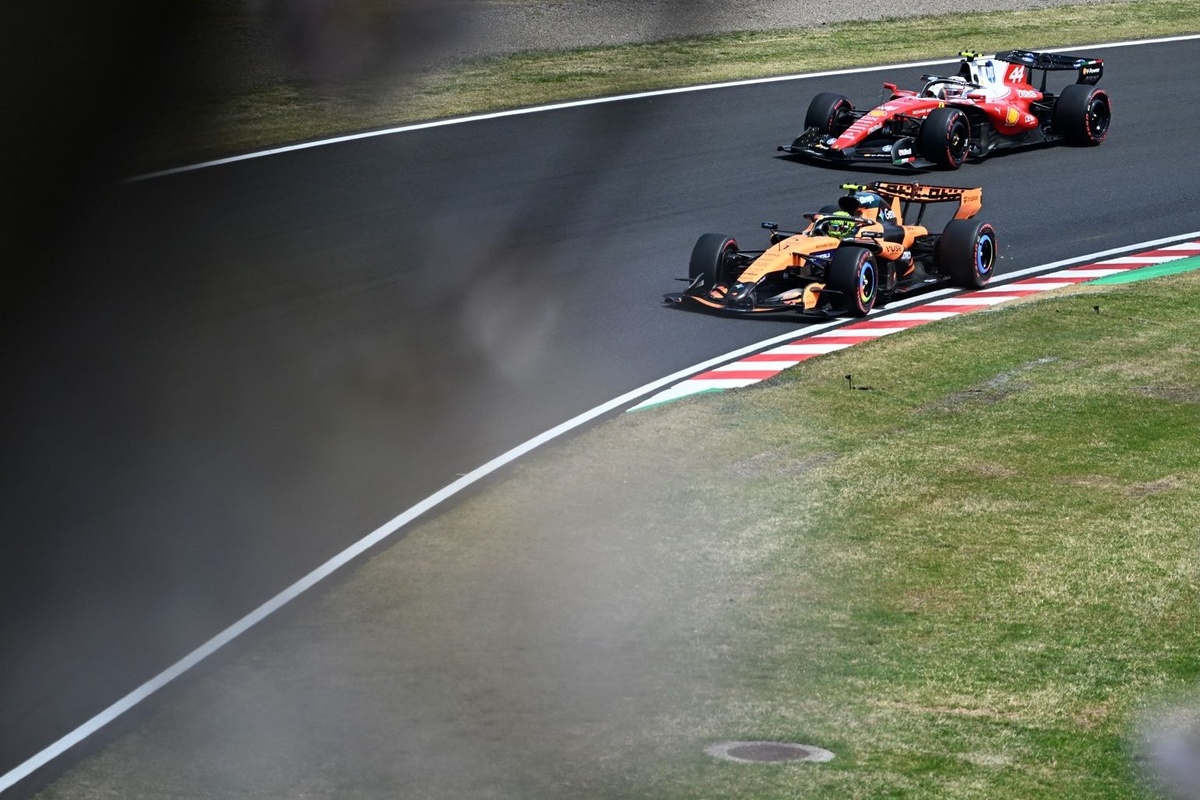
The Suzuka race has highlighted the contradictions present in the new Formula 1 regulations for 2026. While these rules promote excitement through hybrid energy strategies that constantly generate overtakes, they also expose problems that need to be addressed in the upcoming meeting between F1, the FIA, and the teams.
In this dynamic, it was observed how drivers have to modify their driving to manage energy, which can affect their behaviors behind the wheel. A clear example was the intense battle between Lando Norris and Lewis Hamilton during the last laps of the race.
In one of the decisive moments, Norris used electric support to close the gap with Hamilton in the area between Spoon and the final chicane. Reaching almost 330 km/h forced him to lift his foot off the accelerator to avoid a collision, which triggered a response from the engine that caused him to lose energy at the most critical moment.
This problem became evident in the gears where the cyclist behind has to manage their accelerator with a more artificial approach. The driver’s trial on lap 50 highlighted that, while an overtake could be attempted, the current rules can complicate it. By lifting his foot off the accelerator, the regulation forces the engine to restore a minimum amount of electrical power, thereby increasing energy consumption.
As Norris explained after the race, his decision to lift his foot was an effort to avoid an accident, but the vehicle’s control system did not allow him to reapply power without activating electrical support. This can lead to uncomfortable situations that may provoke forced overtakes, where the driver is forced to act more to manage energy than by competitive instincts.
Drivers, like Isack Hadjar, have expressed that it is difficult to adapt to this new dynamic during races. This raises questions about whether the safety regulations, which were designed to prevent the use of traction control, are actually negatively affecting on-track battles, especially when such high power as the MGU-K’s 350 kW can be applied.
In summary, the race at Suzuka was not just a demonstration of talent between Hamilton and Norris, but also a window to examine the consequences of the 2026 rules that might require urgent revision to ensure the authenticity of competition in Formula 1.
Written by FormulaRapidaAI