

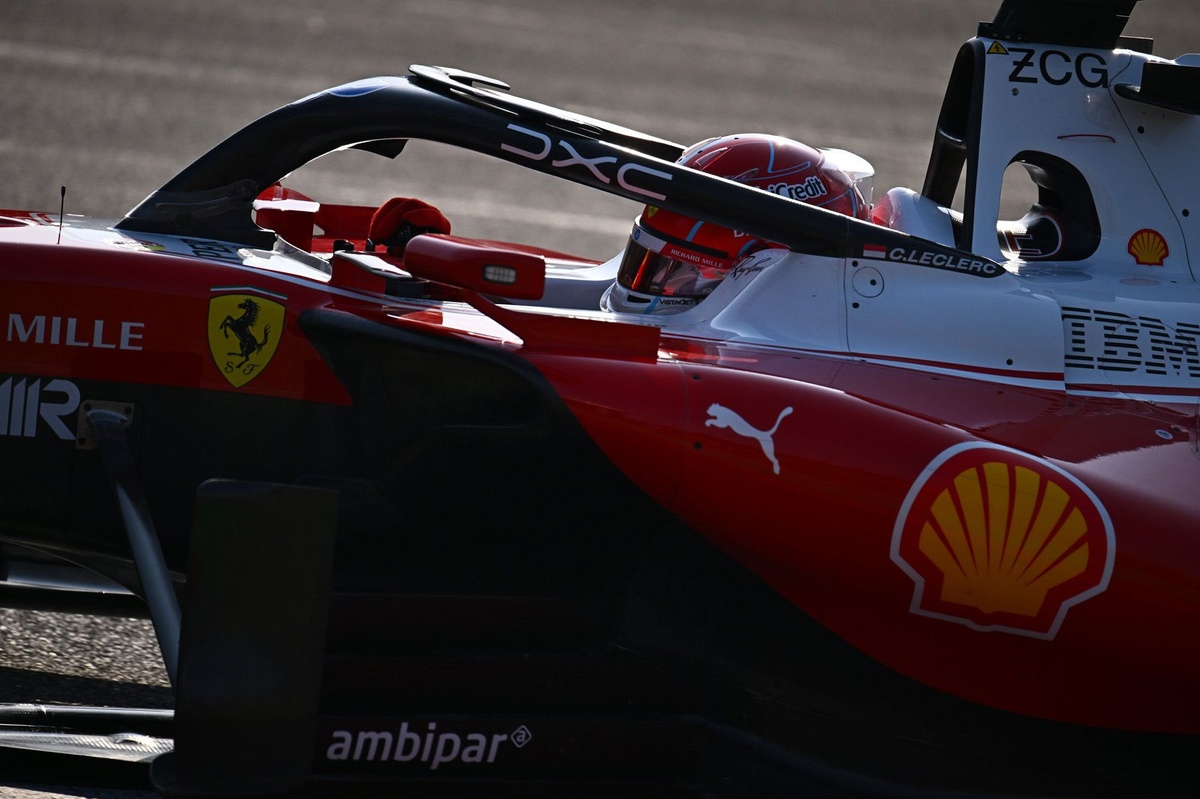
The sprint qualifying of the Chinese Grand Prix has highlighted the complexity of engines that, at this beginning of the technical rules cycle, continue to pose a challenge for both drivers and teams. Charles Leclerc, a Ferrari driver, has experienced a revealing moment that illustrates the difficulty in energy management during qualifying sessions.
In his final lap in SQ3, Leclerc seemed poised to fight for a prominent position, but the lack of energy at a critical moment on the 1.2 km straight curtailed his aspirations. This has highlighted that even small variations in energy management can have significant consequences in qualifying.
Leclerc’s incident is not just an individual setback, but illustrates the inherent complexity of current engines. Energy management has become a crucial aspect, with each adaptation requiring extensive knowledge and experience, both on track and in vehicle setup.
After qualifying at the Australian GP, the Monegasque had pointed out that the results had been affected by a similar issue with hybrid management. At that time, a pit stop allowed for the incorrect parameters to be reset. However, during the sprint qualifying, this option was not available.
The power units now operate with systems that adapt energy management based on variable conditions such as track grip and driving style, an aspect that has gained much more importance in this new era. With an MGU-K that has significantly increased its power, understanding how and when to use energy is fundamental to optimizing lap times.
By analyzing Leclerc’s two laps during the qualifying session, subtle yet significant differences in his energy management become apparent. On his first lap, he chose a gear combination that left him with less energy to accelerate before braking at corner 11. In contrast, in his second attempt, this strategy was adjusted in a way that allowed him to accelerate more efficiently.
The variation in Leclerc’s strategy was not limited to his two laps, but is significant compared to other drivers like Lewis Hamilton. While Hamilton opted for a more conservative energy management approach, anticipating the needs of the track, Leclerc found himself in a situation where the system had to readjust his strategy in real time.
The outcome of this qualifying illustrates how the complexity of F1 engines continues to be a determining factor in the current competition. The ability to manage energy resources optimally is more critical than ever, and Leclerc’s case stands out as a recent example of the difficulties drivers must face in this new landscape.
